Comparison guide · Storage & filing · 01
Filing cabinets vs office cupboards: buy for the contents, not the empty space
A large cupboard can be the wrong answer to a small filing problem. A tall filing cabinet can be equally unhelpful when most of the contents are boxes, binders and shared supplies.
Get the short answer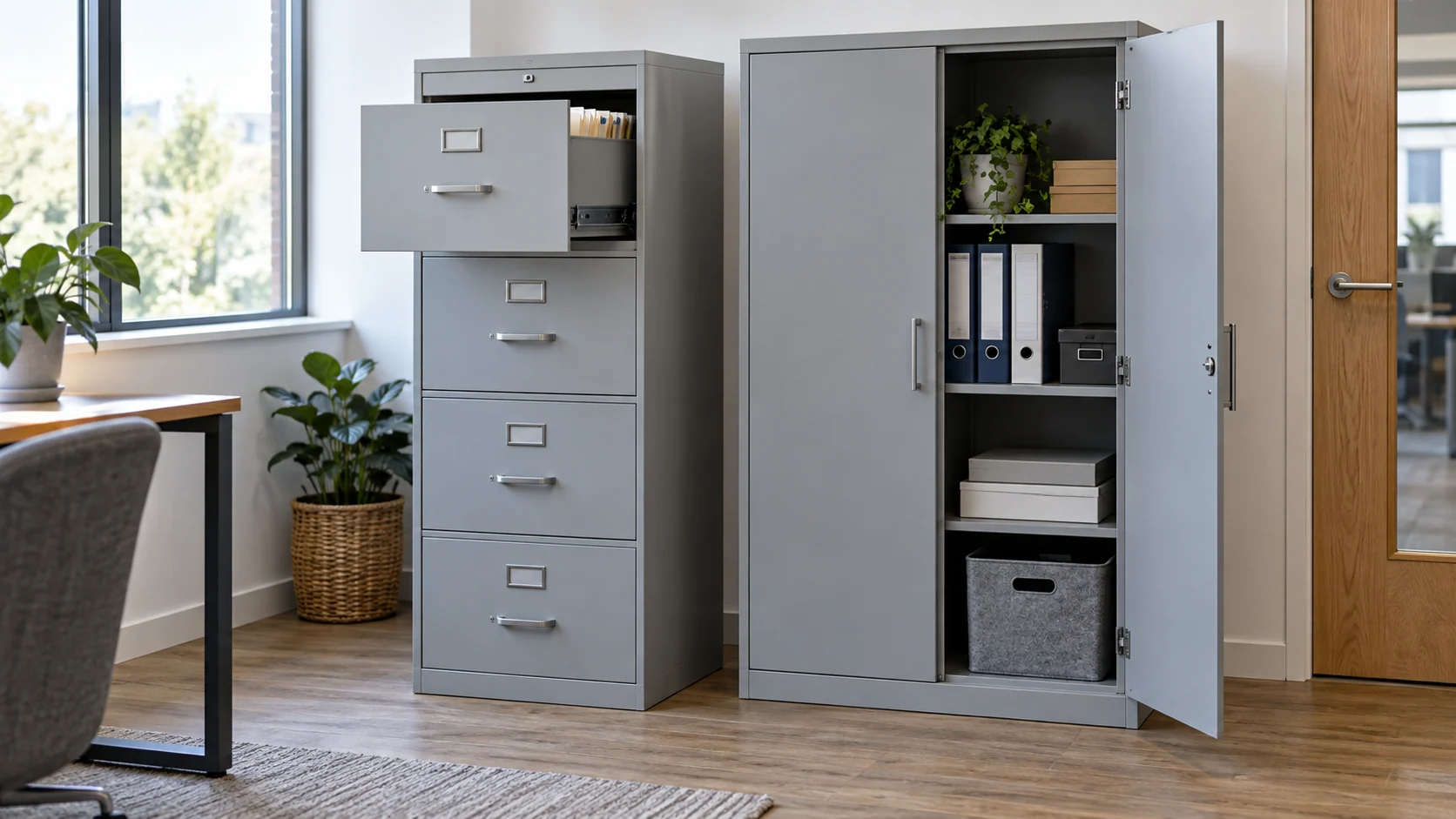
Short answer
Choose a filing cabinet when organised drawer-based document access is the main requirement. Choose an office cupboard when shelves and mixed contents are more useful. Some systems combine both, so compare the supplied internal fittings as carefully as the outer dimensions.
Choose on purpose
Which option fits which situation?
Choose filing drawers for active suspension folders that need a compatible hanging system and convenient retrieval.
Choose cupboards for mixed binders, boxes and supplies; specify filing fittings separately if the cupboard must also hold hanging files.
Know what is being compared
Filing cabinets
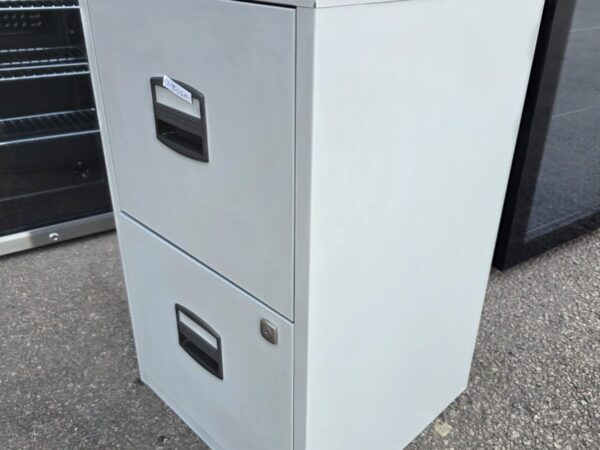
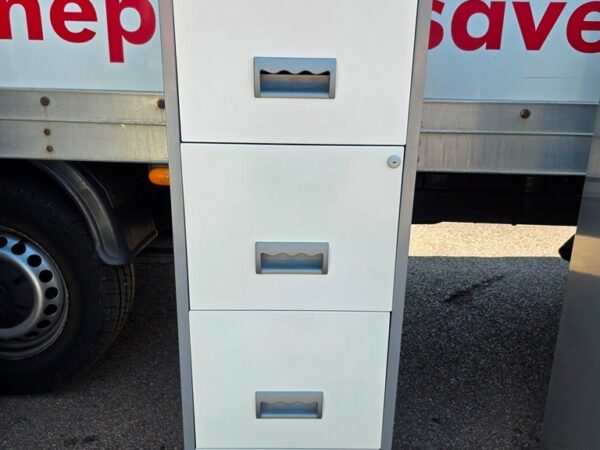
A filing cabinet commonly uses drawers arranged for suspension files or another specified filing format. Not every drawer fits every folder size.
Office cupboards
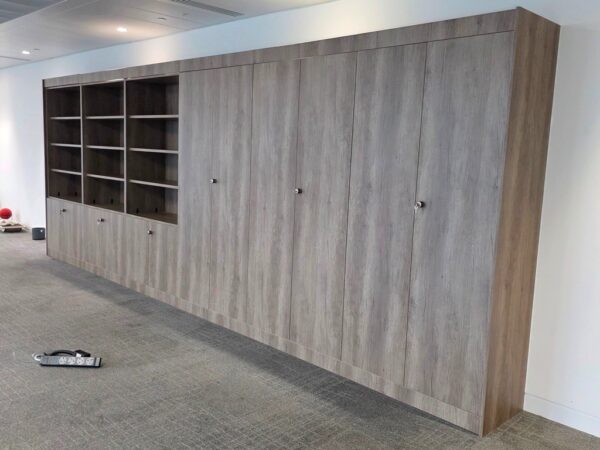
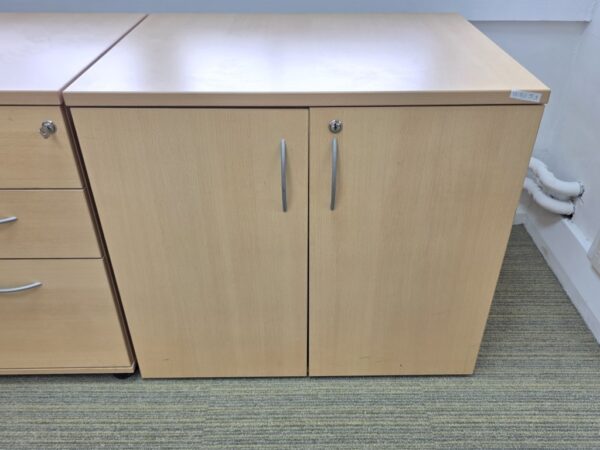
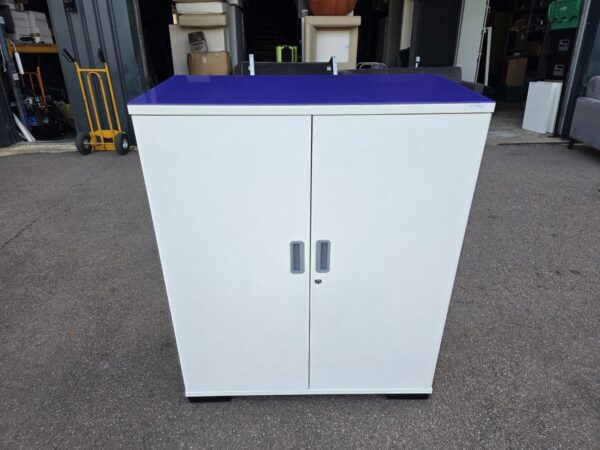
An office cupboard normally provides enclosed shelf storage, sometimes with additional filing rails or pull-out frames. The internal fittings determine what it can usefully store.
The details that change the decision
Make a contents list before a furniture list
Separate active suspension files from bound folders, archive boxes and loose supplies. These are different storage tasks. A cupboard full of small boxes may use shelves efficiently, while the same cupboard filled with loose paper folders could be awkward to search.
Count the contents you expect to keep, not everything currently in the room. Removing obsolete or duplicated material through the appropriate business process may change the storage requirement. Do not buy extra furniture simply to preserve an unreviewed pile.
External size is not usable capacity
Measure inside the unit. On a filing cabinet, confirm the file format and usable run of folders. On a cupboard, check clear shelf dimensions, shelf adjustment and the space lost to hinges or other fittings.
A simple planning example: if a usable shelf is 900 mm wide and each filled binder is 75 mm wide, twelve fit arithmetically with no spare handling space. That is a starting calculation, not a promise of practical capacity. Measure your real contents and leave room to use them.
Opening the storage changes the room
Draw the furniture closed, then add the full drawer extension or door movement. Include the person retrieving an item and nearby chairs. A cabinet that fits a wall can still obstruct the office during normal use.
Ask for loading and installation instructions. Check stability, fixings and any drawer interlock on the actual unit. A working lock is not evidence of a fire rating or a particular security certification; those require separate product information.
Worked measurement
Count contents in the unit they actually use
Illustrative inventory: 36 binders, each 75 mm wide, plus a separate run of active suspension folders.
| Check | Option or calculation | What it tells you |
|---|---|---|
| Binder shelf width needed | 36 × 75 mm = 2,700 mm in total | Three 900 mm shelves fit arithmetically, with no spare room |
| Active suspension files | Measure the occupied filing run | Check the compatible rail format |
| Practical allowance | Include space to handle and add contents | Do not assume outer cabinet width is clear shelf width |
A cabinet with more external volume can still store fewer useful items if the fittings do not suit them. Keep the binder calculation separate from suspension-file capacity; drawer count alone does not make the two offers comparable.
For a used cupboard, photograph the inside as well as the doors. Missing shelves, clips or filing frames change the usable capacity and the price of putting the unit into service. For drawers, test the runners and obtain the appropriate installation and loading information.
Put it in a real room
A team with active files and bulky sample boxes
This office may need both types: filing drawers for frequently retrieved records and shelves for the sample boxes. One large unit is not automatically more economical if half its space is inconvenient to use. Compare a mixed storage plan with a combination cabinet, including the cost and availability of the required internal fittings.
Side by side
Filing cabinets vs office cupboards
| Decision | Filing cabinets | Office cupboards |
|---|---|---|
| Typical contents | Suspension folders and organised records | Binders, boxes, equipment and supplies |
| Access | Pull a drawer towards the user | Open doors and reach the shelves |
| Capacity measure | Usable filing length and compatible format | Clear shelf width, height and depth |
| Operating space | Drawer travel plus user space | Door movement plus user space |
| Internal fittings | Rails, followers or filing supports | Shelves, clips and optional filing fittings |
| Security | Check locks and any separate ratings | Check locks and any separate ratings |
Before ordering
Five checks worth doing
- 01List the actual file formats, binder sizes and box dimensions.
- 02Request internal measurements and supplied fittings.
- 03Check rails, shelves, clips, runners, hinges and keys.
- 04Measure the full operating footprint with doors or drawers open.
- 05Confirm loading, stability and installation requirements.
Clear answers
Frequently asked questions
Can a cupboard hold suspension files?
Some can, using compatible filing fittings. Confirm that the required rails or frames are included and suit your folder format.
Are all filing cabinets suitable for A4 and foolscap?
No. Compatibility depends on the drawer and rail arrangement. Check the exact model.
Is lockable storage fireproof?
No. A lock and a fire-resistance rating are different features. Do not infer one from the other.
Useful source material
Ready to compare real options?
Take the brief to current stock.
Use your contents list and internal measurements to narrow down current storage options. Condition, quantity, price and delivery can change, so verify the current listing and order details.