Comparison guide · Meeting & collaboration · 02
Meeting tables vs boardroom tables: where the difference matters
A boardroom table can make a room feel established. It can also dominate a room that spends most of its time hosting three people and a laptop.
Get the short answerShort answer
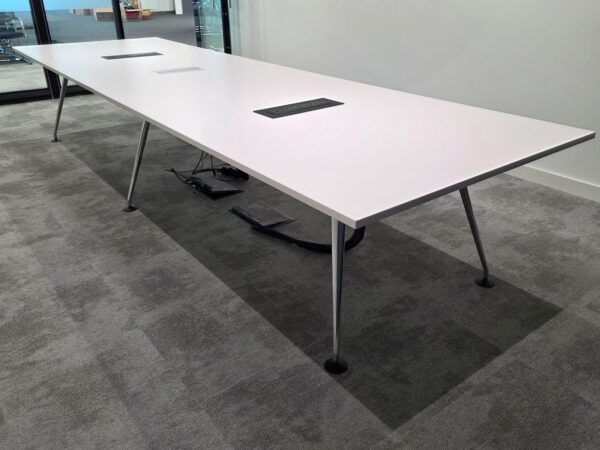
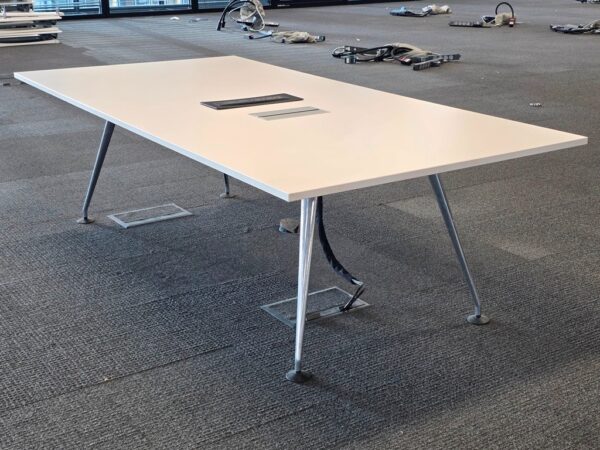
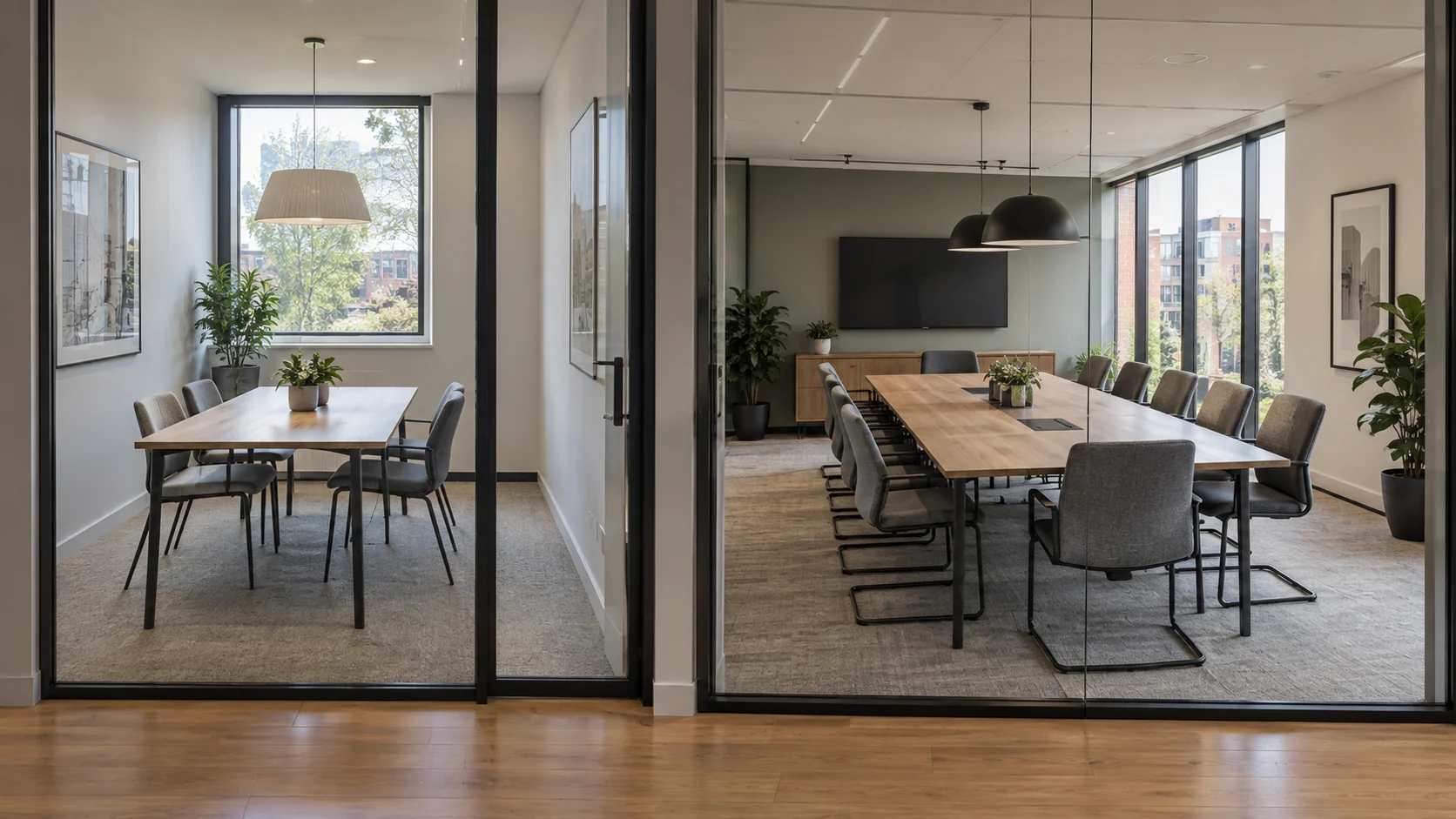
Boardroom tables are generally chosen for a dedicated, often more formal meeting space, while meeting tables cover a wider range of room sizes and uses. The categories overlap. Compare the real seating plan, presentation needs, construction and installation route rather than paying for a label.
Choose on purpose
Which option fits which situation?
Choose a meeting-table arrangement for the usual group and activities, particularly where the room has several uses.
Choose a dedicated boardroom arrangement when a consistent seating plan, presentation setup and room identity justify it.
A practical route to a decision
Record the room, route and working clearances.
List what the users and the task actually require.
Compare the condition and completeness of the real options.
Put it in a real room
An eight-seat room with twelve-seat ambitions
A team occasionally wants to squeeze twelve people into its eight-seat meeting room. Replacing the table with a larger boardroom model does not add floor area, screen visibility or circulation space. First test the proposed chairs and occupied footprint. If the room cannot support the larger meeting comfortably, the furniture name will not fix it.
Worked measurement
Check usable seating along the edge
Illustrative arithmetic: three chairs each 600 mm wide occupy 1,800 mm before any space between them.
| Check | Option or calculation | What it tells you |
|---|---|---|
| Three chair widths | 3 × 600 mm = 1,800 mm | No spacing has been allowed yet |
| Usable table edge | Measure between relevant obstructions | Legs and bases may remove a position |
| End seats | Check independently | Do not simply add two to the side-seat count |
This is not a recommended seat allowance or proof that a 1,800 mm table seats three people comfortably along each side. Actual chair widths, arm movement, legs and the task can change the plan. Lay out the chairs you intend to use rather than accepting an advertised capacity untested.
For hybrid meetings, draw the camera and screen too. A seat at the far end may fit physically but give a poor view of faces or shared material. Decide whether a different arrangement would work better before buying a larger table solely for its boardroom label.
Side by side
Meeting tables vs boardroom tables
| Decision | Meeting tables | Boardroom tables |
|---|---|---|
| Room use | Small meetings through to multipurpose rooms | Usually a dedicated meeting room |
| Layout | Fixed, modular or changeable | Often a consistent central arrangement |
| Appearance | Practical or formal depending on the model | Often selected as a visual focal point |
| Seating | Check actual chairs and base positions | Do not rely on advertised headcount alone |
| Technology | Specify what the room needs | May need planned AV and cable integration |
| Installation | Depends on size and construction | Large tops and bases need an access plan |
Know what is being compared
Meeting tables
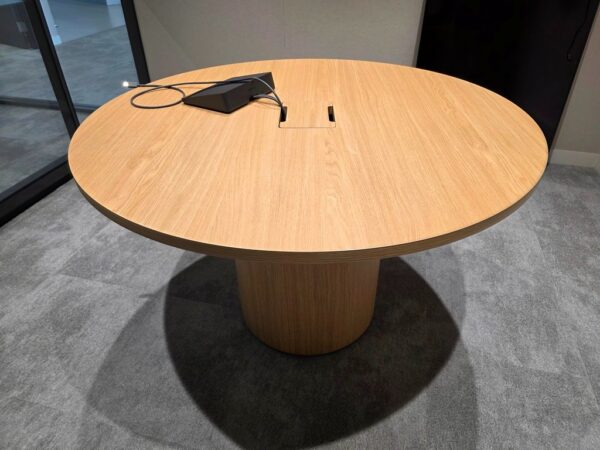
Meeting table is a broad category covering small discussion tables through to large conference arrangements.
Boardroom tables
Boardroom table usually describes a table selected for a dedicated boardroom, often with a larger or more formal design. It is not a separate guarantee of quality, comfort or capacity.
The details that change the decision
Buy for the usual meeting, then plan the exceptions
Write down the typical attendance and the largest meeting the room genuinely needs to host. Furnishing permanently for an occasional large group can make everyday meetings feel remote and leave less room for circulation.
An alternative is a smaller everyday arrangement with a separate plan for larger events. That might involve a different room or compatible modular furniture. The right answer depends on how often the exception happens and how much disruption a changeover creates.
The camera changes the seating plan
For hybrid meetings, test what remote participants will see. A long table can put people at the far end a long way from the camera and screen. A wide base or awkward cable exit can also dictate where equipment ends up.
Mark the screen, camera and power positions on the room plan before selecting the table. Check sightlines from each seat. An impressive finish does not compensate for someone spending the meeting behind another person or unable to see the shared presentation.
A large used table is also an installation project
Ask whether the top is one piece or several sections, how the base separates and what joining hardware is required. Measure doorways, stairs, lifts and turns along the delivery route. The overall room dimensions do not answer the access question.
Check joints, edge damage, top alignment and the completeness of cable-management parts. Confirm what delivery and assembly include in writing. An otherwise good purchase can become difficult if a large top cannot reach the room or a proprietary joining plate is missing.
Before ordering
Five checks worth doing
- 01Record usual attendance and genuine maximum attendance.
- 02Draw chairs occupied, not just tucked under the table.
- 03Test screen and camera views from the proposed seats.
- 04Measure the delivery route and check how the table dismantles.
- 05Confirm all joining, power and cable-management components.
Clear answers
Frequently asked questions
Is a boardroom table better quality?
Not automatically. Construction, condition and suitability need checking on the actual product.
Can a boardroom table go in an ordinary meeting room?
Yes, if the room, access route and use support it. The room’s name is not the deciding factor.
How many people can a boardroom table seat?
That depends on the table, chair widths, base positions and working space required. Treat a stated capacity as something to verify.
Ready to compare real options?
Take the brief to current stock.
Compare current tables with your chairs, room layout and presentation requirements. Condition, quantity, price and delivery can change, so verify the current listing and order details.