Comparison guide · Meeting & collaboration · 01
Meeting tables vs project collaboration tables: what happens around yours?
A weekly catch-up and a workshop covered in drawings ask different things of a table. Yet both products can appear under the same meeting furniture category.
Get the short answer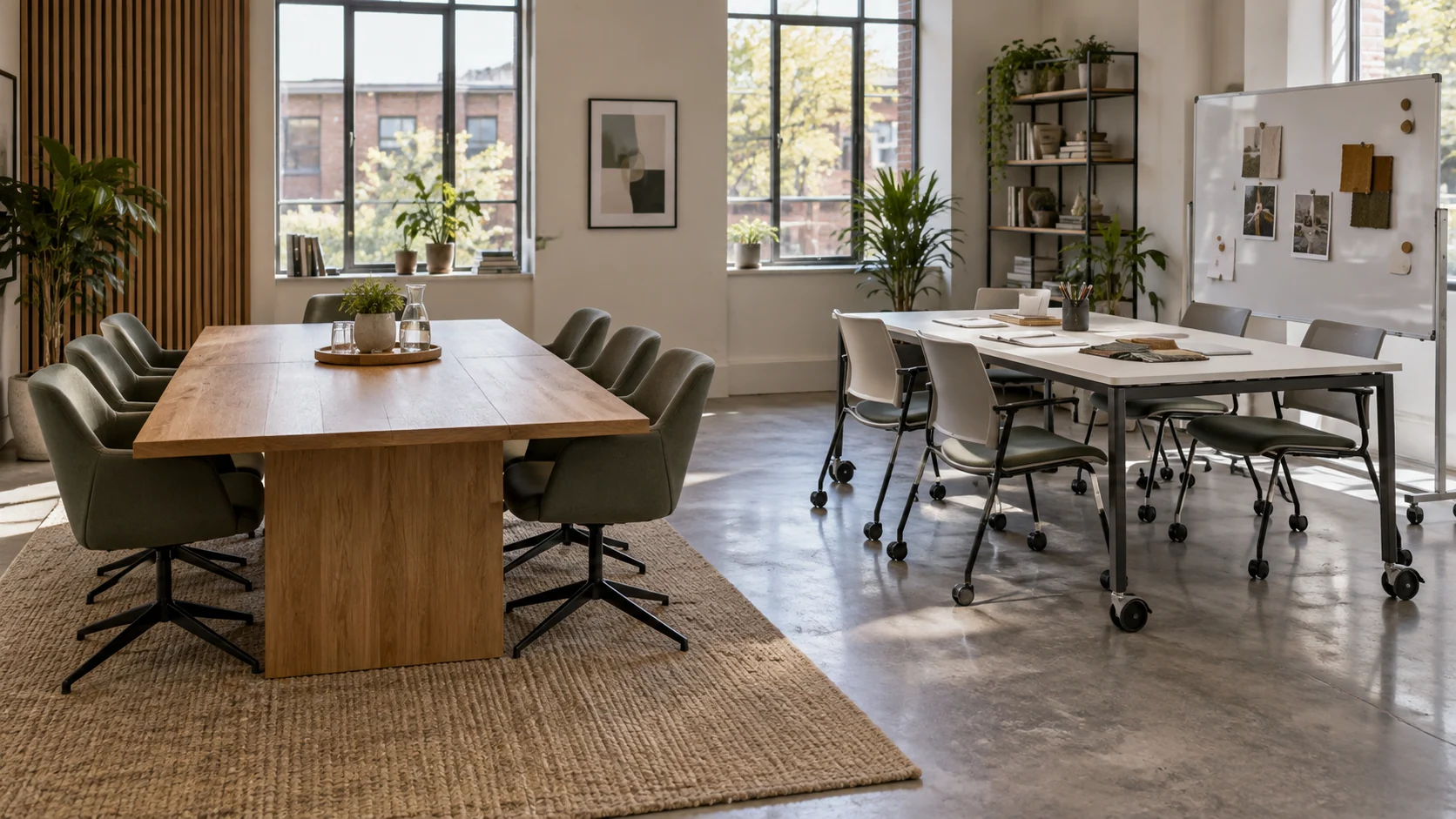
Short answer
A meeting table suits discussion, presentations and shared seated work. A project collaboration table makes sense when its particular features support hands-on work, changing groups or materials left in place. There is no strict boundary: surface size, height, access and equipment matter more than the name.
Choose on purpose
Which option fits which situation?
Choose a meeting table for discussions and presentations where people mainly need space for themselves and their devices.
Choose a project table when samples, plans, tools or work left in place define the activity—and the actual features support it.
Know what is being compared
Meeting tables
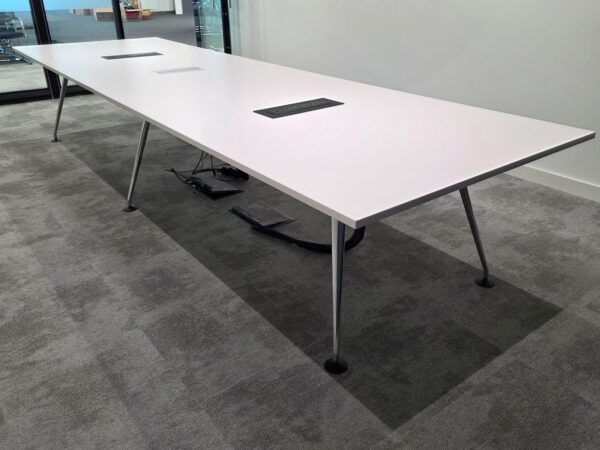
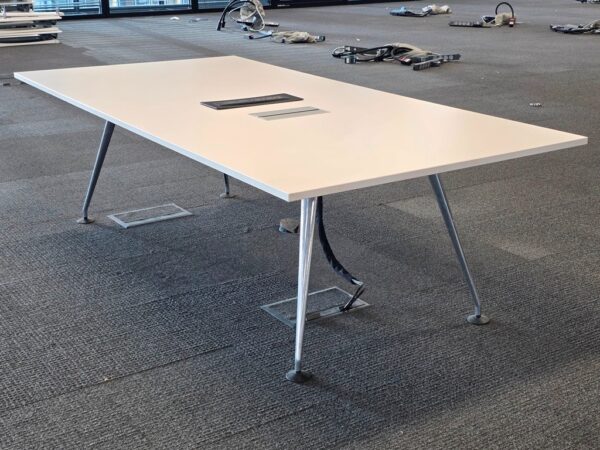
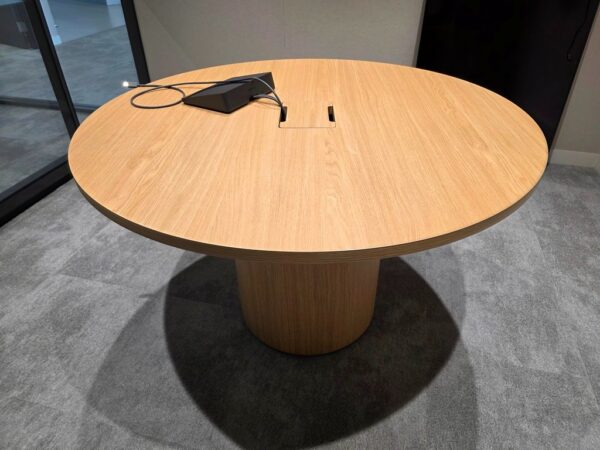
A meeting table provides a shared surface for people gathered around it. It can be fixed, modular, mobile or height-adjustable.
Project tables
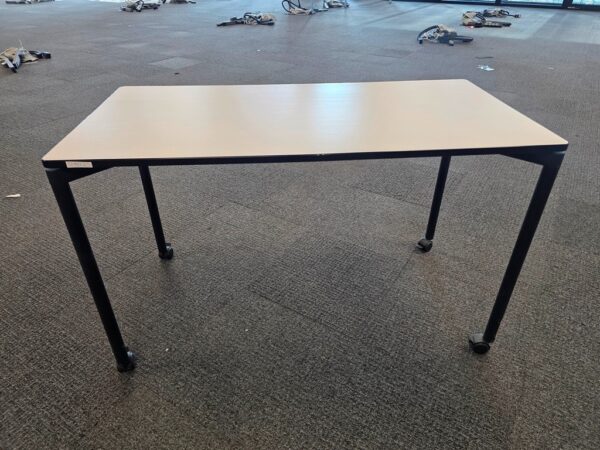
A project or collaboration table is usually presented for joint working. Depending on the model, it may offer a larger work surface, standing height, castors, storage or integrated power. None of those features is guaranteed by the label.
The details that change the decision
Count the work as well as the people
A six-person table does not necessarily hold six laptops and a large sample board comfortably. List what needs to remain on the surface during a typical session. Then place those objects on a measured outline of the proposed table.
For project work, reach can be more important than total area. A very deep table may put shared materials out of convenient reach. Several smaller surfaces can sometimes work better, provided their edges and bases do not interrupt the task.
A flexible room needs a practical reset
If the room changes between training, workshops and meetings, check how that change will happen. Castors, linking devices and movable screens can help, but cables and heavy equipment may keep an apparently mobile table in one place.
Ask who will move the furniture, where it will be stored and how the next layout will be set out. Follow the manufacturer’s handling instructions. A room that takes too long to reset tends to settle into whichever layout is least troublesome.
Power and access are part of the table choice
Specify device connections from the work backwards. A central power module is useful only if people can reach it without covering the workspace in loose leads. Check whether modules and cable trays are included in a used table.
For standing-height project tables, provide a way for people who need to sit to join the same activity. Do not assume a tall stool solves every access requirement. Compare a seated or adjustable alternative before committing the whole room to one height.
Practical example
Four people are not the whole space requirement
Illustrative project brief: four people need to discuss a 900 × 600 mm sample board as well as use notebooks or laptops.
| Check | Option or calculation | What it tells you |
|---|---|---|
| Shared material | 900 × 600 mm board | Already occupies 0.54 m² |
| Personal work | Add the actual devices and paperwork | Do not assume all remaining area is reachable |
| Between sessions | Decide whether the work stays in place | Plan another meeting surface if necessary |
Place the sample board on the table outline first, then add the people’s working areas. A table advertised for four seats may accommodate a conversation but not the same four people examining bulky materials. A larger table also needs a check that everyone can reach the shared work.
If the room changes use, decide who clears the project and where it goes. Castors help only when movement, storage and cable disconnection are practical. A fixed project surface with a separate small meeting area may be simpler than resetting one table every day.
Put it in a real room
One room, two very different afternoons
A design team uses the room for a video meeting, then spreads finish samples across the table. A conventional meeting table could handle both if the surface and connections are right. If the samples must stay overnight, a separate project surface may protect that work without making the meeting room unavailable. The useful distinction is whether the work can be cleared away, not whether the product has “collaboration” in its name.
Side by side
Meeting tables vs project collaboration tables
| Decision | Meeting tables | Project tables |
|---|---|---|
| Main activity | Discussion, calls and presentations | Working together on materials or a task |
| Surface requirement | Seats, notebooks and devices | Also allow for samples, plans or prototypes |
| Room changes | A fixed arrangement may be sufficient | Mobility or modularity may be useful |
| Height | Often seated, but check the model | Seated, standing or adjustable options |
| Equipment | Screen sightlines and device connections | Task-specific tools, power and storage |
| Buying question | Can everyone participate comfortably? | Can everyone reach and use the work? |
Before ordering
Five checks worth doing
- 01List people, devices and physical materials for a normal session.
- 02Check reach, base positions and usable surface area.
- 03Confirm supplied power modules, trays and linking parts.
- 04Plan movement, storage and cable disconnection where relevant.
- 05Include seated participation and the room’s access needs.
Clear answers
Frequently asked questions
Are collaboration tables always standing height?
No. The name covers several heights and configurations. Check the actual specification.
Can a meeting table be used for project work?
Yes, if its surface, height, stability and equipment suit that work.
Does a bigger table make collaboration easier?
Not necessarily. An oversized surface can make shared objects harder to reach and reduce space around the group.
Ready to compare real options?
Take the brief to current stock.
Compare current tables with your chairs, room layout and presentation requirements. Condition, quantity, price and delivery can change, so verify the current listing and order details.