


MY USED FURNITURE · CHAIR CARE
How to clean
an office chair
Inside our preparation process, with useful care for fabric, mesh and leather at home.
See the process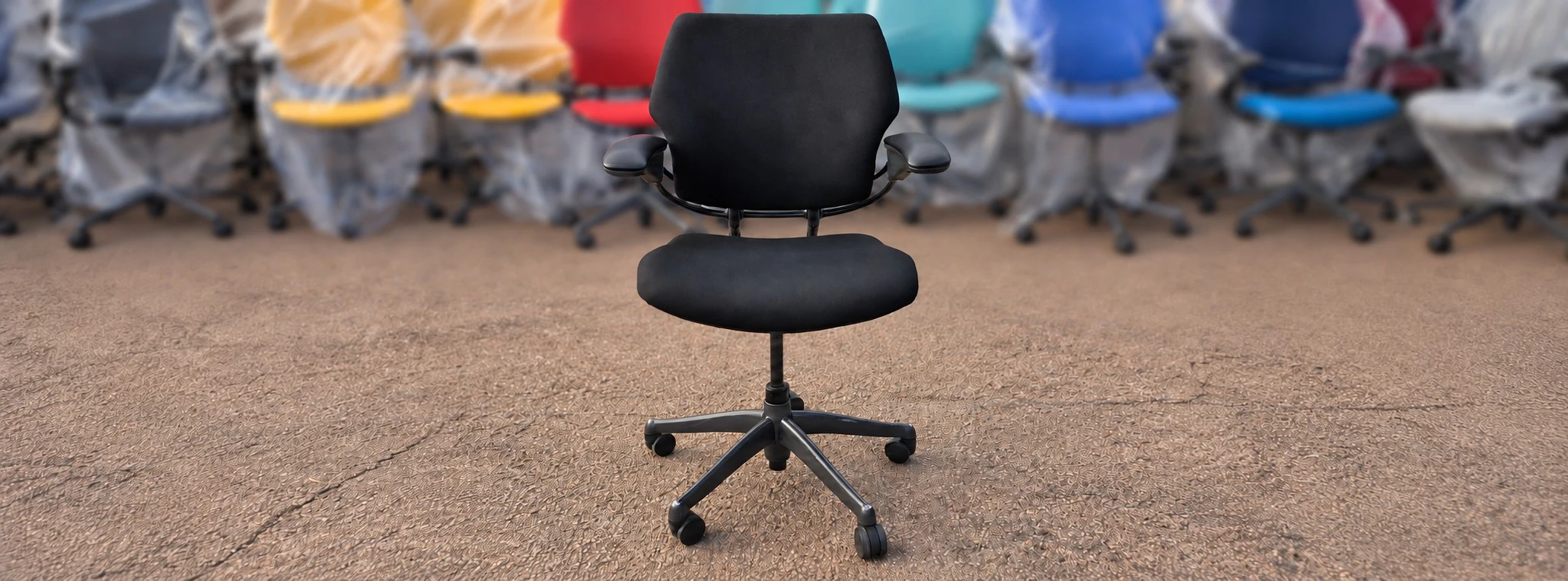
To clean an office chair, identify the material, remove loose dirt and use only a suitable cleaner with as little moisture as the method needs. Blot stains gently and let every cleaned part dry fully before using the chair. Fabric, mesh and leather need different care.
Inside our office chair cleaning process
At My Used Furniture, cleaning forms part of preparing used seating for its next owner. Our team combines professional cleaning equipment with the hand cleaning needed around seat edges, arm supports and other awkward areas. The material and condition determine the treatment.
My Used Furniture is operated by ONEPLACE 2 SAVE LIMITED. This short Oneplace2save video shows a stored chair being cleaned and prepared before its return in one specific project. It gives a closer look at the attention paid to the whole chair.
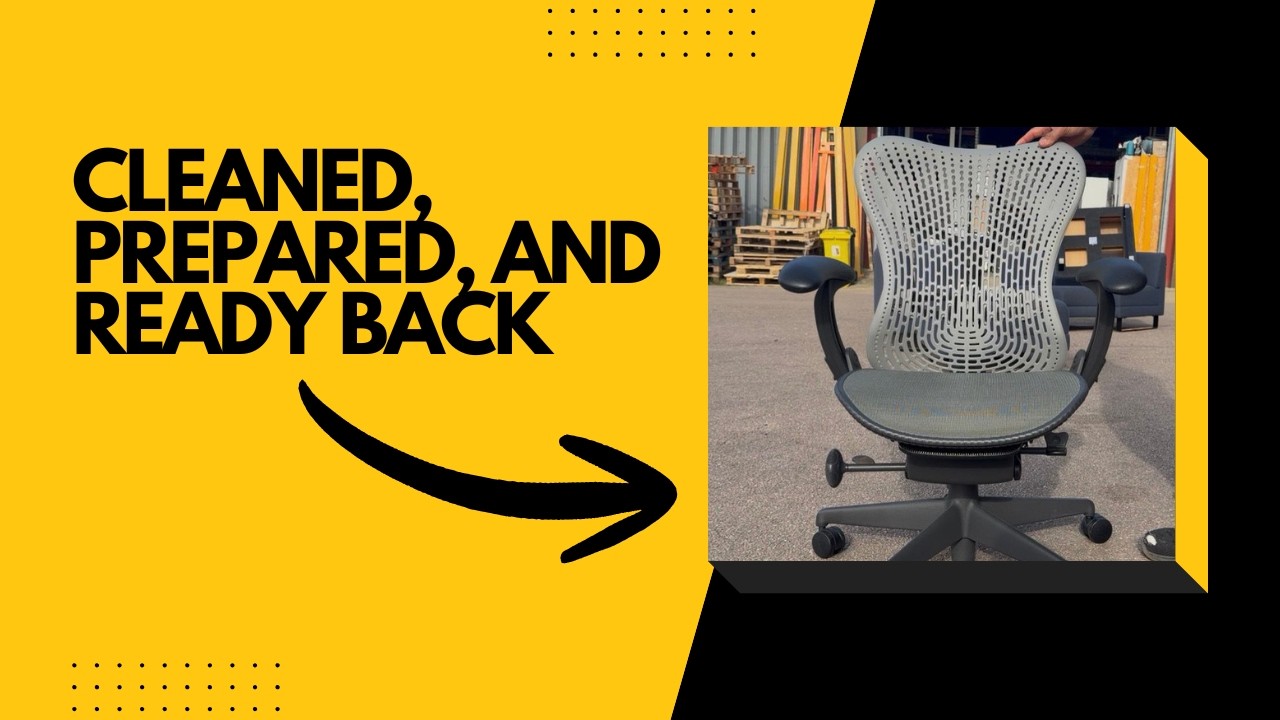
Watch the video on YouTube. The player on our website uses your video cookie choices.
More than the seat
Check the rear supports, underside, arm pads, base spokes and wheel housings. A clean front view can hide dirt elsewhere.
Detail by hand
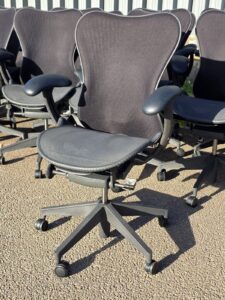
The video chair has a mesh seat and a perforated moulded back. Each surface needs its own method. Turn to a clean part of the cloth as it picks up dirt.
Dry and working
After cleaning, inspect the chair and its adjustments. Removing a mark does not repair a loose fitting, damaged upholstery or worn mechanism.
Where professional equipment helps
For suitable padded upholstery, extraction can help recover cleaning solution and loosened dirt rather than leaving them in the seat. Hand detailing still matters around components a machine cannot reach. The equipment does not decide which treatment the material can tolerate.
You can use the home cleaning steps in this guide without copying a professional process. The cleaner, equipment and drying method still need to suit your own chair.
Before you clean: identify the material
A chair can have a fabric seat, a mesh back, coated arm pads and a metal base. They do not necessarily take the same cleaner. Look underneath for the model label, then find the manufacturer's care instructions for the actual upholstery and finish.
If the chair has been reupholstered, the original model's fabric instructions may no longer apply. Ask the seller or upholsterer what is fitted. If you cannot identify the material, start with gentle vacuuming or dusting and confirm the wet cleaning method before going further.
Try the permitted cleaner on a small concealed area. Check it once dry for colour transfer, a tide mark, stiffness or a change in texture. A test that looks fine while wet has not finished telling you its result.
What you need for an ordinary home clean
- A vacuum with a clean upholstery attachment appropriate for the material.
- Several soft white or colourfast cloths, plus an absorbent towel.
- Lukewarm water and a suitable upholstery cleaner, only where the care instructions allow them.
- A small pair of tweezers for loose hair around the castors.
- A ventilated place where the chair can stay unused until dry.
You do not need a professional extraction machine to remove ordinary dust, crumbs or a small fresh spill. Keep bleach, solvent cleaners, abrasive pads and mixed cleaning recipes out of a general home cleaning routine unless the exact material instructions specifically permit them.
How to clean a fabric office chair
For upholstery that permits cleaning with water, use a controlled amount of the recommended solution. The aim is to lift surface dirt without saturating the cushion underneath.
- Remove loose dirt first. Vacuum the seat, back and seams gently. Pay attention to the front edge of the seat and the gap beside the backrest, where crumbs collect. Do not press a hard nozzle into the fabric.
- Blot a fresh spill. Press a clean absorbent cloth onto it and lift away. Work from the outside towards the centre rather than spreading it across the seat. Avoid vigorous rubbing.
- Prepare the approved cleaner. Follow its dilution instructions. Wet a cloth and wring it out thoroughly, unless the product specifies another application method. It should not drip into the cushion.
- Clean a small area gently. Use light passes and turn to a clean part of the cloth as dirt transfers. Stop if colour comes off or the texture changes. Repeated soaking is not the answer to a stubborn stain.
- Remove residue as directed. Where a water rinse is allowed, use another barely damp cloth. Press with a dry towel to lift remaining surface moisture, then leave the chair to dry fully.
Fabric suppliers give material specific instructions. For example, Camira's Sonus care guidance allows regular vacuuming and suitable damp cleaning. That is an instruction for that fabric, rather than permission to wet every office chair.
Some covers have zips to help assembly or upholstery work. Remove and wash a cover only if its care instructions say that you can. Do not assume that a removable cover, its lining and the seat foam can all go through the same process.
How to clean a mesh office chair
Start with gentle vacuuming using an appropriate upholstery tool. Support the material lightly rather than pushing a nozzle or cloth through it. Where the maker permits damp cleaning, wipe with the recommended solution and remove residue as instructed. Let it dry before sitting down.
Mesh is not one universal material. Herman Miller's Aeron care instructions specifically rule out brushing 8Z Pellicle or using a rotary vacuum brush. A stiff brush recommended for another surface could damage this one.
Clean the seat and back according to their own construction. A chair with a mesh back and padded fabric seat needs two approaches. Do not drag a brush across stretched fibres, scrub harder to remove a mark or pour water through the seat.
How to clean leather and faux leather office chairs
First establish whether the surface is genuine leather, faux leather or another coated upholstery. A smooth appearance alone does not identify it. Suede, nubuck and some unfinished leathers need different care from a protected leather office seat.
Genuine leather
Remove dust with a soft dry cloth. For a mark, use the cleaner and method approved for that leather finish. Where a mild soap solution is permitted, apply it sparingly with a damp cloth, remove residue and wipe dry.
Do not automatically add leather oil or conditioner. Steelcase's leather guidance, for example, warns against oils and furniture polish. An unsuitable product can alter the finish.
Faux leather and coated fabric
Use the upholstery supplier's instructions for the particular coating. Avoid treating it as genuine leather or assuming it tolerates disinfectant wipes. Clean seams carefully and leave no liquid pooled around stitching.
A flaking or peeling surface is damaged coating, rather than dirt waiting to be scrubbed off. More rubbing or a stronger cleaner will not restore the missing layer.
Clean the armrests, frame and castors too
It is easy to clean the seat and leave the parts your hands touch. Dust the frame, adjustment controls and base. On hard surfaces that allow it, use a soft cloth with the specified mild cleaner, then remove residue and dry. Keep liquid out of adjustment mechanisms and openings.
For a specific example, Herman Miller's Mirra 2 care guide describes mild detergent and warm water for the listed hard components and arm pads, followed by removing residue and drying. It excludes abrasive kitchen cleaners and solvents on those parts.
Removing hair from office chair wheels
Keep the chair stable and protect the floor. Pick away loose threads and hair around the wheel with tweezers, taking care not to pull on seals or force debris further into the axle. Wipe accessible wheel surfaces and dry them.
Some castors pull out; others use a different fitting. Remove one only if the model's instructions explain how. If a wheel remains seized or damaged, check the correct replacement rather than forcing it or spraying general lubricant around the chair.
Keep the chair's pressure cylinder intact. Opening, drilling or heating it is not part of cleaning a chair. If the height adjustment is faulty, arrange an appropriate repair.
What to do about common stains and smells
Identify the problem before reaching for a stronger product. A fresh spill, old grease mark and worn patch need different decisions.
On a small screen, scroll the table sideways.
| What you find | What to do first | When to stop |
|---|---|---|
| Fresh tea, coffee or another spill | Blot excess liquid straight away. Use the material's approved stain method. | If colour transfers or a mark spreads, stop and get material specific advice. |
| Crumbs, dust or dried mud | Lift loose debris with the appropriate vacuum tool before introducing moisture. | Do not grind embedded grit into the surface with a hard brush. |
| Grease, ink or an unknown old stain | Identify the mark and upholstery. Ask the manufacturer or an upholstery cleaner about a suitable treatment. | Do not experiment with solvent, nail varnish remover or several cleaners in succession. |
| A lingering smell | Check for trapped food, damp upholstery and dirt around seams. Clean the identified source and allow full drying. | A smell that returns from inside the cushion needs assessment, rather than more perfume or repeated soaking. |
| Peeling, tears or flattened padding | Assess repair or replacement of the affected part. | Cleaning cannot replace missing coating, torn material or worn out foam. |
Do not cover up persistent dampness or visible mould with fragrance and continue using the chair. Keep it out of use while you seek appropriate cleaning or replacement advice.
Should you steam clean an office chair?
Only if both the upholstery and the assembled chair permit it. A fabric's tolerance of steam does not establish whether the cushion, glue, backing or nearby mechanism can take the same treatment.
Camira's cleaning guide distinguishes between fibres: it permits certain deeper cleaning methods for some materials while excluding steam cleaning for polypropylene. This is why a blanket instruction to steam any office chair is unhelpful.
An upholstery extractor and a steam cleaner also do different jobs. An extractor applies cleaning solution and recovers liquid; a steam cleaner uses hot vapour. If extraction is approved, use suitable upholstery equipment and follow its instructions, including moisture recovery and drying. Never use an ordinary dry vacuum to suck up liquid.
For an occasional home clean, vacuuming and careful spot treatment may be enough. For a heavily soiled seat or an uncertain material, a suitable upholstery professional is a better next step than hiring a machine and guessing.
Let the chair dry, then keep the job small
Leave a cleaned chair in a ventilated room until the upholstery is completely dry. Check seams, the front edge and the underside of padded areas, rather than judging only the top surface. A seat can feel almost dry while moisture remains below it.
There is no reliable drying time for every chair. It depends on the padding, moisture used, airflow and room conditions. Avoid rushing it with a hairdryer or by pushing it against a radiator. If you need the chair later that day, choose a dry maintenance task or arrange another seat.
A manageable care routine
- When something spillsBlot it promptly and deal with it using the approved method.
- About once a weekAs a starting routine, check for dust, crumbs and hair around the wheels. Adjust the frequency to use and the care instructions.
- Before a deeper cleanConfirm the material, test the product and allow enough drying time.
For shared workplace chairs, agree the cleaning schedule with the team responsible for the premises. Steelcase's cleaning guidance also emphasises product dilution, contact time and workplace requirements. Removing dirt and disinfecting a surface are separate jobs; a chair that looks clean has not automatically been disinfected.
Your office chair cleaning checklist
- Identify each material and find the right care instructions.
- Vacuum or dust loose dirt before damp cleaning.
- Blot fresh spills instead of scrubbing them in.
- Test the approved product in a hidden area and let the test dry.
- Use the minimum moisture the method needs.
- Clean arms, controls and accessible wheel surfaces too.
- Leave the chair completely dry before using it.
- Treat damaged upholstery or faulty mechanisms as a repair decision.
Office chair cleaning FAQs
Can I clean an office chair without a machine?
Yes. Regular dust removal and many small surface marks can be dealt with using a suitable vacuum tool, clean cloths and the material's permitted cleaner. A machine becomes a separate decision for deeper soiling; it is not a requirement for routine care.
Can I use washing up liquid on my office chair?
Only where the care instructions permit a suitable mild soap solution. Washing up products vary, and adding more detergent can leave residue. Use the specified type and dilution, or choose a cleaner the upholstery supplier recommends. Keep it off materials that do not permit that treatment.
Will baking soda or vinegar get smells out?
Neither is a universal chair cleaning method. Powders can lodge in mesh or seams, and an unsuitable liquid can affect dyes or finishes. Find the source of the smell and use an approved treatment instead of assuming a household ingredient suits every upholstery.
Can I use disinfectant wipes on the whole chair?
Do not assume that a wipe suitable for a hard plastic surface also suits fabric, leather or coated arm pads. Check compatibility and the product's contact time. Never mix cleaning products. Workplace disinfection should follow the premises' agreed procedure.
How do I know when a chair needs replacing instead?
Cleaning helps with dirt. It will not repair torn mesh, a peeling coating, failed padding or a faulty height mechanism. Check whether the affected part can be repaired or replaced, and take an unstable or damaged chair out of use until it is assessed.
Are My Used Furniture office chairs cleaned before sale?
Cleaning and preparation form part of our used seating work, with the treatment chosen for the material and condition. The photographs and condition description in each product listing tell you about the particular item. Cleaning does not mean that every used chair looks new or receives an identical process.
A used chair deserves a useful second life
At My Used Furniture, chair listings give you photographs and condition information to help you judge the actual item. Cleaning is one part of looking after it; working adjustments, suitable support and sound upholstery matter too.
If you are replacing a worn chair, our used office chairs buying guide explains fit, adjustments and condition. You can then browse office chairs and seating and read the individual listing. If your existing chair still does its job well, a suitable clean and regular care may be all it needs.
Once it is ready to use, check the rest of your setup with our guide to desk height for sitting and standing. For a question about a chair you are considering from MUF, contact the team with the product link.
Prepared by My Used Furniture using the linked manufacturer and upholstery supplier guidance. The specific chair and material instructions take priority.
More practical furniture advice →