Comparison guide · Desks & workstations · 05
Bench desks vs corner desks: shared layout or a larger personal workspace?
This choice is less about which desk is bigger and more about where the space belongs. A bench organises a group. A corner desk gives one position a different working shape.
Get the short answerShort answer
Bench desks suit coordinated team layouts with repeated workstation positions. Corner desks suit roles that can make productive use of a return or shaped surface. Compare each person’s task and the room’s operating space before choosing one format for everyone.
Choose on purpose
Which option fits which situation?
Choose bench desks for repeated screen-work positions that benefit from shared routes and a coordinated layout.
Choose corner desks where a return has a defined purpose, such as drawings, samples or a second working surface.
A practical route to a decision
Record the room, route and working clearances.
List what the users and the task actually require.
Compare the condition and completeness of the real options.
Put it in a real room
Six screen-based positions and two sample-heavy roles
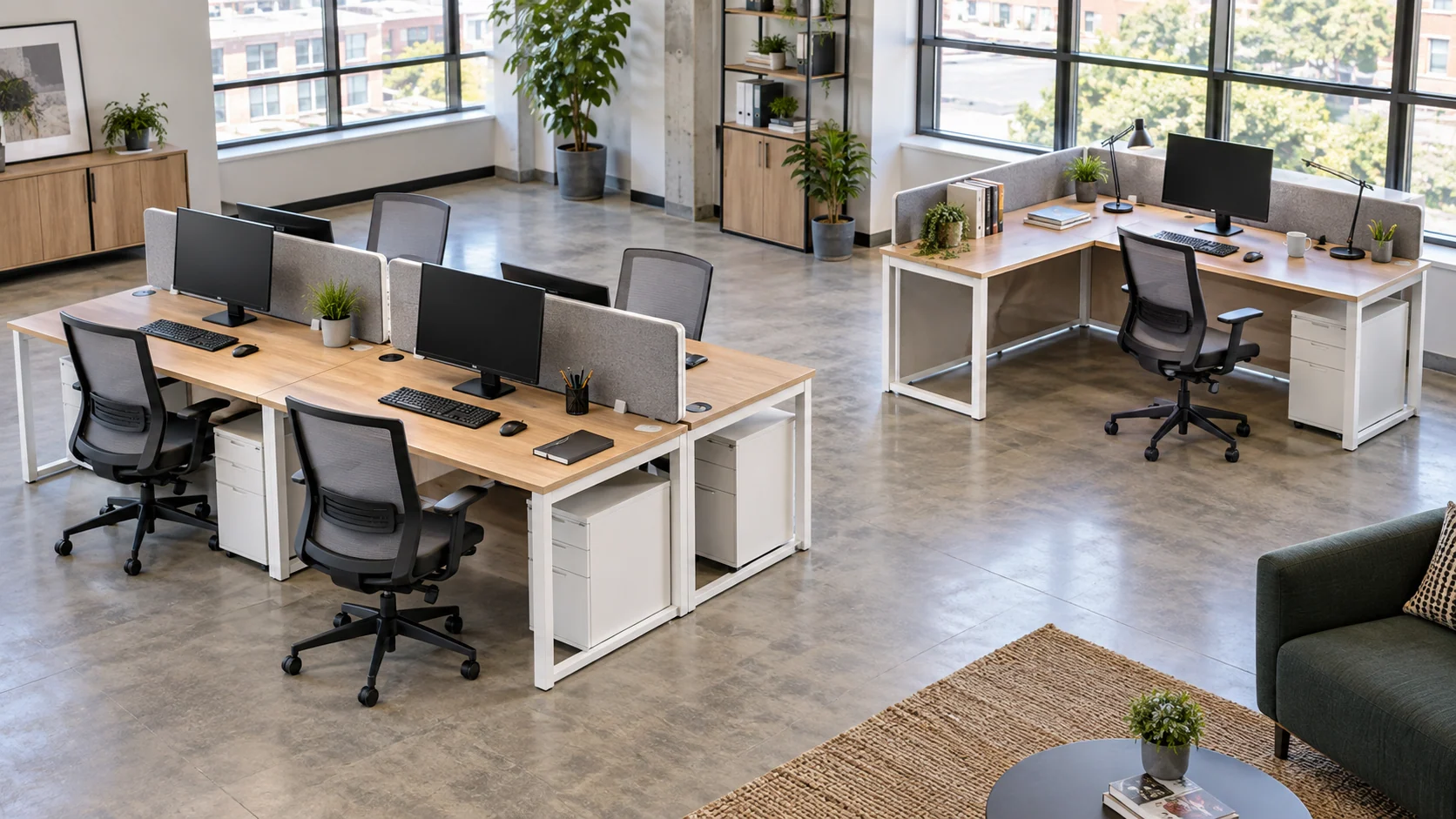
In this illustrative office, six people mainly use screens while two regularly handle physical samples. One option is a bench for the six positions and corner desks for the sample work. Test that against eight corner desks and against a bench with a separate shared project table. The best answer depends on how often the samples are used and whether they need to stay set out, not on a universal desk hierarchy.
Practical example
Equip the roles, not just the headcount
Illustrative brief: eight people need workstations, but only two regularly spread out large drawings.
| Check | Option or calculation | What it tells you |
|---|---|---|
| Screen-focused roles | Six positions can be assessed as a bench group | Six returns may provide unnecessary extra surface |
| Drawing-based roles | Check whether the straight top is sufficient | Two corner desks may serve the extra task |
| A mixed option | Six bench positions | Two properly oriented corner positions |
Compare that mixed plan with eight corner desks and with eight bench positions. Include the same chairs and circulation assumptions each time. The useful result is the arrangement that supports the work without turning unused surface into an obstacle.
Do not try to create a corner desk by attaching an unrelated return to a bench frame. A matching finish does not establish structural compatibility. Keep the systems complete and let the visual scheme, rather than improvised connections, bring the room together.
Side by side
Bench desks vs corner desks
| Decision | Bench desks | Corner desks |
|---|---|---|
| Primary advantage | Coordinated group layout | Additional or differently shaped personal surface |
| Floor planning | Repeated straight positions | Handedness and return shape need checking |
| Team changes | Check modularity and spare end components | Check whether returns can move or reverse |
| Equipment | Often organised along shared routes | Can separate screen work from a secondary task |
| Storage | Shared and desk-side storage need coordination | A return may compete with pedestal or leg space |
| Used batch | Verify full system component quantities | Verify matching sizes and orientations |
Know what is being compared
Bench desks
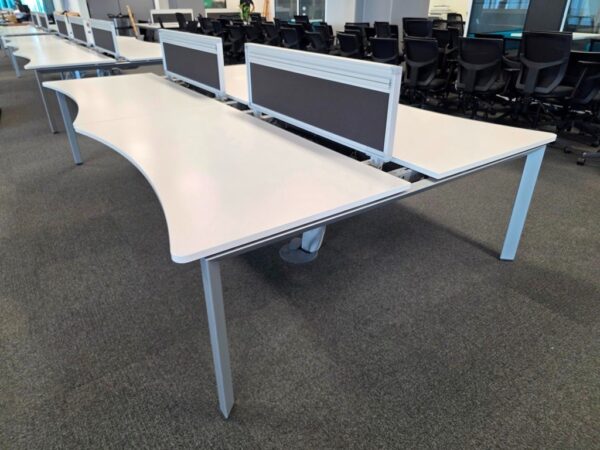
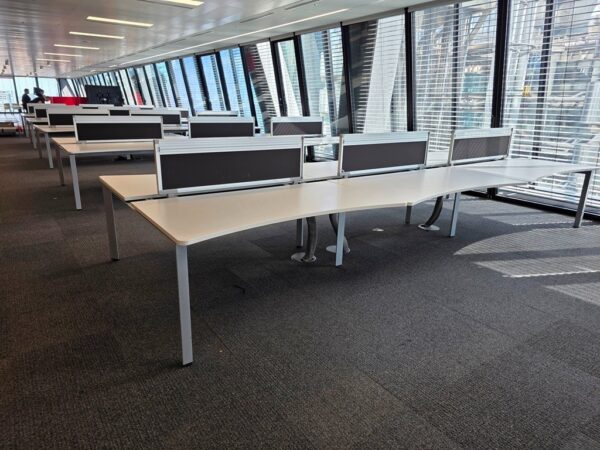
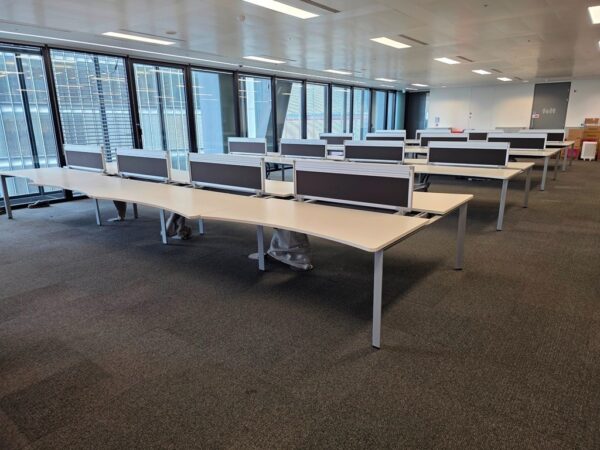
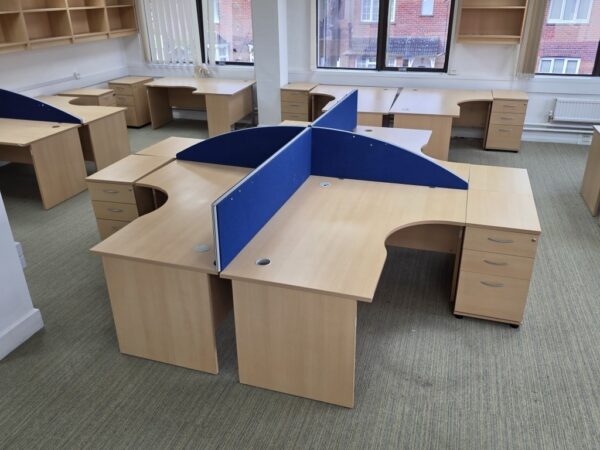
A bench desk arrangement groups workstations into rows or islands, often with shared components and cable routes. The amount of independent adjustment varies by system.
Corner desks
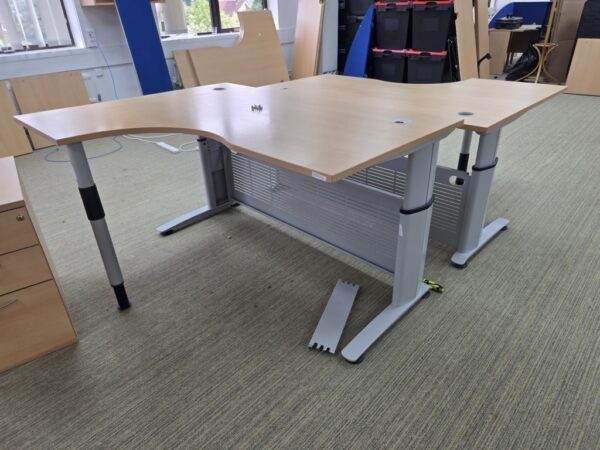
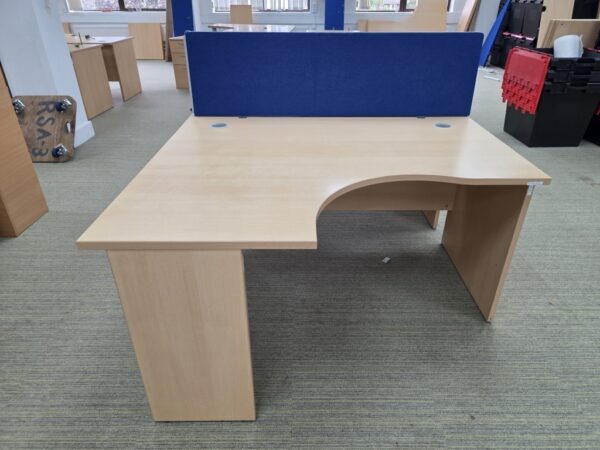
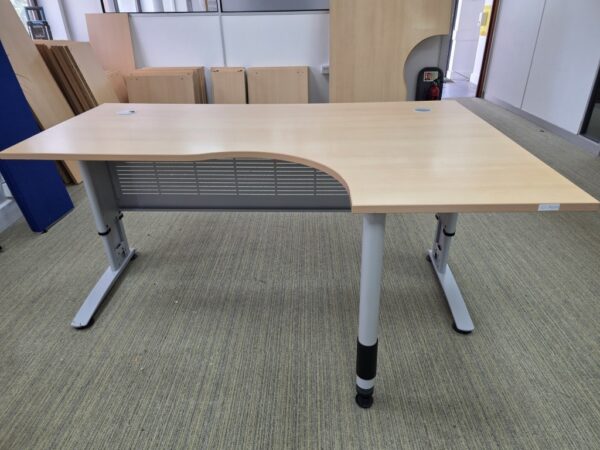
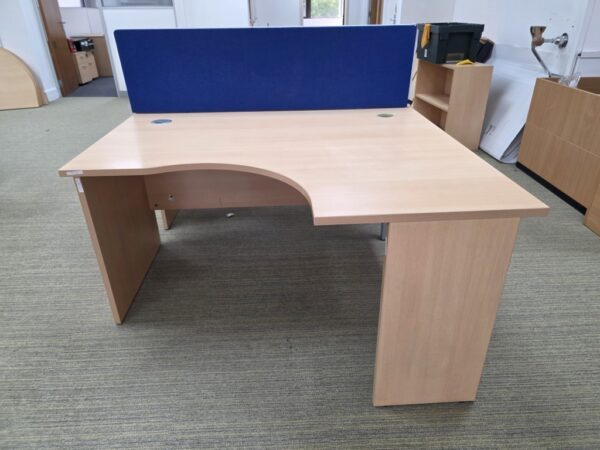
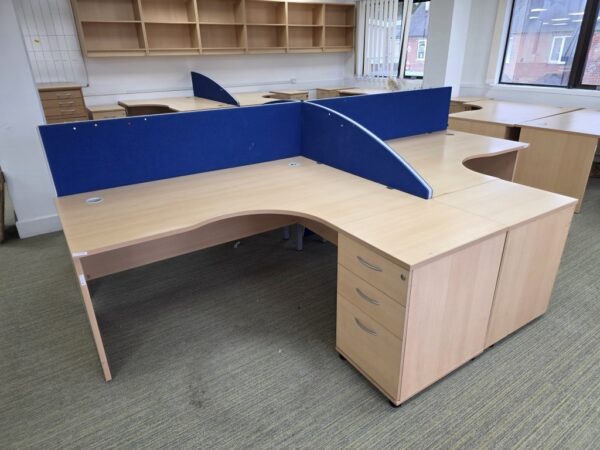
A corner desk uses an L-shaped, angled or other shaped working area. It may sit in a room corner, but the name does not require wall placement or a single universal shape.
The details that change the decision
Do not give every role the same desk by default
A mostly screen-based role may need a different surface from a role that regularly spreads out drawings, samples or paperwork. Start with those tasks. A corner return earns its space when it supports a repeated activity, not merely because it looks more substantial.
Likewise, a bench is not only a budget option. A well-planned shared layout may make sense for a team that needs consistent positions, predictable cable routes and a coherent use of the room. The decision should follow the workflow.
Compare working footprints, not desktop area alone
A corner desk may provide more surface but also change how a person enters and leaves the workstation. Include the chair, the return and any neighbouring storage. Check whether opposite-handed desks form useful pairs or create a bottleneck.
With benches, consider the entire island. A compact furniture footprint can still produce a busy route at the ends where everyone passes. Storage and printers may draw people through a working area that looked quiet on the initial plan.
A mixed layout can be the better answer
You do not have to choose one type for the whole office. A group bench and a small number of task-specific corner positions can share finishes and heights without sharing the same outline. That may be more useful than forcing every workstation into a uniform shape.
Before buying used stock, check whether the available quantities support the plan. Similar-looking corner desks can have different return dimensions, and a bench advertised by the number of tops may not include every component needed for your chosen arrangement.
Before ordering
Five checks worth doing
- 01List the equipment and working materials for each role.
- 02Draw chairs, entry routes and storage openings on every option.
- 03Confirm corner-desk handedness from the seated position.
- 04Check bench splitting options and available replacement components.
- 05Compare complete delivered layouts with the same accessories included.
Clear answers
Frequently asked questions
Do corner desks have to sit in a corner?
No. Many can be used in open layouts, provided their shape, back panels and access work in that position.
Are benches only for open-plan offices?
No. Small bench arrangements can also fit separate team rooms. The room dimensions and working requirements decide suitability.
Can I mix bench and corner desks?
Yes. Matching finishes and a clear layout can keep the office coherent while supporting different tasks.
Ready to compare real options?
Take the brief to current stock.
Compare the dimensions and components of current office desks against your room plan. Condition, quantity, price and delivery can change, so verify the current listing and order details.