Comparison guide · Buying decisions · 05
Matching vs mixed office furniture: consistency without replacing everything
An office can look considered without every piece coming from the same range. It can also feel untidy even when the desks match, if heights, storage and equipment have been added without a plan.
Get the short answerShort answer
Matching furniture is useful when visual consistency, repeated layouts or simple procurement matter. Mixed furniture can work well when you retain good existing pieces, accommodate different tasks or buy in phases. Keep a few clear design and functional rules so the mix looks deliberate and still works.
Choose on purpose
Which option fits which situation?
Choose matching batches when a repeated layout and consistent appearance simplify the project without compromising individual needs.
Choose a planned mix when it retains suitable furniture or accommodates different tasks, with clear rules for colours and placement.
Put it in a real room
A growing team with two good furniture batches
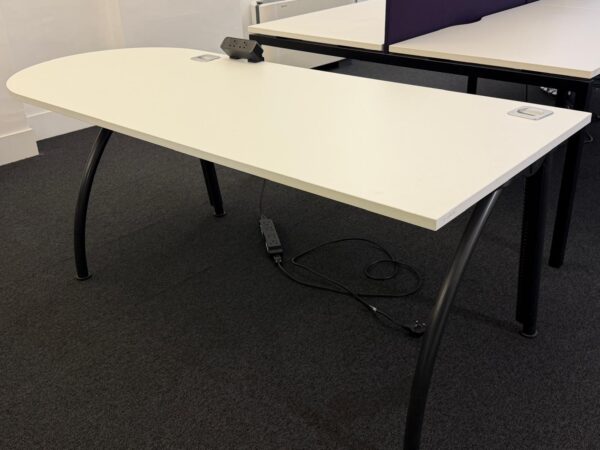
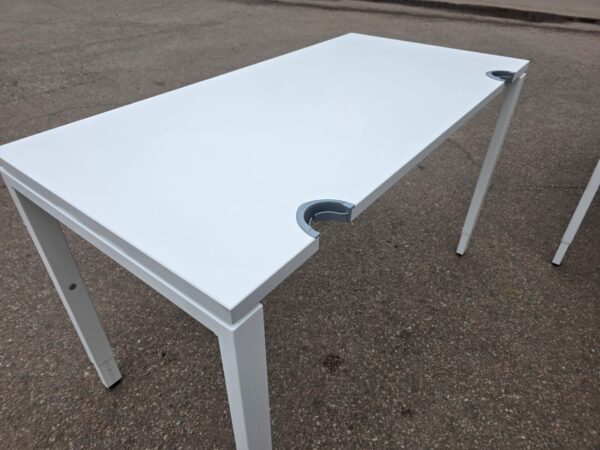
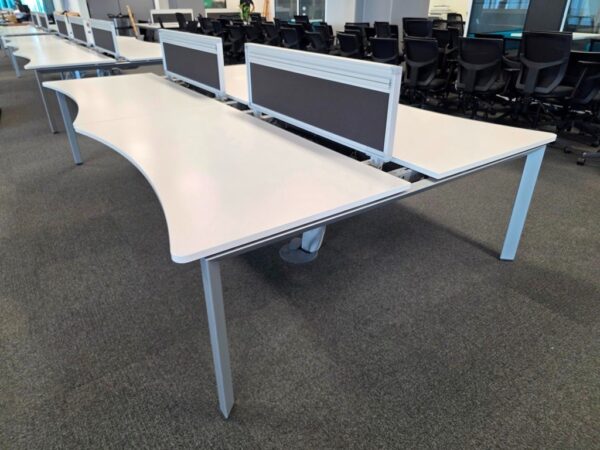
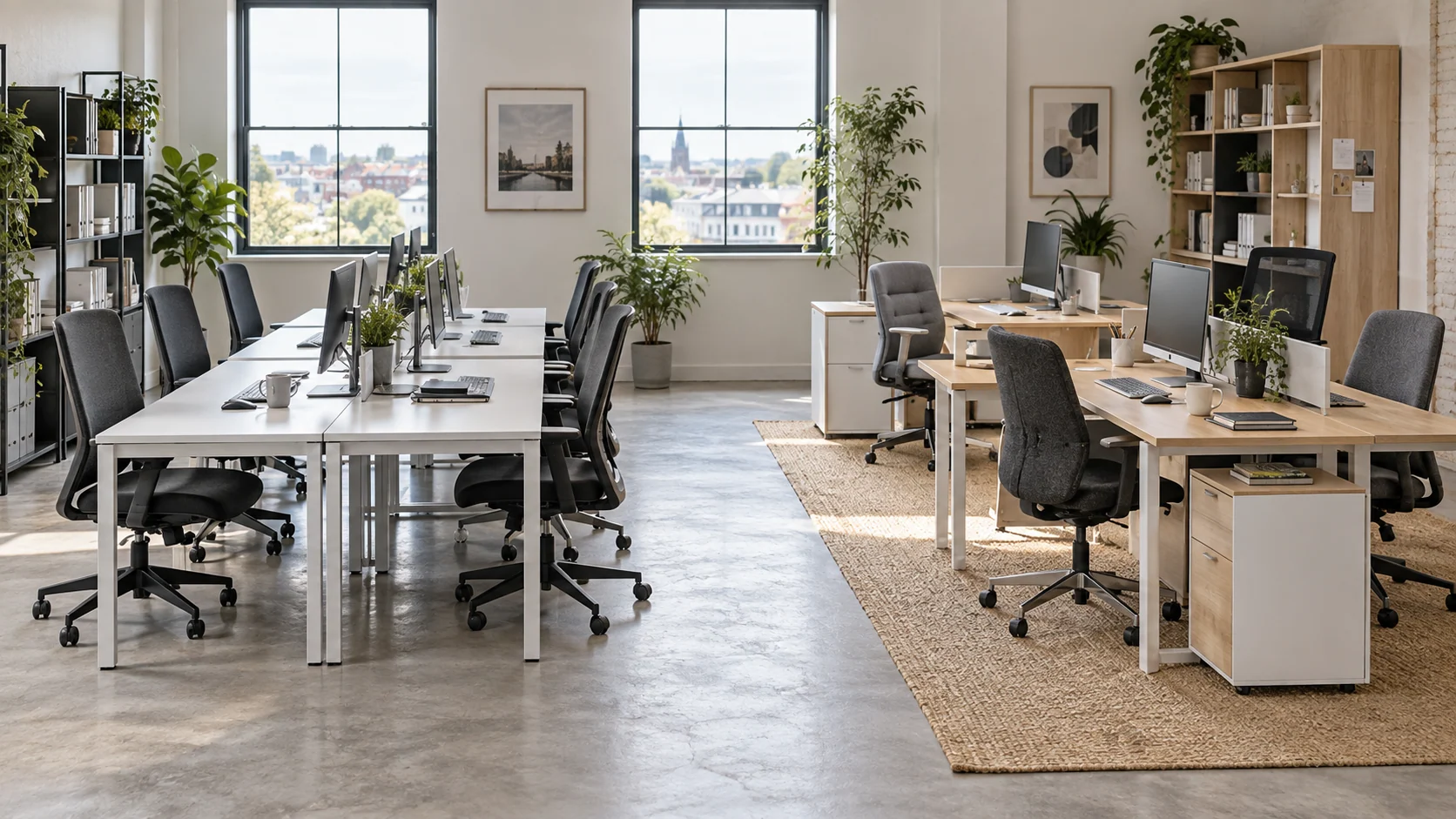
One department already has white desks with black frames; another has oak-effect tops. Rather than scattering both randomly, keep each finish within a defined work zone and use a consistent storage colour between them. Then check chair fit, desk heights and circulation. The visual plan makes sense because the furniture is grouped with a purpose, not because every piece is identical.
Know what is being compared
Matching office furniture
Matching furniture uses the same range or closely aligned finish and design across a group. Confirm what matches: colour alone does not establish identical dimensions or components.
Mixed office furniture
Mixed furniture combines different ranges, finishes or types. It can be planned around shared colours, proportions or work zones rather than assembled without a brief.
The details that change the decision
Match the room’s logic before matching every product
Choose a few things to keep consistent: perhaps desk-top finish, frame colour and storage height along a wall. These rules can make different products read as one scheme without requiring an exact match everywhere.
Use task differences intentionally. A reception area, a focused desk zone and a project space do not have to contain the same furniture. A change of finish can help distinguish those areas, provided it does not look like an unexplained leftover.
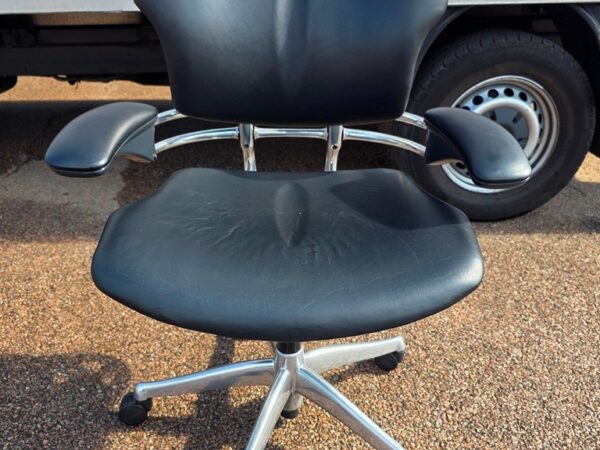
Function takes priority within the scheme. Different people may need different chairs or workstation arrangements. A visually uniform office is not successful if it only works for the person who chose the furniture.
A finish name is not a colour sample
Two suppliers can use the same finish name for visibly different colours or textures. Lighting, age and wear can widen that difference. When an exact match matters, compare samples or photographs taken together under similar conditions.
For used batches, confirm whether all pieces belong to the same range and whether there are variations in height, edging, handles or condition. Ask for representative images of the batch, including any exceptions, rather than relying on one especially tidy item.
Sometimes a clear contrast looks better than an almost-match. A neutral new storage unit beside an older timber desk can feel deliberate, while two slightly different timber finishes placed edge-to-edge may make the difference more noticeable.
Keep compatibility separate from appearance
Furniture that looks similar may use different fixing systems, frame dimensions or accessory mounts. Do not combine desk supports, screens, pedestals or linking parts without confirming compatibility. A visual match is not a structural specification.
For a phased project, keep a record of product details, dimensions, finish references and photographs. This gives the next buyer a useful starting point even if the original range is no longer available.
Compare the cost of replacing everything with the cost of keeping suitable items and adding a coherent second range. A mixed plan may reduce waste and expenditure, but only if the retained furniture still meets the job. Do not keep an unsuitable chair simply because it saves a purchase today.
Practical example
Keep the good desks and give the addition a place
Illustrative plan: six existing white desks remain suitable and a team needs four more workstations.
| Check | Option or calculation | What it tells you |
|---|---|---|
| Exact-match approach | Find four genuinely matching desks | Check dimensions, finish and components |
| Planned contrast | Add four desks as a coherent second zone | Repeat a frame or storage colour |
| Unplanned mix | Scatter near-matching finishes randomly | Differences become harder to explain visually |
A deliberate contrast can be easier to maintain than an almost-match. Grouping the new workstations gives the second finish a purpose, while common storage or screen colours can connect the room. Check real samples or representative batch photographs in similar light.
Record each range, size and finish after purchase. That helps the next person add furniture without guessing from a photograph. Keep the visual record separate from component compatibility: a screen clamp, desk leg or joining bracket must suit the actual system even when its colour matches.
Side by side
Matching vs mixed office furniture
| Decision | Matching office furniture | Mixed office furniture |
|---|---|---|
| Appearance | A repeated finish and form are easier to establish | Needs a small set of clear visual rules |
| User requirements | Avoid forcing one chair or desk onto every task | Can accommodate different working needs |
| Existing furniture | May encourage replacing non-matching items | Can retain suitable pieces deliberately |
| Phased buying | Check future availability of the range | Allows complementary additions |
| Used stock | Matching batches need quantity and condition checks | Different batches can be combined thoughtfully |
| Compatibility | Still check fixings and dimensions | Do not assume parts from different systems connect |
Before ordering
Five checks worth doing
- 01Choose two or three visual rules for the whole room.
- 02Retain furniture only where condition and function remain suitable.
- 03Compare real finishes and record batch variations.
- 04Verify component compatibility separately from appearance.
- 05Keep dimensions and product references for future additions.
Clear answers
Frequently asked questions
Does mixed office furniture look unprofessional?
Not when the mix is planned. Consistent colours, proportions or work zones can create a coherent result.
Should every employee have the same chair?
Not necessarily. Individual fit and task requirements can justify different chairs within the same office.
Can I expect to find the exact same used range later?
Do not rely on it. Record the details, check current availability and have a complementary alternative for future additions.
Ready to compare real options?
Take the brief to current stock.
Compare the actual items, quantities and order details against a consistent buying brief. Condition, quantity, price and delivery can change, so verify the current listing and order details.