Comparison guide · Buying decisions · 02
Used vs refurbished office furniture: ask what has actually been done
Two chairs can be advertised with different condition labels and have received almost the same preparation. Another pair can look identical while one has had substantial repairs. The label is the start of the conversation, not the evidence.
Get the short answerShort answer
Used describes a furniture item’s previous use. Refurbished generally signals that work has been done to improve or restore it, but the scope varies. Ask for an item-specific account of cleaning, repairs, replacement parts and checks, then compare the condition and written support offered.
Choose on purpose
Which option fits which situation?
Choose a well-described used item when its existing condition is suitable and there is no need to pay for work it does not require.
Choose a refurbished item when documented repairs or improvements answer a real need and justify the complete price.
A practical route to a decision
Record the room, route and working clearances.
List what the users and the task actually require.
Compare the condition and completeness of the real options.
Put it in a real room
Two chairs, one price and very different descriptions
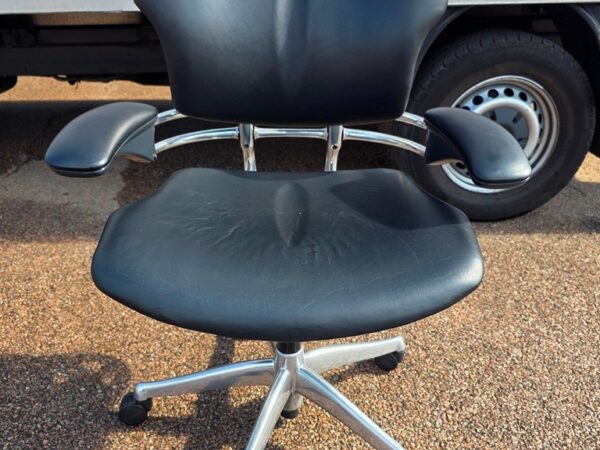
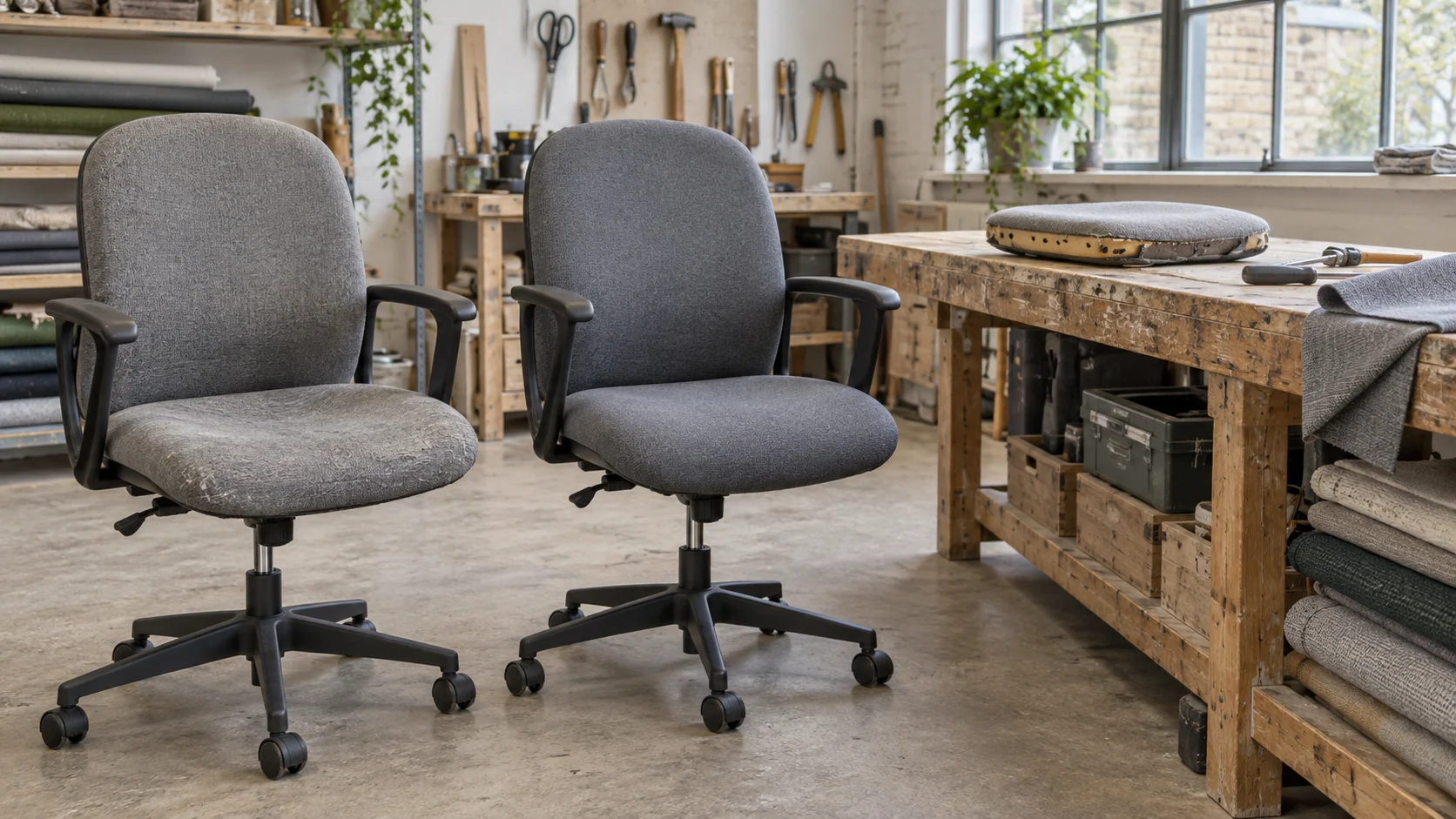
Chair A is described as used, with working adjustments and visible wear shown clearly. Chair B is described as refurbished, but no work is listed. Neither description is enough to choose a winner. Ask what was checked or replaced, try the fit and compare support. If Chair B has only been cleaned, the refurbishment label may add little useful information.
Practical example
What a useful refurbishment record would say
Illustrative comparison of descriptions—not a claim about work performed by My Used Furniture.
| Check | Option or calculation | What it tells you |
|---|---|---|
| “Cleaned” | Names the cleaning undertaken | Does not establish that worn parts were replaced |
| “Reupholstered” | Identifies the replaced cover or padding | Does not establish that the lift or tilt was rebuilt |
| “Repaired and checked” | Names the fault, parts and checks | Can be compared with the item’s current condition |
A useful record could identify an item or batch, the date, the original fault, the work completed and the components that remain unchanged. It should also say whether the description applies to every piece. That makes it easier to compare two suppliers using different condition labels.
Ask for this information before paying a refurbishment premium. A desk with a replaced top might solve a cosmetic problem while leaving a damaged frame unresolved. Conversely, a sound used desk may need no refurbishment at all. Buy the documented condition, not the most impressive label.
Side by side
Used vs refurbished office furniture
| Decision | Used office furniture | Refurbished office furniture |
|---|---|---|
| What the label tells you | There has been previous ownership or use | Some improvement or restoration work is claimed |
| What remains unknown | Condition and preparation unless described | Exactly what was done and what remains original |
| Useful evidence | Current photographs and condition report | Work record, parts details and current photographs |
| Appearance | Can range from excellent to heavily worn | Can improve, but cosmetic work is not a full rebuild |
| Function | Needs checking on the actual item | Also needs checking after the work |
| Support | Depends on the seller and order | Do not infer warranty length from the label |
Know what is being compared
Used office furniture
Used or second-hand furniture has had a previous owner or period of use. It may be sold as found, cleaned, checked or repaired; the word alone does not tell you which.
Refurbished office furniture
Refurbished furniture has undergone work described by the seller as refurbishment. That might include repair, reupholstery, refinishing or component replacement. Confirm the actual scope rather than assuming a standard package.
The details that change the decision
Cleaning, repair and refurbishment are different jobs
Cleaning removes dirt; it does not by itself renew a worn mechanism. A repair addresses a fault. Refurbishment can combine several types of work, but a broad description may conceal a very limited intervention. Ask the seller to separate those tasks.
For a chair, useful detail could include whether the upholstery was cleaned or replaced, which moving parts were checked and whether any components were renewed. For a desk, ask about top condition, edging, frame connections and replacement fixings.
A seller who can describe the actual work gives you something to compare. “Like new” is less useful unless it is supported by a clear condition description and photographs of the items or representative batch you will receive.
New upholstery does not tell the whole chair story
A chair can look fresh after reupholstery while retaining its original mechanism, castors and adjustment controls. That is not necessarily a problem, provided those components remain suitable and work correctly. It does mean the fabric should not be treated as evidence of a complete rebuild.
Ask whether replacement parts are original or compatible alternatives and whether the supplier can explain their suitability. Where product documentation or workplace requirements matter, confirm how alterations affect the information available for that item.
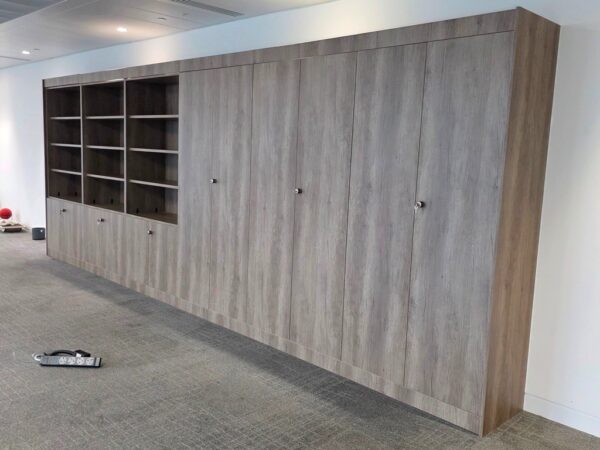
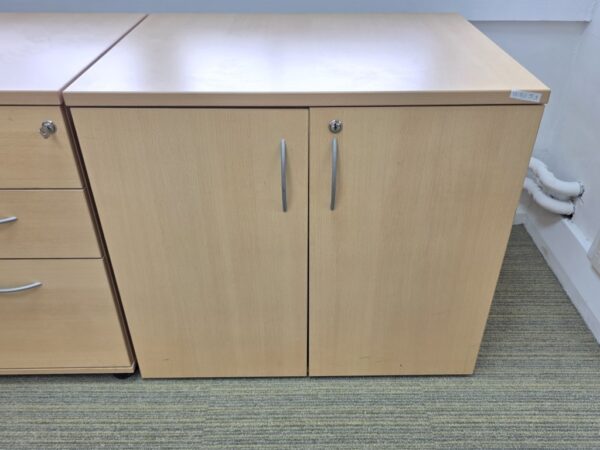
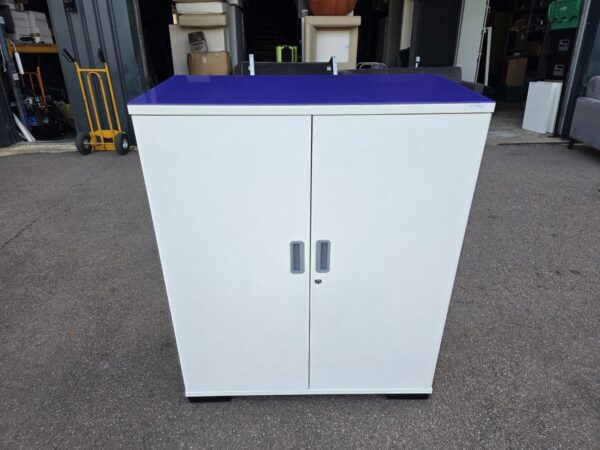
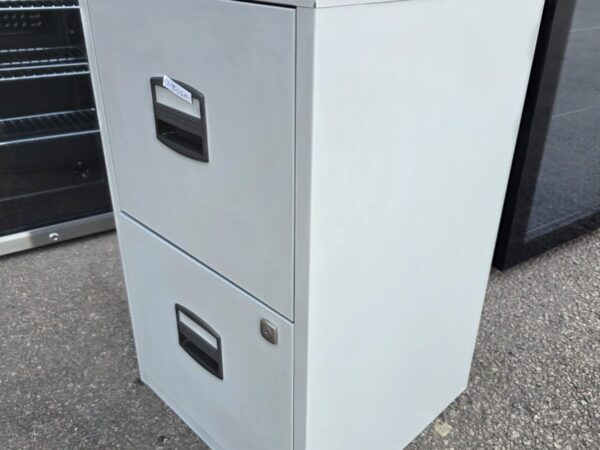
For storage, the equivalent questions concern keys, locks, hinges, runners, shelves and filing fittings. A newly painted cupboard can still be incomplete inside. Inspect what enables the furniture to perform its job as carefully as the visible finish.
Choose between the actual offers, not a hierarchy of words
A well-kept used desk needing no repair may be a better fit than a refurbished desk in the wrong size. A refurbished chair with documented work may justify a higher price than an untested example of the same model. The useful comparison is specific.
Request the condition, work undertaken, included parts and support terms on the quotation or order record. If several pieces are involved, ask whether the description applies to every item or whether there are grades within the batch.
Keep that information with the furniture inventory. It helps colleagues understand what was bought, supports maintenance and makes a later sale or internal move easier. Do not assume a label in a listing will remain available after the order is complete.
Before ordering
Five checks worth doing
- 01Ask for the exact preparation and repair work completed.
- 02Separate cosmetic changes from mechanical work.
- 03Confirm replacement-part details and included accessories.
- 04Inspect current condition, not only catalogue photographs.
- 05Keep the written condition and support terms with the order.
Clear answers
Frequently asked questions
Does refurbished mean as good as new?
Not automatically. The work may be limited, and some components may retain previous wear. Ask what the seller means for the specific item.
Can used furniture be cleaned and checked without being called refurbished?
Yes. Sellers use descriptions differently, which is why the preparation details matter.
Is refurbished furniture always more expensive?
No fixed rule applies. Compare the actual item, work undertaken, condition and support rather than the category alone.
Ready to compare real options?
Take the brief to current stock.
Compare the actual items, quantities and order details against a consistent buying brief. Condition, quantity, price and delivery can change, so verify the current listing and order details.