Comparison guide · Office chairs & seating · 06
Office stools vs draughtsman chairs: a quick perch or a supported workstation?
Stool can mean a low occasional seat, a high project seat or a sit-stand perch. Those are not interchangeable. Establish the job first, then compare the specific furniture.
Get the short answerShort answer
An office stool may suit short, flexible or task-specific use when its design fits the setting. A draughtsman chair typically provides a backrest and higher working position for a raised workstation. Neither category is a substitute for checking fit, support and intended use.
Choose on purpose
Which option fits which situation?
Choose a stool for a defined task when that particular low, high, saddle or perch design suits the movement involved.
Choose a draughtsman chair when a raised workstation needs a supported seated position with the appropriate controls and foot support.
A practical route to a decision
Record the room, route and working clearances.
List what the users and the task actually require.
Compare the condition and completeness of the real options.
Put it in a real room
A project table becomes a daily workstation
A high table originally used for brief discussions may start being used for regular screen work. That change should trigger a review of the setup, not just a purchase of taller stools. Consider the work surface, seating, equipment and users together. A draughtsman chair may be one option, but so might a different table height or a separate conventional workstation.
Practical example
Start by identifying which stool is being offered
These are different furniture designs, not interchangeable versions of one product.
| Check | Option or calculation | What it tells you |
|---|---|---|
| Backless stool | Check seat height and intended task | Do not assume it replaces a supported desk chair |
| Perching seat | Check intended posture and operating range | A leaning position differs from ordinary sitting |
| Raised task chair | Check back, base, lift and foot support | Match the complete configuration to the workstation |
A quick sorting task, a reception shift and extended computer work create different requirements. Write down whether the person sits, perches, turns or regularly gets up. This makes the comparison more useful than selecting the highest-looking seat.
Before buying a batch, check one complete example in the intended setting where possible. Consider the floor and how the seat moves during entry and exit. A photograph of a foot ring or backrest is not a demonstration that the arrangement works for the users.
Side by side
Office stools vs draughtsman chairs
| Decision | Office stools | Draughtsman chairs |
|---|---|---|
| Category breadth | Many different seat and perch designs | More specifically raised workstation seating |
| Backrest | May be absent or minimal | Usually present |
| Height | Low, high or adjustable variants | Typically a higher adjustment range |
| Foot support | Varies with stool design | Commonly a ring or similar provision |
| Task | Check the intended short or specialised use | Check suitability for the raised workstation |
| Main risk in buying | Assuming all stools serve the same purpose | Assuming extra height guarantees fit |
Know what is being compared
Office stools
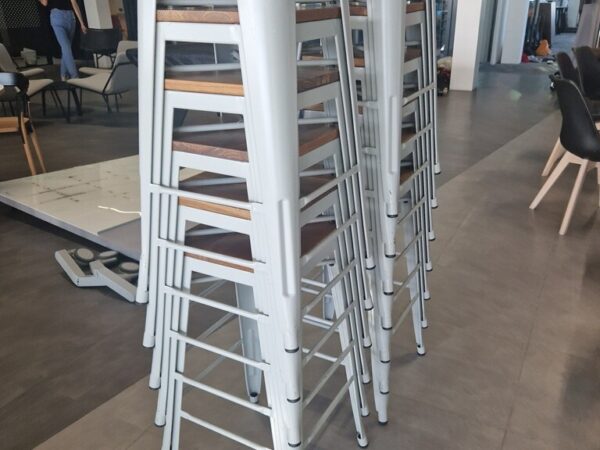
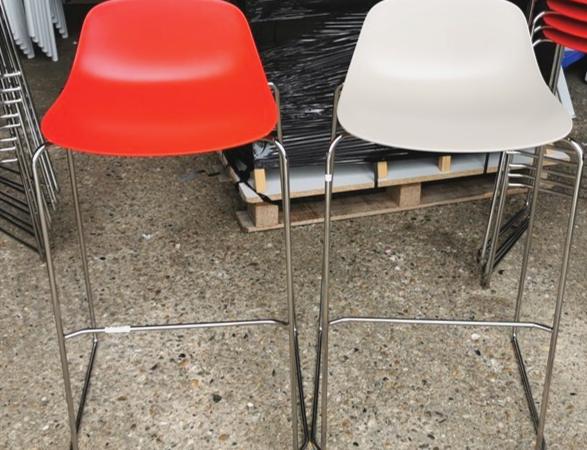
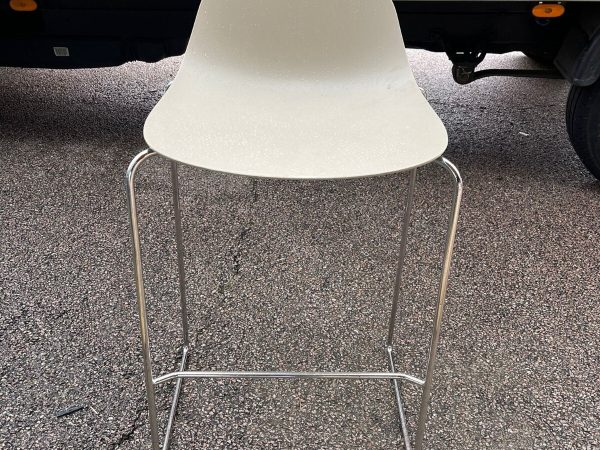
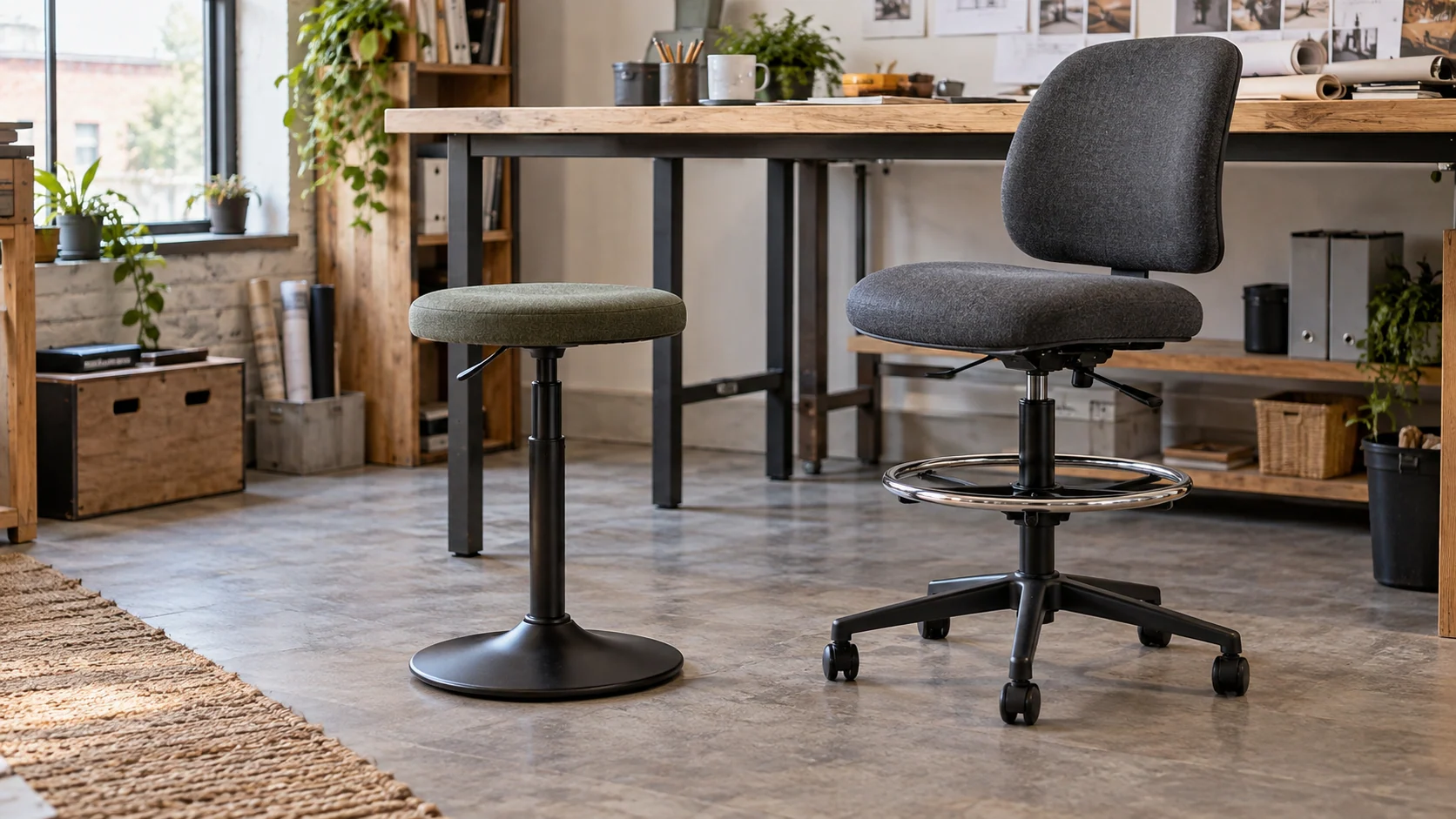
Office stools include several designs: backless seats, high stools, saddle-style seats and leaning or perching models. Their height ranges and purposes can be very different.
Draughtsman chairs
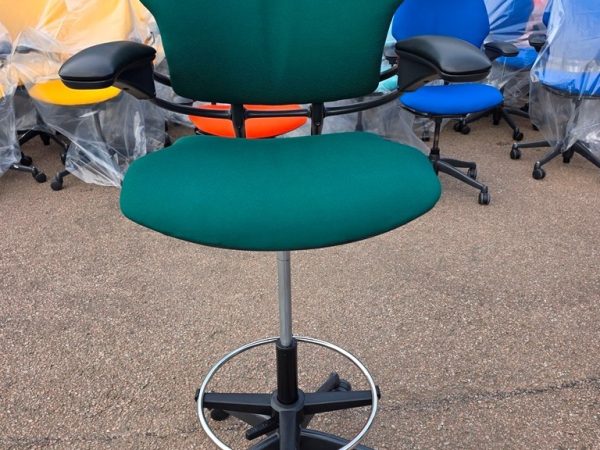
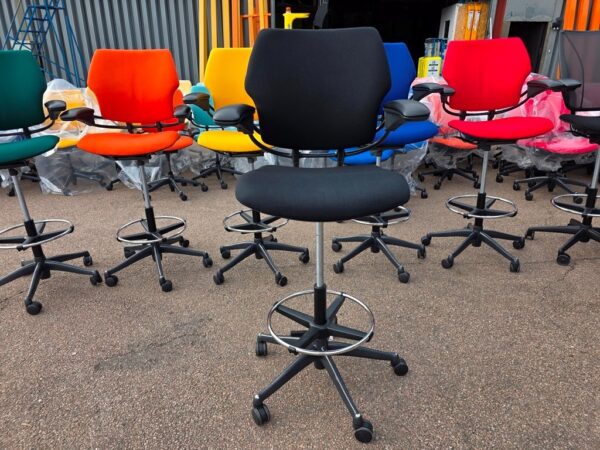
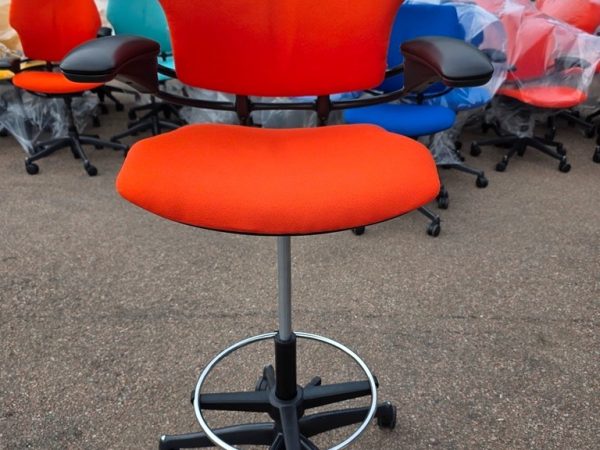
Draughtsman chairs typically provide a raised adjustable seat, backrest and foot-support provision. The actual model determines the range, base and adjustment options.
The details that change the decision
Short use and desk work are different briefs
A stool used during a quick team huddle has a different role from seating used for sustained work at a high counter. The same product may not be appropriate for both. Describe the task, equipment and likely working pattern to the supplier.
A backless design can allow an open approach to a surface, but it does not provide the same features as a chair with an adjustable backrest. Avoid treating minimal appearance as proof of either better movement or better support.
The base determines how the seat behaves
Some stools are intentionally designed to rock, tilt or allow a leaning posture. Others are intended to remain still. Those differences matter in a workplace with cables, shared tables or people moving around the seating. Confirm the intended movement rather than discovering it after delivery.
For raised seating, consider access and foot support as part of the whole arrangement. Check the floor and manufacturer’s instructions. A product that looks similar to another may use a very different base, lift or stability arrangement.
Used seating needs more than a surface clean
Inspect the mechanism, base connections and seat attachment. On a draughtsman chair, check the backrest and foot ring as well as the lift. On a stool, check any tilt or return mechanism and whether the base sits as intended.
Ask for the exact model and whether parts have been changed. A replacement gas lift or improvised foot ring should not be accepted simply because it fits physically. The supplier should be able to confirm the chair or stool is in a supported configuration.
Before ordering
Five checks worth doing
- 01Identify whether the product is a stool, perch or raised work chair.
- 02Confirm its intended task and height range.
- 03Check back support and foot-support provision.
- 04Test any movement mechanism and inspect the base.
- 05Confirm manufacturer-supported parts and clear operating instructions.
Clear answers
Frequently asked questions
Is a stool suitable for a full working day?
Do not infer that from the name. Suitability depends on the specific product, user and task, and may require a workstation assessment.
Can I use a draughtsman chair at a project table?
Potentially, if the height, clearance and intended use match. Check the actual table and chair specifications.
Are all office stools height-adjustable?
No. Some are fixed-height; others adjust or support a particular leaning position. Check the model.
Useful source material
Ready to compare real options?
Take the brief to current stock.
Check the fit, fitted adjustments and condition of the seating currently listed. Condition, quantity, price and delivery can change, so verify the current listing and order details.