



Fit before features
Stop Shopping for “an Office Chair”
Shop for a chair for this person, doing this job, at this surface.
That sentence removes most of the noise. An adjustable operator chair, a high draughtsman chair, a stackable meeting chair and a reception tub chair may all appear under office seating, but they solve different problems.
!
Colour, brand and finish are legitimate requirements—especially when the chair will shape a client-facing room or a carefully designed office. Keep those preferences, but test them alongside sitting time, user fit, working height and functioning controls.
Someone works here most of the day
Begin with an adjustable operator chair and test it at the workstation.
See operator chairs →The surface is higher than a normal desk
Begin with a draughtsman chair and check its working-height range and foot ring.
See draughtsman chairs →People sit, talk, then leave
Start with meeting or visitor chairs, depending on the table and room.
See meeting chairs →The space is informal or shared
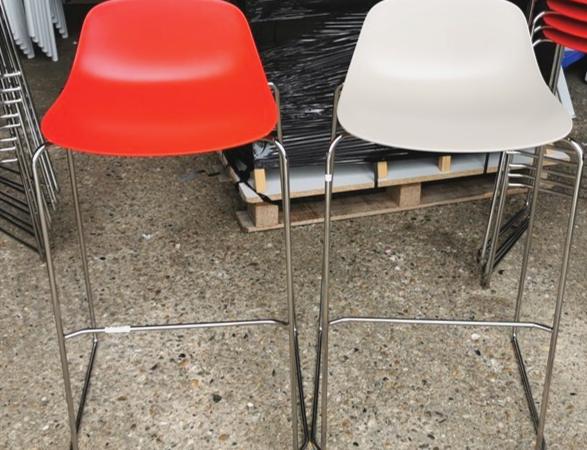
Consider stools, sofas or booths—and be honest about how long people will stay.
See informal seating →Live stock, not invented recommendations
See What Is Available Now
The products below are pulled from the main Office Chairs & Seating category. Stock, quantities and prices can change, so the guide teaches you how to judge what appears rather than pretending one model will always be available.
A faster test than reading fifty specifications
The 90-Second Used Office Chair Test
Sit first. Adjust second. Judge third.
A photograph can show fabric and shape. It cannot tell you whether the seat edge presses behind your knees, whether the gas lift slowly sinks or whether the arms stop you reaching the desk.
Sit all the way back
If you perch on the front, you cannot judge seat depth or back support. With your back against the backrest, look for thigh support without pressure behind the knees.
Find working height
Raise or lower the chair until you can approach the work surface with relaxed shoulders. If the desk forces the chair too high for your feet, the workstation may also need a footrest or another change.
Move every control
Do not count levers; use them. Each control should move something understandable, travel smoothly and hold the position it claims to set.
Bring the chair to the desk
Check whether the arms, seat or base stop you moving close enough. A chair can feel fine in open space and fail the moment it meets a fixed-height desk.
Lean, turn and sit still
Recline normally, swivel and remain seated at one height. Notice instability, sinking, grinding, unexpected movement or pressure that appears after the first few seconds.
Reset it without help
For shared desks, another user should be able to understand and reset the chair. Controls that nobody can find are features the team may never use.
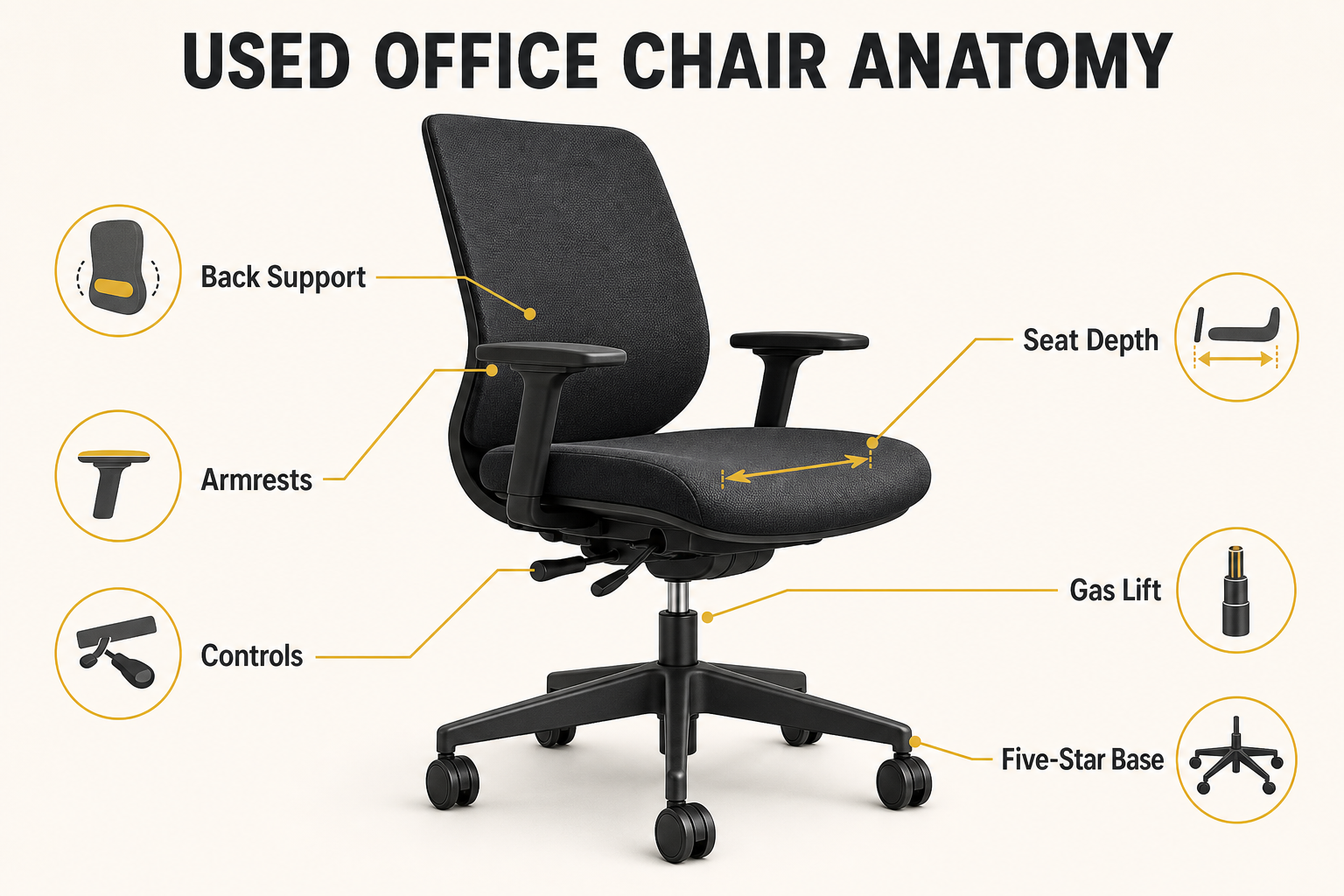
Seat pan
Depth, width, front-edge shape and foam condition decide how the thighs are supported.
Backrest
Shape matters, but so do height, tilt, tension and where any lumbar contour actually lands.
Armrests
Useful when positioned well; obstructive when they lift the shoulders or hit the desk edge.
Mechanism and gas lift
These carry the chair's movement. Test function and hold—not just whether a lever is present.
Base and castors
Five matching contact points should feel secure and suit the floor and movement required.
Foot ring
On a draughtsman chair, the ring is functional support—not decoration. Check its position and security.
The official check is bigger than the chair
HSE's DSE posture guidance shows lower-back support, supported thighs and clearance behind the knees. For workers using DSE daily for continuous periods of an hour or more, HSE says employers must assess the whole workstation, including furniture, equipment, work conditions, the job and individual requirements.
The control-panel myth
More Knobs Do Not Automatically Mean More Fit
“A useful adjustment is one that reaches the user, changes the chair in the right direction and still locks where it should.”
A simpler chair within the right range can beat a premium chair whose seat is too deep, arms are too wide or controls no longer hold.
Read the feeling, then check the feature
If the Chair Feels Wrong, What Might Be Happening?
| What you notice | A possible mismatch | What to check first |
|---|---|---|
| Pressure behind the knees | The seat may be too deep, too high or have a hard front edge. | Sit fully back; check seat depth, height and whether a seat slide changes the fit. |
| Shoulders feel lifted | The chair may be too low for the desk or the armrests may be too high. | Set working height first, then lower or move the arms if the model allows. |
| You keep leaning forward | The backrest may not meet you, the seat may be too deep or the screen may be too far away. | Check the whole workstation before blaming the backrest alone. |
| The chair will not approach the desk | Fixed arms, a wide seat or desk furniture may be blocking it. | Measure arm height, desk clearance, pedestal position and legroom. |
| You feel pushed forward | A headrest, lumbar pad or seat angle may be too prominent for this user. | Reduce or reposition adjustable support; if it cannot be changed, the model may not fit. |
| The chair sinks during use | The gas lift may not be holding the selected height. | Set a height, stay seated and recheck it after a few minutes. |
Mechanism decoder
What the Main Adjustments Should Change
| Adjustment | Its real job | Used-chair red flag |
|---|---|---|
| Seat height | Places the user in relation to the work surface and floor support. | The chair drops, sticks, or will not hold one height. |
| Seat slide | Changes usable seat depth without moving the backrest. | The seat has excessive play or the slider will not lock. |
| Back height or lumbar | Changes where support meets the lower back. | A ratchet slips or a pad creates a hard, unavoidable pressure point. |
| Recline and tension | Controls movement away from upright and the force needed to move. | The chair drops backward, grinds or ignores its lock. |
| Adjustable arms | Support the arms while allowing the chair to approach the desk. | The arms are loose, mismatched or cannot move out of the desk's way. |
| Draughtsman foot ring | Supports the feet when the seat is raised above normal desk-chair height. | The ring rotates, slips or sits outside a useful range. |
Categories make more sense inside rooms
Choose the Chair by Situation
The room tells you what the category label leaves out.
Duration, table clearance, movement, cleaning and the kind of conversation taking place all change what “suitable seating” means.
When someone returns to the same desk every day
Operator Chairs Earn Their Place Through Adjustment
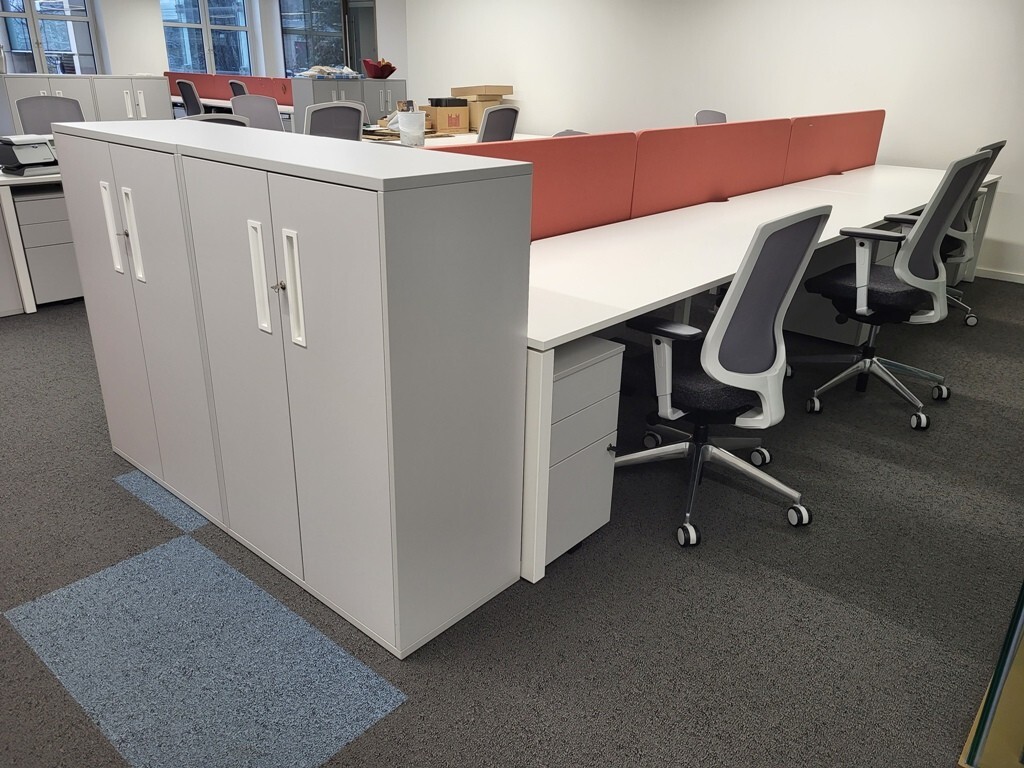
This is the everyday workstation category: swivelling chairs with a five-star base and controls intended to help the user meet the desk. Do not buy them by silhouette. Two similar-looking chairs can have very different seat depths, arm packages and mechanisms.
Look hardest at: the adjustment range, gas-lift hold, seat and back dimensions, desk clearance and how easily the user understands the controls.
When normal chair height cannot reach the work
Draughtsman Chairs Solve Height—and Create New Questions
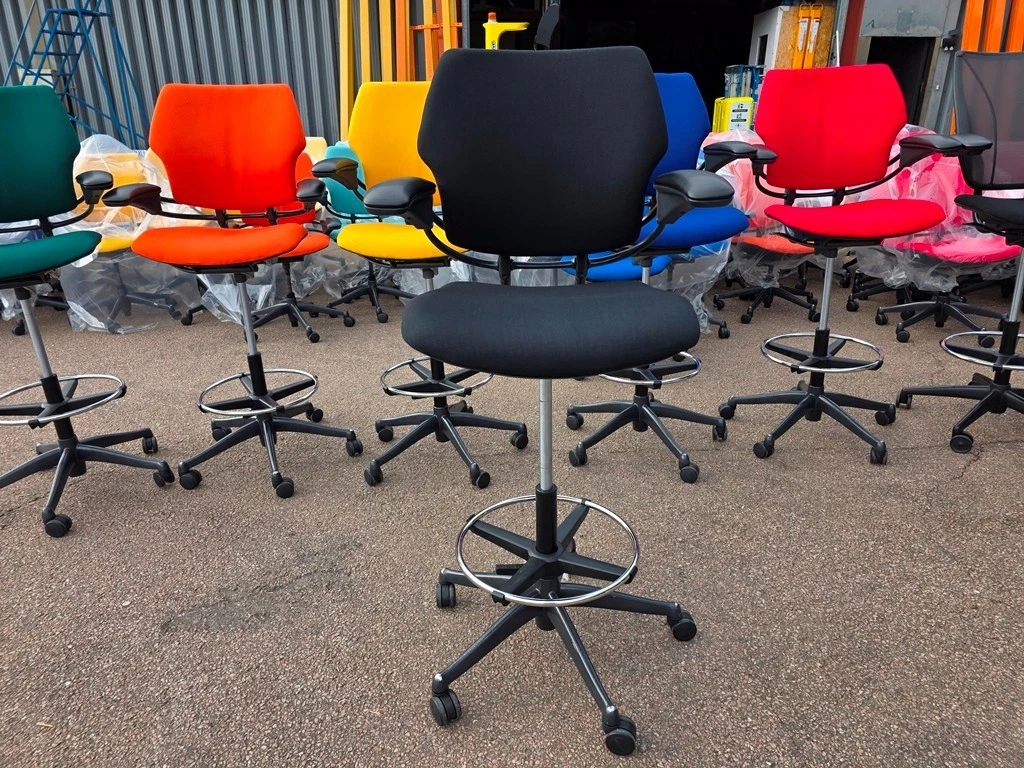
An extended gas lift gets the user to a counter, studio bench or high workstation. That same height makes stable foot support and safe access more important. A draughtsman chair is not simply a taller operator chair, and it is not interchangeable with a casual bar stool.
Look hardest at: minimum and maximum seat height, foot-ring position, stability, the route onto the chair and the surface being served.
When the seat belongs to the room more than one person
Meeting Chairs and Visitor Chairs Overlap—but the Layout Decides
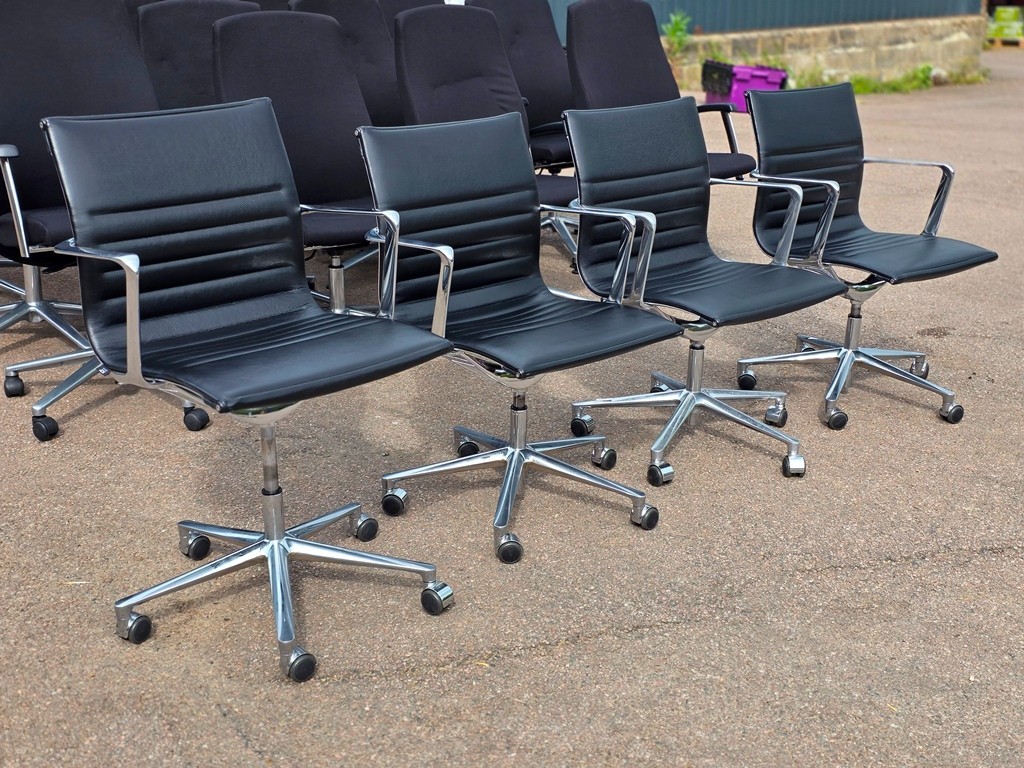
Meeting chairs must work with a table, other seats and the length of the session. Visitor chairs must work with approach space, waiting time and the public-facing feel of the room. A cantilever chair might serve both; a wide tub chair may suit reception but waste table space.
Look hardest at: arms and table clearance, stacking, frame stability, seat width, cleanability and how many occupied chairs truly fit.
When work becomes informal
Stools, Sofas and Booths Change the Tempo of a Space
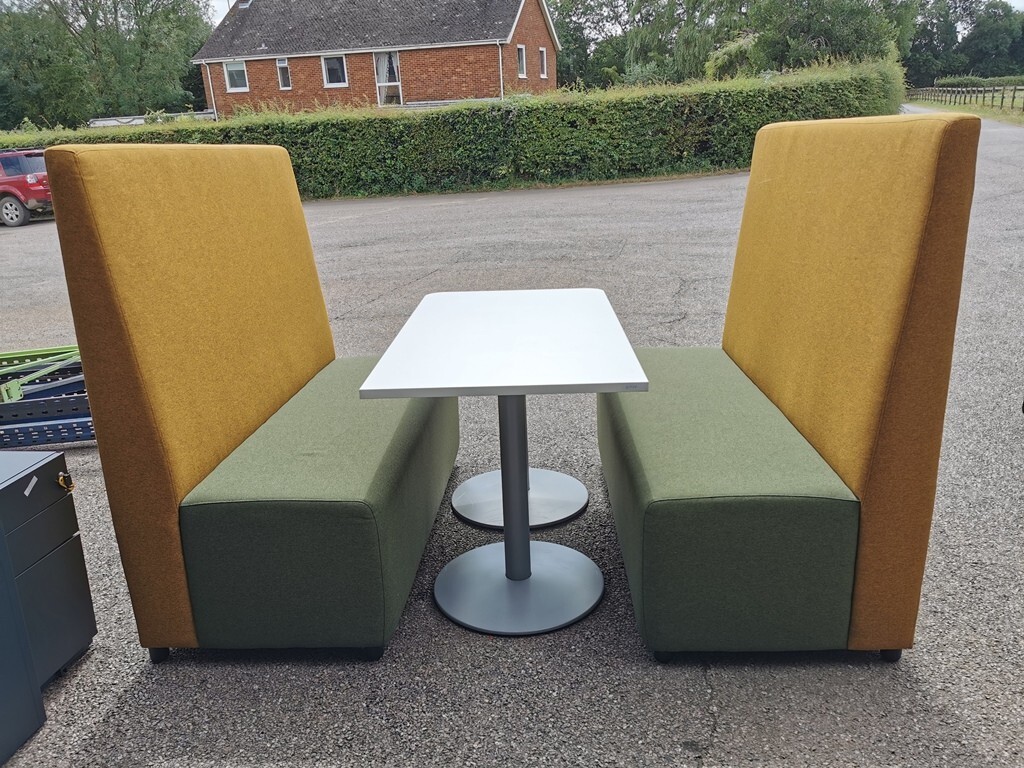
Stools make quick conversations easy. Sofas invite people to stay. High-back booths can visually shelter a conversation. None is automatically suitable for prolonged laptop work just because the space is called collaborative.
Look hardest at: expected sitting time, working-surface height, seat firmness, delivery dimensions, upholstery condition and cleaning access.
Current Workstation Seating
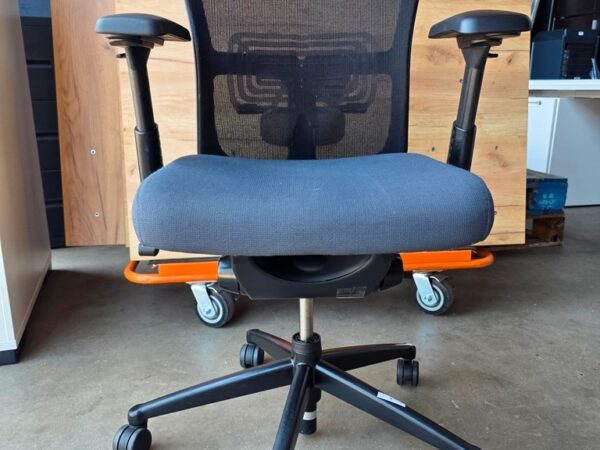
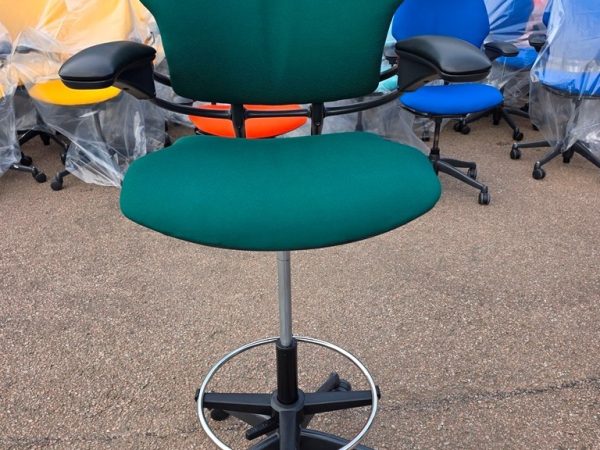
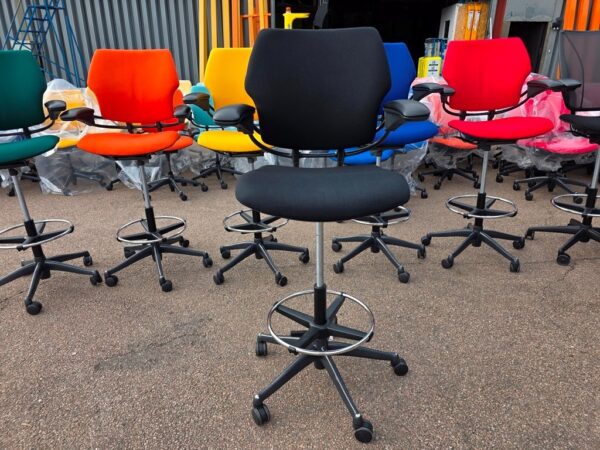
Compare live operator and draughtsman chairs after checking the working height, adjustment range and foot support the job requires.
Current Meeting and Visitor Seating
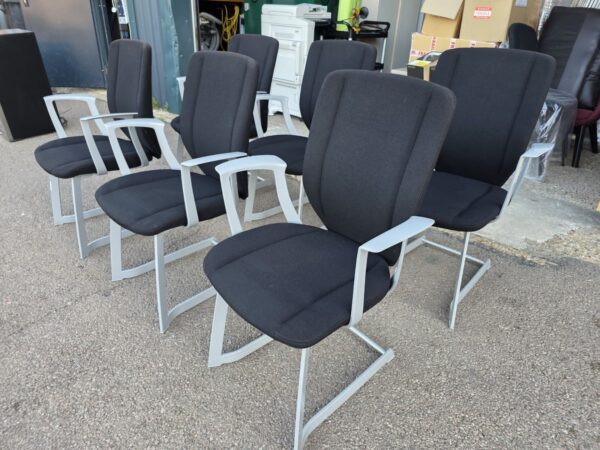
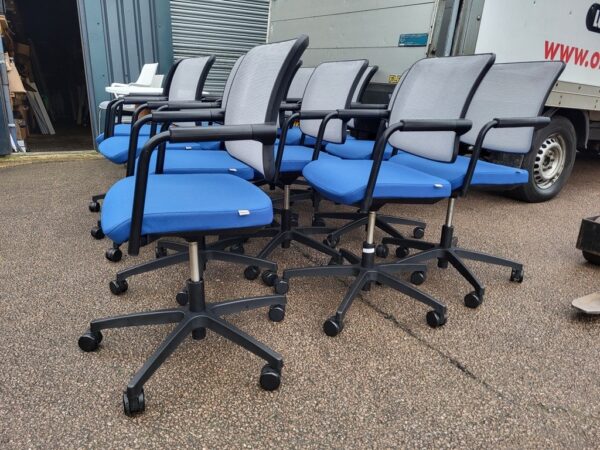
Use the table clearance, session length, occupied room layout and public-facing role to judge these live meeting and visitor options.
Current Informal and Breakout Seating
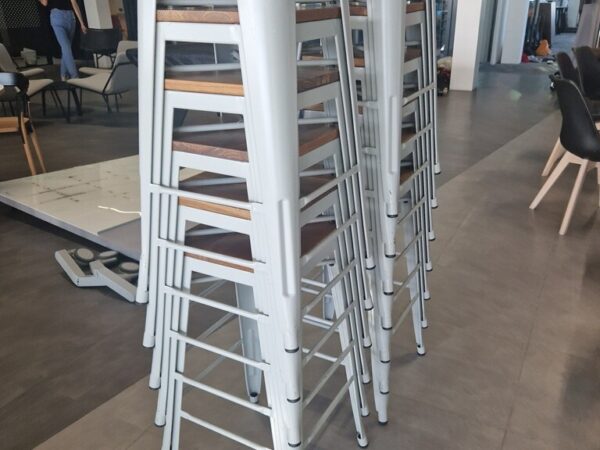
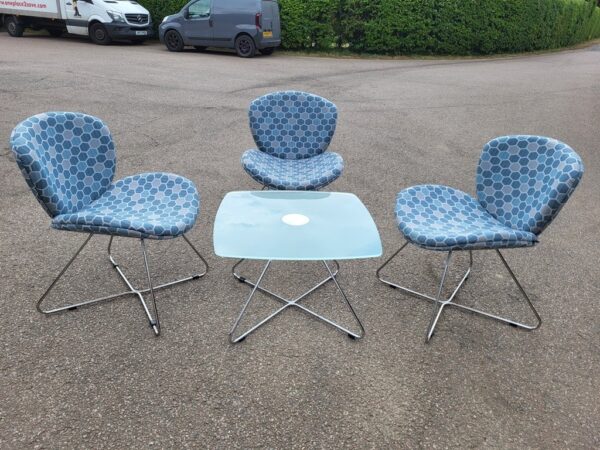
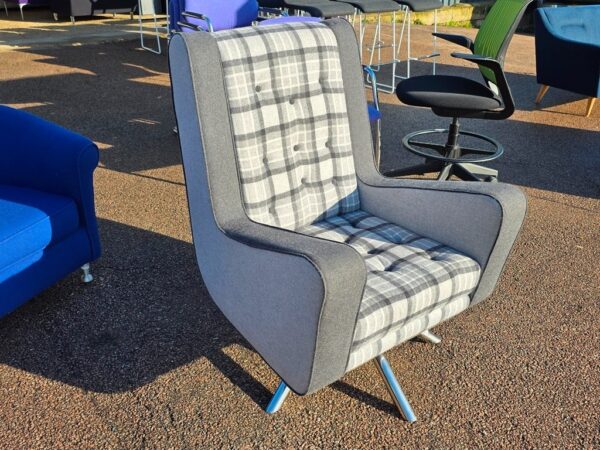
Compare stools, sofas and booth seating by expected sitting time, surface height, upholstery condition and the real delivery route.
Do not begin with the stain
Inspect a Used Chair in the Order That Matters
Function first. Structure second. Upholstery third.
Cosmetic wear is visible, so it attracts attention. Mechanical failure can be quieter and more important. Run the chair through use before deciding how much a mark matters.
Load the chair
Check stability, seat support and whether the selected height holds under normal use.
Move every mechanism
Raise, lower, slide, recline and lock. A lever's presence is not evidence of function.
Notice what movement says
Grinding, sharp clicks, loose play or a slipping ratchet deserve investigation.
Finish with structure and fabric
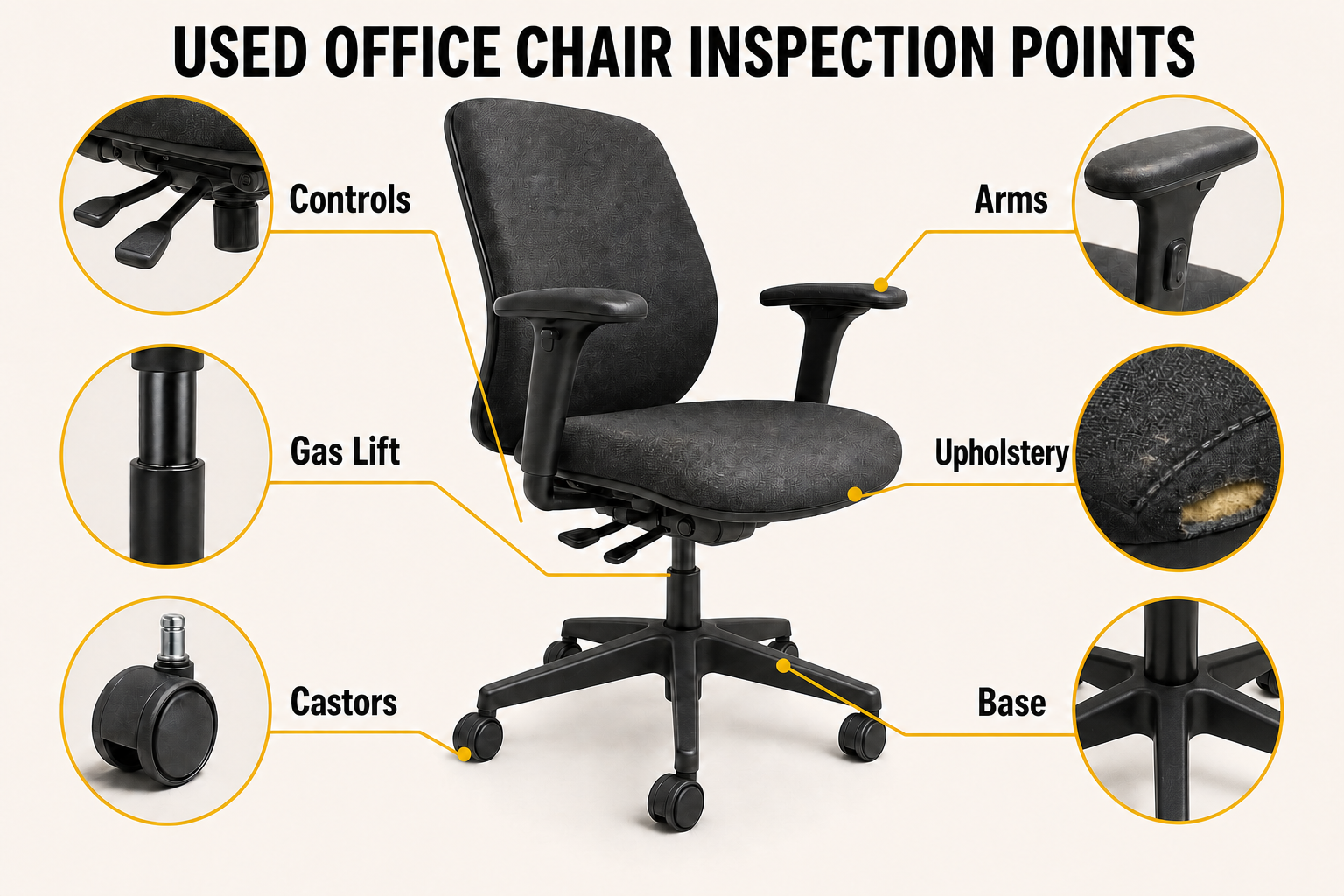
Inspect the base, arms, fixings, castors, seams, mesh tension, foam and high-contact edges.
The details worth recording
- Every control works and stays where set.
- The gas lift holds a seated user at one height.
- The seat, back, arms and base have no concerning cracks or movement.
- Five castors or glides are present, matched and secure.
- Foam has not collapsed into a hard or uneven seat.
- Mesh remains tensioned and attached to its frame.
- Fabric, leather or coated surfaces meet the condition you agreed.
- The exact model, included parts and quantity match the listing.
Language check: used, second hand, refurbished and reconditioned are not always used identically. Ask what was inspected, cleaned, repaired or replaced on this batch.
One chair is a fit decision; fifty chairs are a systems decision
Buying Used Office Chairs for a Team
The larger the order, the less “matching” tells you.
A batch can look coordinated while mixing armrests, bases, controls or wear levels. Define what must match and what may vary before the room plan depends on it.
Fit the individual
Prioritise the user's dimensions, task, desk and any specific requirement. Model uniformity is irrelevant if nobody else needs the same chair.
Compare every example
Check whether adjustments, arms, upholstery and condition are consistent. Decide who gets which chair if the batch varies.
Buy the process as well as the product
Confirm quantity, specification, delivery sequence, setup, user instructions, DSE assessment arrangements and what happens when one chair needs attention.
Write a matching specification
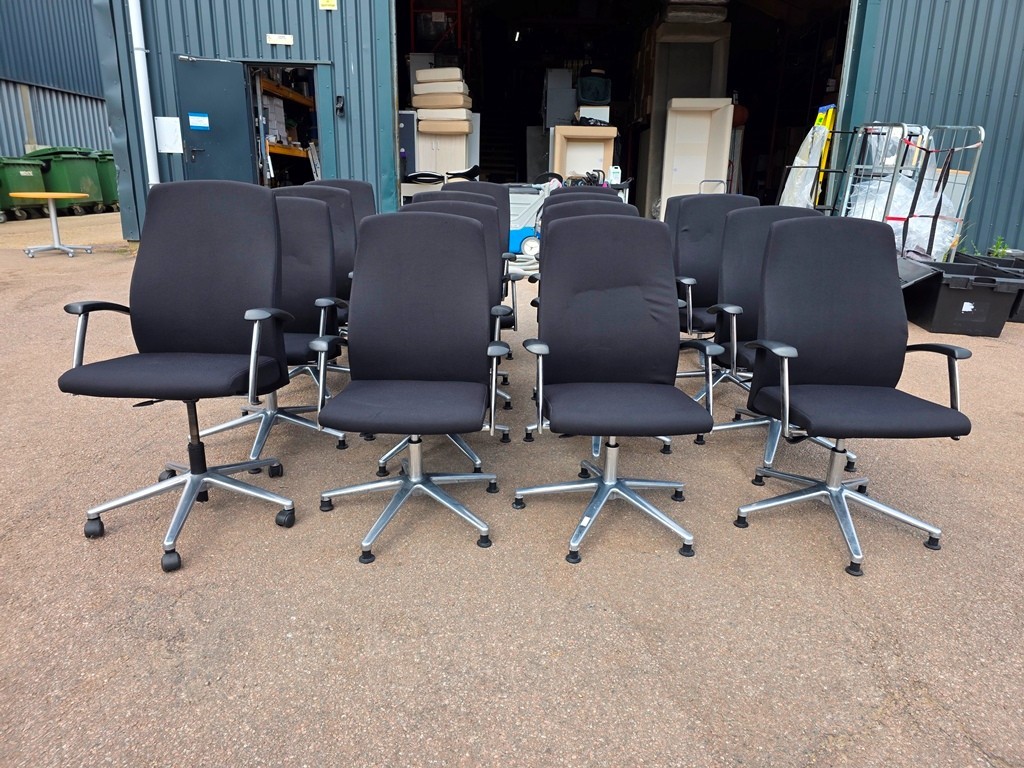
For example: “same model and mechanism; black fabric may show minor shade variation; adjustable arms required on every chair; matching five-star bases; no torn upholstery.” That is more useful than asking whether the chairs match.
For a growing team: make the specification repeatable even if the exact model later changes. Record the chair type, usable adjustment range, arm requirement, condition standard and acceptable finish variation so the next purchase can solve the same job without pretending used stock is permanent.
Materials tell their history differently
Read the Wear, Not Just the Finish
A tidy surface can hide tired foam. A scuffed frame can hide years of useful life.
Judge how the material functions, how it will be cleaned and how it contributes to the room. Appearance matters; it simply needs to sit beside an honest condition check.
Fabric
Inspect seams, abrasion, stains, odour, pilling and shade differences. Sit to feel the foam beneath it.
Mesh
Look for sagging, fraying, punctures and separation from the frame. Tension is part of the support.
Leather and coated finishes
Check cracking, peeling, stretching and wear on front edges, arms and other contact points.
Plastic shells
Inspect around fixings and bends for cracks, stress whitening, sharp damage and loose frame connections.
Cleaning methods differ by material and finish. Use suitable products, follow available manufacturer guidance and test an inconspicuous area first.
Fit the body and the brand
Yes, Colour and Office Aesthetics Matter
A practical chair does not have to look like a compromise.
Workplaces communicate through colour, material and visual consistency. A design studio may want energy; a legal office may want restraint; a reception area may need a memorable accent. Those are real requirements, not superficial distractions.
A real example from the range
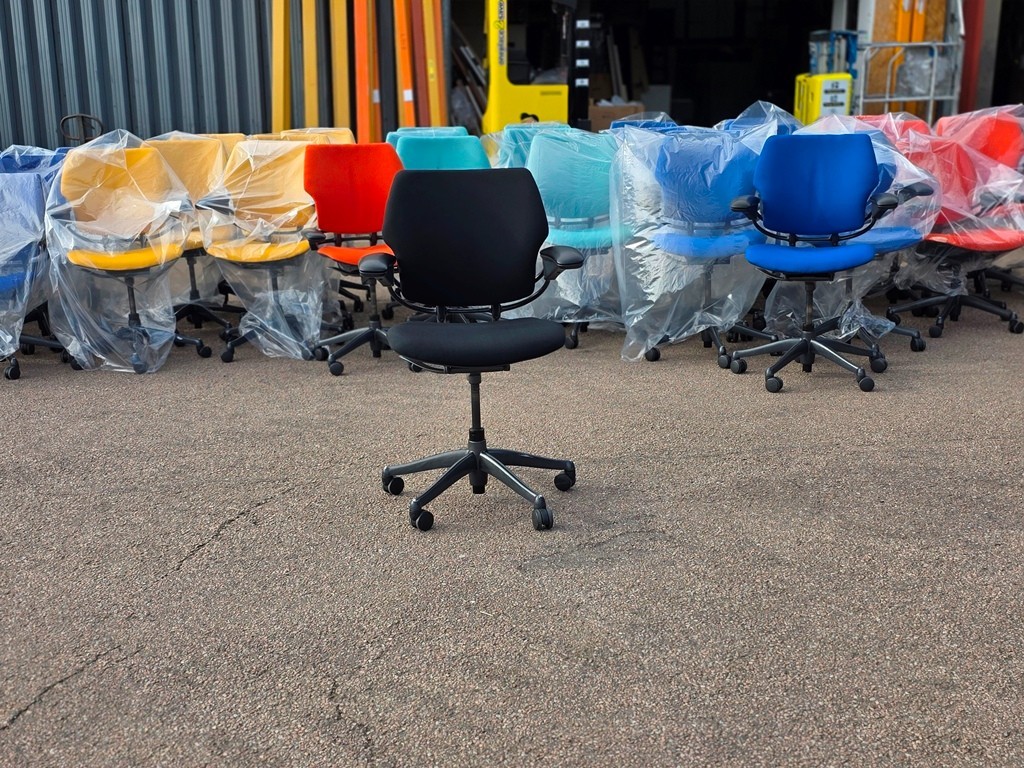
One Recognisable Chair, Several Personalities
At the time this guide was updated, the operator-chair range included refurbished Humanscale Freedom chairs in yellow, navy blue, green, royal blue, jade, orange and red, subject to live stock availability. The model can stay visually consistent while the upholstery changes the mood.
That is the useful middle ground: preserve the functional specification your team needs, then choose a colourway that works with the office—or use several colours deliberately rather than accepting a random mix.
Choose a calm foundation
Black, grey and navy often integrate easily with changing desks, carpets and future additions. Neutral does not have to mean anonymous.
Repeat an accent
A strong colour looks intentional when it appears elsewhere—in screens, artwork, wayfinding or another seating zone.
Mix with a rule
Different chair colours can still feel professional when the model, frame or palette remains consistent. “Mixed” and “mismatched” are not the same.
Check the whole room
Compare upholstery with desk finishes, flooring, wall colour, natural light and the visual weight of surrounding furniture.
The balanced rule
Do not make aesthetics the last thing you are allowed to enjoy. Make fit, function and condition the boundaries—then choose confidently inside them.
The chair still has to reach the room
Delivery, Access and the Honest Case for Reuse
A chair is smaller than a desk. A hundred assembled chairs are not.
Confirm delivery format, vehicle access, loading times, lifts, stairs and the route from entrance to final position. Sofas and booth seating deserve full route measurements, not optimism.
Before delivery day
- Confirm whether seating arrives assembled, stacked, wrapped or partly disassembled.
- Measure doors, corridors, stair turns and lifts.
- Book loading bays, goods lifts or security access if the building requires them.
- Keep installation routes clear of desks, cartons and other trades.
- Allow time to inspect, place and explain the controls after delivery.
Reuse is strongest when the chair remains useful
Keeping suitable furniture in service aligns with the UK Government's Waste Prevention Programme for England and the circular principle described by WRAP. But a failing or poor-fit chair that is quickly replaced is not made sustainable by the word used. Condition, suitability, remaining life and transport all matter.
Change the question, improve the shortlist
Ask Better Questions Before You Order
Generic questions invite generic assurances. Ask for something you can verify.
Ask which dimensions and adjustments it has, what range they cover and whether every control has been tested.
Ask about gas-lift hold, mechanism function, foam compression, mesh tension, tears, stains and batch variation.
Ask whether model, mechanism, arms, base, upholstery and condition grade are the same on every unit.
Ask for actual chair width, base footprint and arm height, then plan the room with every chair occupied.
Ask for postcode coverage, cost, timing, delivery format, floor level and what access the driver expects.
Common questions, sharper answers
Used Office Chair FAQs
The short answer should help. The second sentence should stop a bad purchase.
Are used office chairs worth buying?
Yes—when you can explain why the chair is still useful. Judge the working controls, structural condition, user fit and total delivered cost; a famous model in poor condition is not automatically good value.
What type of chair is best for all-day desk work?
Start with an adjustable operator chair, then prove the fit at the workstation. “All-day” is not a product label: the seat depth, height range, back support and desk relationship still have to suit the individual.
What does ergonomic office chair mean?
It is a description, not a guarantee. Treat “ergonomic” as an invitation to inspect the adjustment range and user fit—not as proof that the chair suits everybody.
How can I tell if an office-chair seat is too deep?
Sit with your back supported. If the front edge presses behind the knees or you must perch forward to avoid it, the usable seat depth may be wrong for you; a functioning seat slide may help on models that have one.
Why will my office chair not slide under the desk?
Armrest height is the usual first suspect, but it is not the only one. Check the seat width, desk underside, drawers, pedestal position and five-star base before removing useful support.
Do I need adjustable lumbar support?
You need useful back support; that does not always require a separate lumbar control. The question is whether the backrest meets the user's lower back comfortably and can be positioned well enough for the task.
Is mesh or fabric better for an office chair?
Neither wins by material alone. Mesh condition depends heavily on tension and frame attachment; fabric condition depends on foam, seams, wear and cleaning—so compare the complete chair.
Is a draughtsman chair the same as a stool?
Usually not. A draughtsman chair is raised workstation seating commonly fitted with a backrest, extended gas lift and foot ring, while a stool may be simpler and intended for shorter or more informal use.
Can I use a meeting chair for daily computer work?
Do not assume so. A meeting chair may suit a short session yet lack the adjustment or workstation fit needed for regular DSE work; assess the actual person, duration and setup.
How do I test a used chair's gas lift?
Move through the available height range, choose a position and stay seated. If the seat slowly drops, sticks or cannot reach a useful height, investigate before buying.
Can office-chair castors be changed?
Often, but do not order by appearance. Stem fittings, wheel sizes and chair designs vary, so confirm compatibility and choose castors or glides that suit the intended floor.
Are used office chairs hygienic?
Used seating can be cleaned, but “clean” is not a universal process. Ask what treatment the specific chair received, inspect seams and foam condition, and use methods suitable for its fabric, mesh, leather or coated finish.
Can I buy a matching batch of used office chairs?
Yes, when enough stock is available—but define matching. Confirm whether model, mechanism, arms, base, upholstery and condition are consistent, and agree which minor variations are acceptable.
How should a growing company choose office chairs when headcount may change?
Specify the repeatable essentials rather than depending on one colour or model remaining available forever. Record the required chair type, adjustment range, arms, condition standard and acceptable finish variation, then confirm how many suitable examples are available now.
What information should I provide when ordering chairs for a whole office?
Share the quantity, how the chairs will be used, desk or counter heights, required adjustments, acceptable condition and finish variation, delivery access, floor level and deadline. That gives the supplier a testable brief instead of a request for a large number of chairs that merely look alike.
Does buying an ergonomic chair satisfy an employer's DSE duties?
No. HSE guidance requires relevant employers to assess the whole workstation and individual requirements; buying a chair—even a highly adjustable one—is only one part of that process.
How long should a used office chair last?
There is no honest universal number. Remaining life depends on the original design, past use, present condition, future intensity, maintenance and whether compatible parts are available.
Are used office chairs a more sustainable choice?
They can be when a suitable chair remains in useful service. Include condition, expected life, transport and the risk of early replacement rather than treating every second-hand purchase as automatically sustainable.
Should I choose an office chair by colour?
Colour can be a genuine requirement, not merely a last-minute extra. Apply fit, function and condition as firm boundaries, then choose the colour or finish that supports the workplace aesthetic and the people using it.
Can mixed-colour office chairs still look professional?
Yes—when the variation follows a visible rule. Repeating the same chair model, frame finish or controlled colour palette can create cohesion while giving teams or zones their own identity.
The chair never works alone
Continue Building the Workspace

Buying Guide
Used Office Desks
Choose the surface, legroom and layout the chair has to meet.
Buying Guide
Meeting Tables
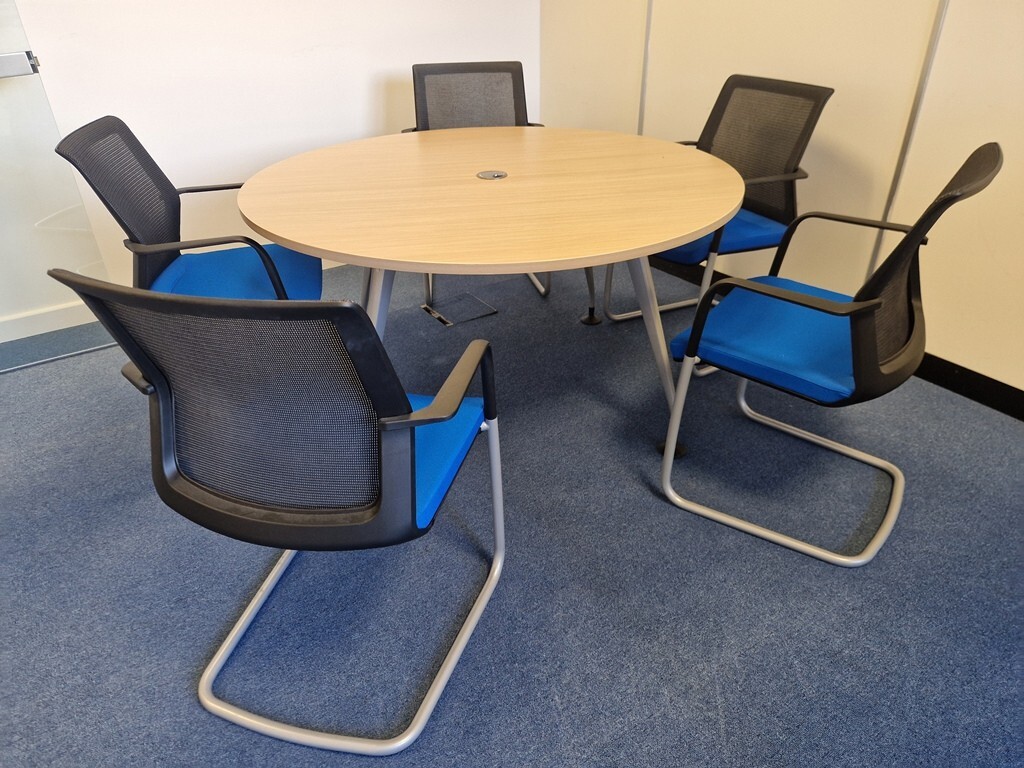
Plan table edges, bases, chair clearance and real seating capacity together.
Buying Guide
Reception Furniture
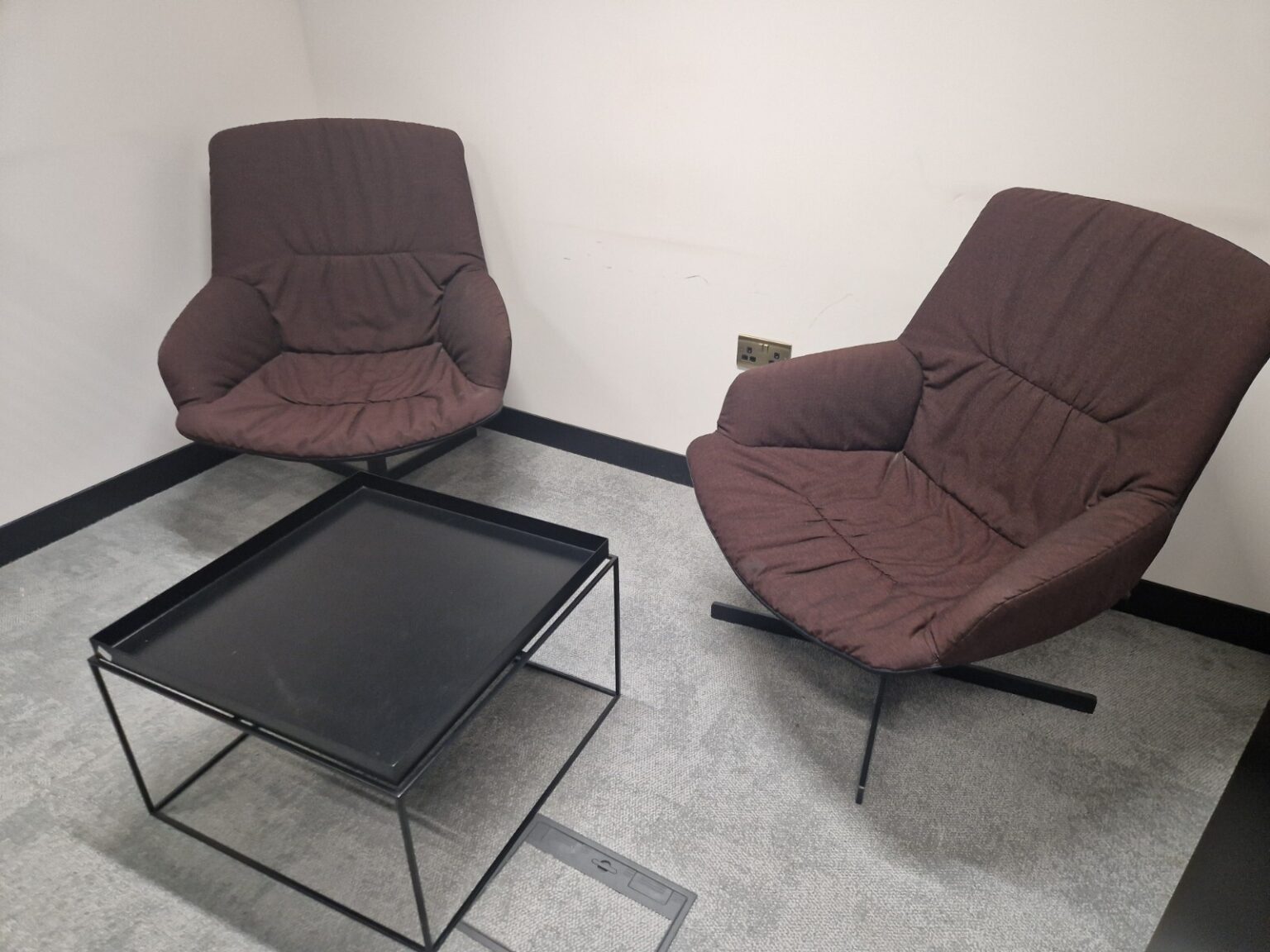
Coordinate visitor seating with the entrance, waiting time and access routes.

Buying Guide
Used Office Furniture
Plan the whole fit-out without losing sight of condition, access or function.
Take the test to the listings
Find the Chair That Fits the Person, the Desk and the Job
Compare current used office seating by purpose, dimensions, working controls, condition and quantity. Then test the shortlist against the real workspace.
Latest Office Chairs & Seating stock
