


The practical buying guide
Used Filing Cabinets Buying Guide: How to Choose the Right Office Filing Cabinet
Match your files to the drawer format, then check capacity, locks, condition and room for opening.
Start with the contents
Do You Actually Need a Filing Cabinet?
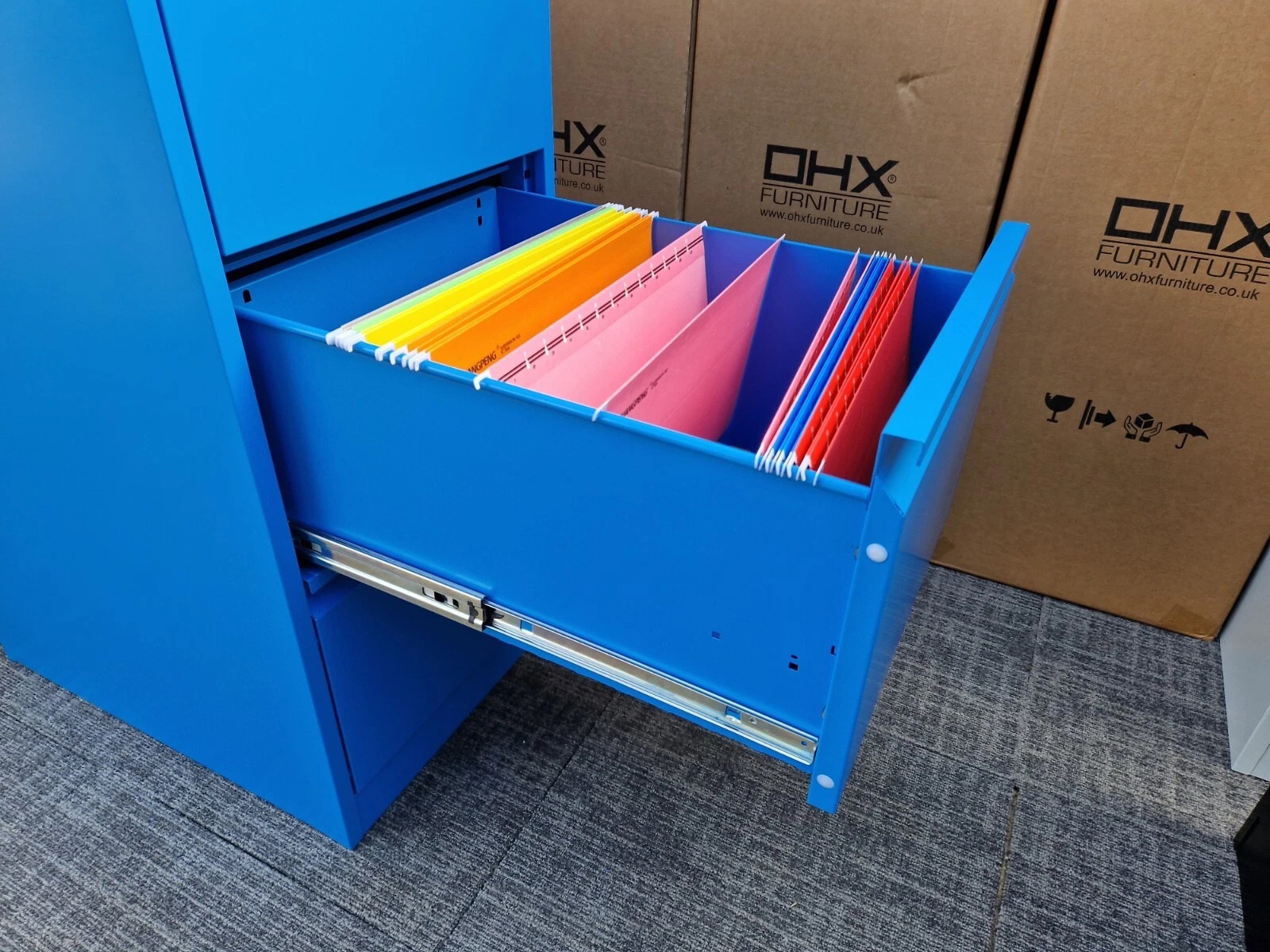
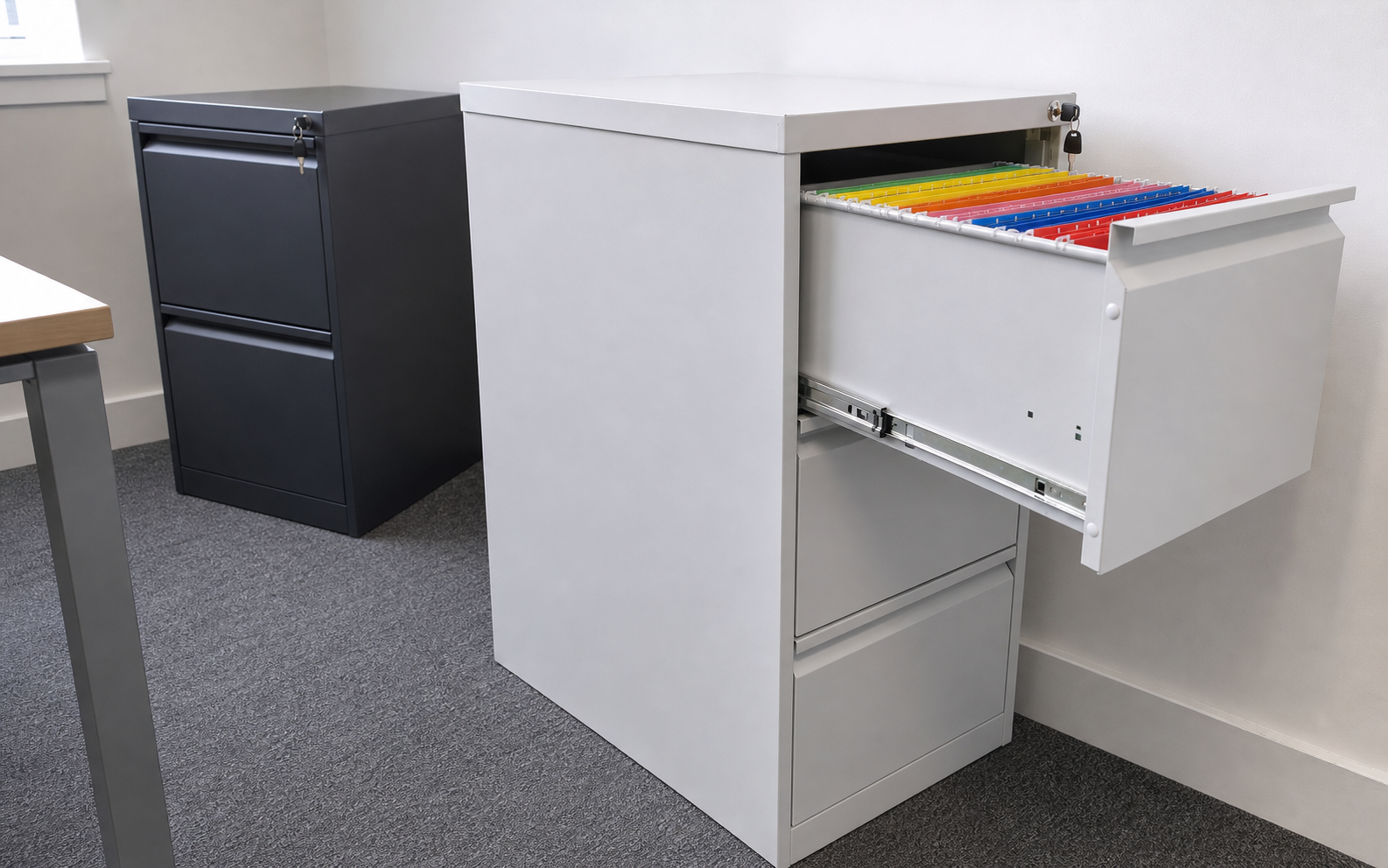
If your office uses hanging suspension folders, a filing cabinet is usually the right starting point.
If you mainly store lever-arch files, boxes, stationery or equipment, another form of office storage may be easier to use. Making that distinction first prevents the most basic buying mistake: purchasing drawers that were designed for a different job.
Hanging folders
Choose a dedicated filing cabinet, then match it to your A4 or foolscap suspension folders.
Browse filing cabinets →Personal desk files
A pedestal can provide one filing drawer plus smaller drawers for stationery and personal items.
Browse pedestals →Binders and boxes
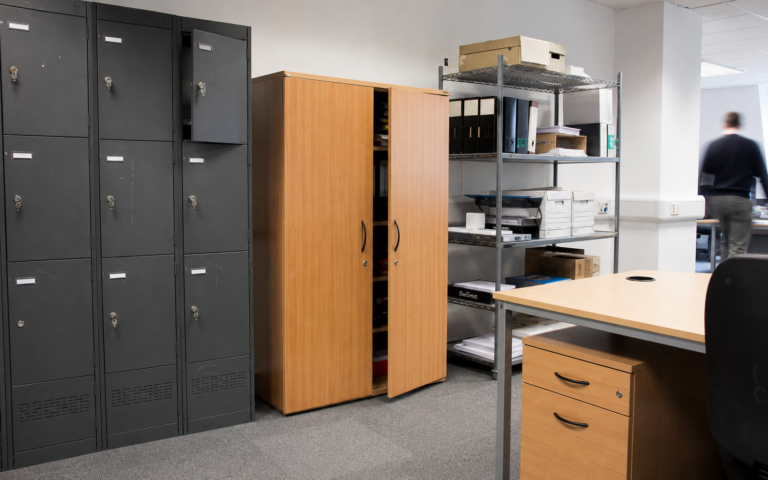
An office cupboard gives mixed contents flexible shelf space without deep suspension-file drawers.
Browse cupboards →Small flat items
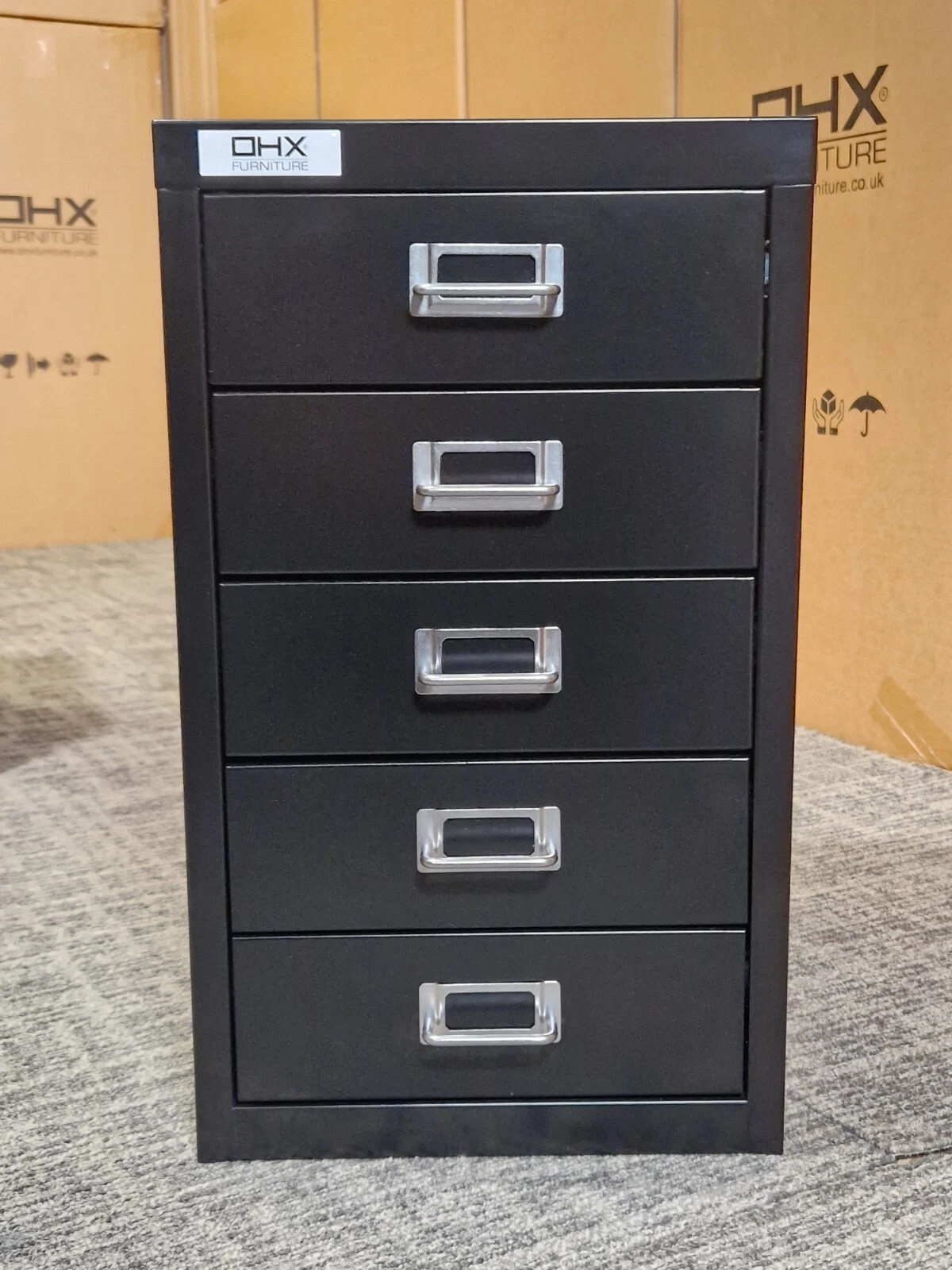
A multidrawer cabinet is better suited to labels, samples, forms, stationery and artwork.
Browse multidrawers →The 30-second answer
For ordinary office suspension files, shortlist a two-, three- or four-drawer filing cabinet. Choose the drawer count by the amount of filing and the available height, then confirm the folder format, lock, condition and open-drawer clearance before ordering.
See the choices in context
Current Filing Cabinets
The category includes genuinely used cabinets as well as new OHX models. Stock, condition, finishes, dimensions, keys and internal fittings can vary, so use the checks below when comparing listings.
-
25% off
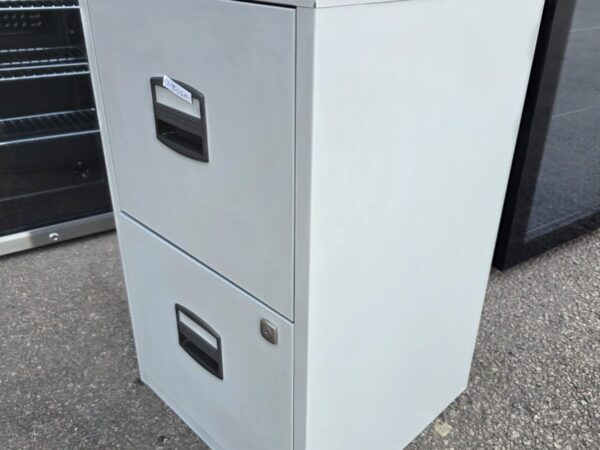
A4 Metal Filing Cabinet – 2 Drawer White Lockable Office Storage – 67cm
£100.00£75.00 Add to cart -
25% off
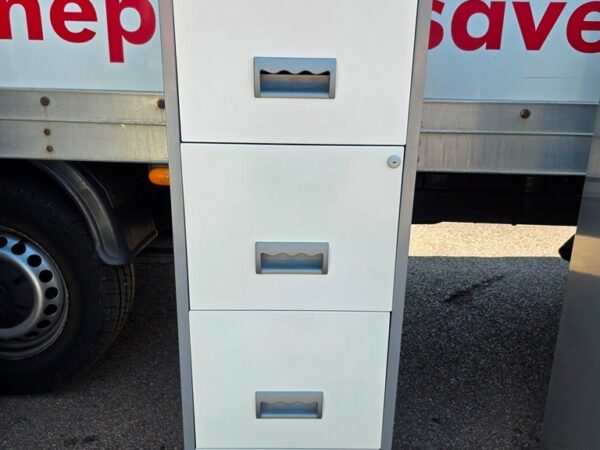
IKEA A4 Filing Cabinet | 4 Drawer Tall Grey and White Metal Lockable Storage
£190.00£142.50 Add to cart -
25% off
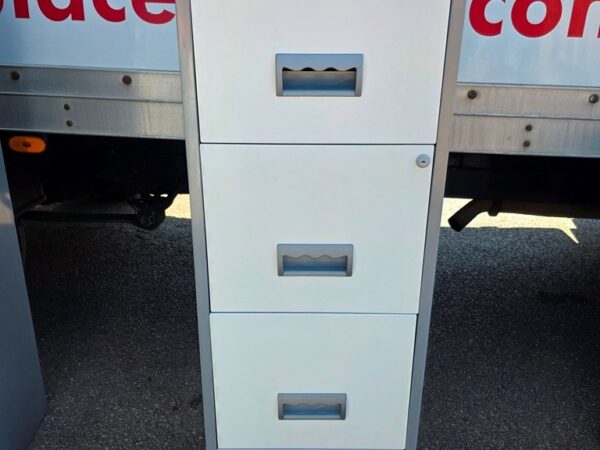
IKEA A4 Filing Cabinet | 4 Drawer Tall Grey and White Metal Office Storage
£180.00£135.00 Add to cart -
25% off
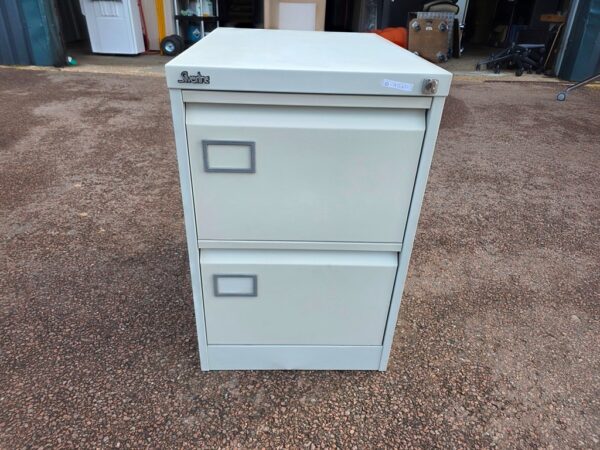
Silverline Office Filing Cabinet Lockable 2 Drawer Light Grey – A4 Foolscap
£120.00£90.00 Add to cart
An important distinction in our range
Should You Buy New or Used?
Not every filing cabinet in this category is second-hand.
Our best-selling two- and three-drawer OHX cabinets are new, boxed products priced to compete with many pre-owned choices. The category also includes genuinely used cabinets from brands such as Bisley and IKEA when those models are available.
Choose a new OHX cabinet when... | Choose a genuinely used cabinet when... |
|---|---|
Both models are 460 mm wide and 620 mm deep. The OHX two-drawer filing cabinet is 720 mm high and listed at 32 kg. The OHX three-drawer filing cabinet is 1025 mm high and listed at 45 kg. Both are supplied dismantled in two boxes, so include assembly in the decision. |
Used stock is individual: two cabinets with the same drawer count may differ in wear, lock operation, file rails or key quantities. Read the condition notes and photographs for the specific item rather than applying the OHX specification to the rest of the category. |
Compare complete value, not the condition label alone
A new cabinet can be the better-value purchase when its price, warranty and predictable specification outweigh assembly time. A used cabinet can be the better-value purchase when its build, condition, format and delivered cost suit the job. The guide should help you compare those facts honestly.
Capacity versus reach
Which Type and Drawer Count Should You Choose?
Two drawers suit smaller active files. Four drawers provide more capacity without using much more floor space.
The right answer depends on how much you keep, who needs to reach it and whether the cabinet must line up with a desk or fit below a window. Always check the actual product dimensions; names such as “desk-high” are descriptive, not a guaranteed measurement.
| Cabinet | Usually suits | Check before buying |
|---|---|---|
| 2-drawer vertical | A smaller active file, desk-side use or a surface close to desk height. | External height, filing capacity and whether an open drawer conflicts with the chair. |
| 3-drawer vertical | A useful middle ground between capacity and easy access to the top drawer. | Total height, folder format and whether every drawer uses the same fittings. |
| 4-drawer vertical | More suspension filing where floor width is limited. | Reach to the upper drawer, stability and enough room for the deep drawers to extend. |
| Lateral or wide | Locations where a shallower cabinet works better along a wall. | File orientation, internal fittings, wall width and the full open depth. |
| Pedestal | Personal files and stationery beside or underneath a desk. | Whether it has a true filing drawer and whether it fits beneath the workstation. |
Choosing for a whole office? Match the functional details before the paint colour: folder format, dimensions, drawer count, internal rails, anti-tilt behaviour, lock operation and key quantities. Minor shade variation is usually easier to live with than incompatible folders or missing keys.
Avoid the most common mismatch
Make Sure Your Folders Fit
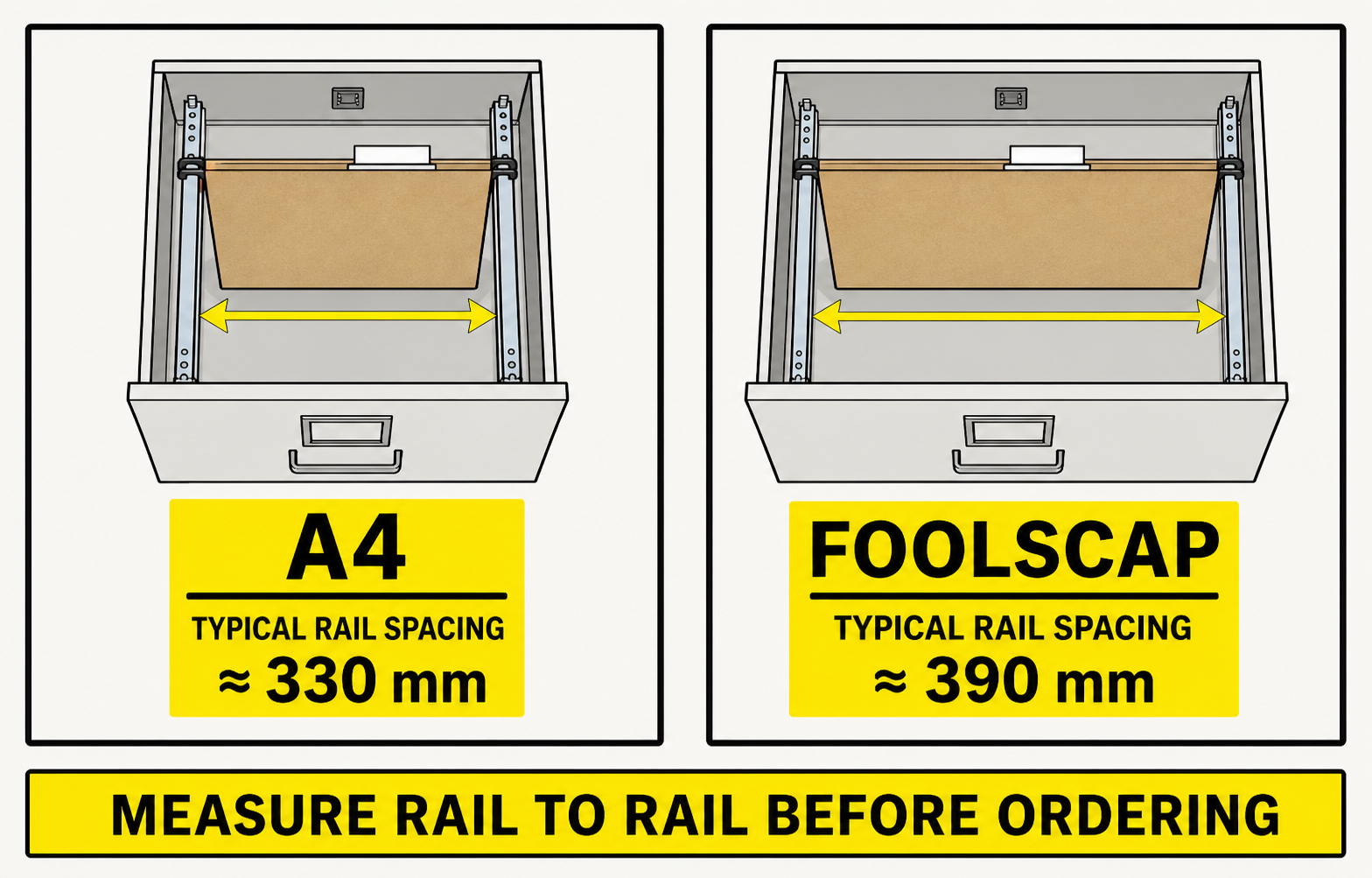
A4 paper and A4 suspension filing are not quite the same thing.
The sheet of paper sits inside a larger hanging folder. The hooks on that folder must rest correctly on the cabinet rails. Foolscap folders are wider than A4 folders and are also commonly used to hold A4 documents, so match the cabinet to the folders used by the office, not merely to the paper inside them.
Confirm these three details
- Folder format: A4 or foolscap suspension files.
- Rail arrangement: spacing, orientation and whether removable file bars are included.
- Usable length: the filing space inside each drawer after stops, dividers and fittings are considered.
If you can inspect the cabinet, bring one real folder. When buying online, ask for the internal rail spacing or a clear photograph of the filing arrangement. Bisley's office filing specification is a useful manufacturer example of A4 and foolscap cabinets being specified separately.
Measure the centimetres occupied by your current folders, add realistic room for growth, then compare that total with the cabinet's usable filing length. Folder thickness varies too much for one universal “files per drawer” figure.
Condition before colour
The 60-Second Used Filing Cabinet Check
A cabinet can look tidy while hiding worn runners, missing stops or a lock that does not secure every drawer.
Inspect the parts that affect everyday use before deciding whether scratches or colour variation matter to you.
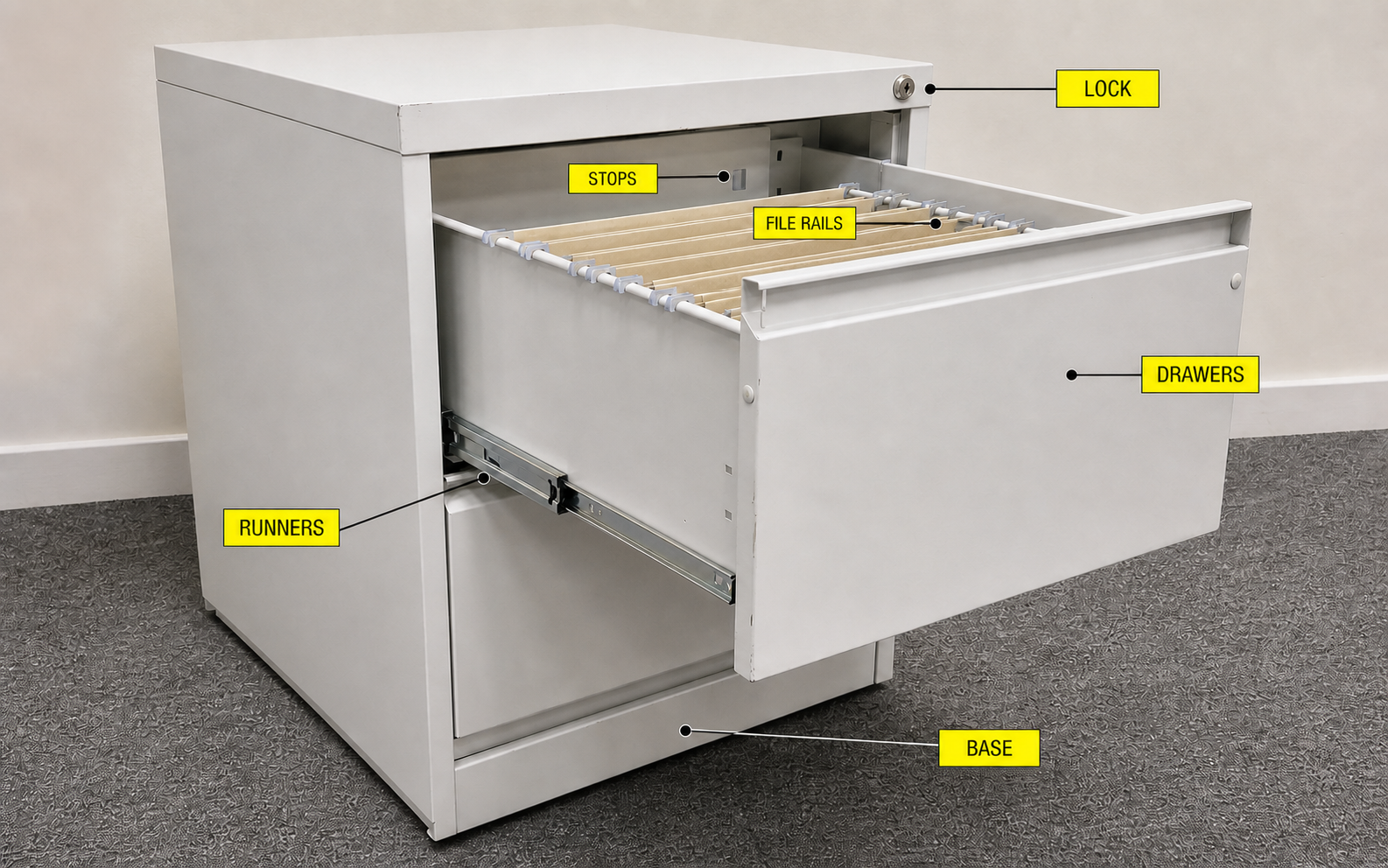
Check the cabinet stands square
Look for rocking, leaning, corrosion, distorted drawer gaps or damage around the base and feet.
Open every drawer fully
Each drawer should travel without scraping, dropping, catching or excessive sideways movement.
Inspect runners and stops
Check both sides, confirm a positive end stop and make sure the rear filing space is accessible.
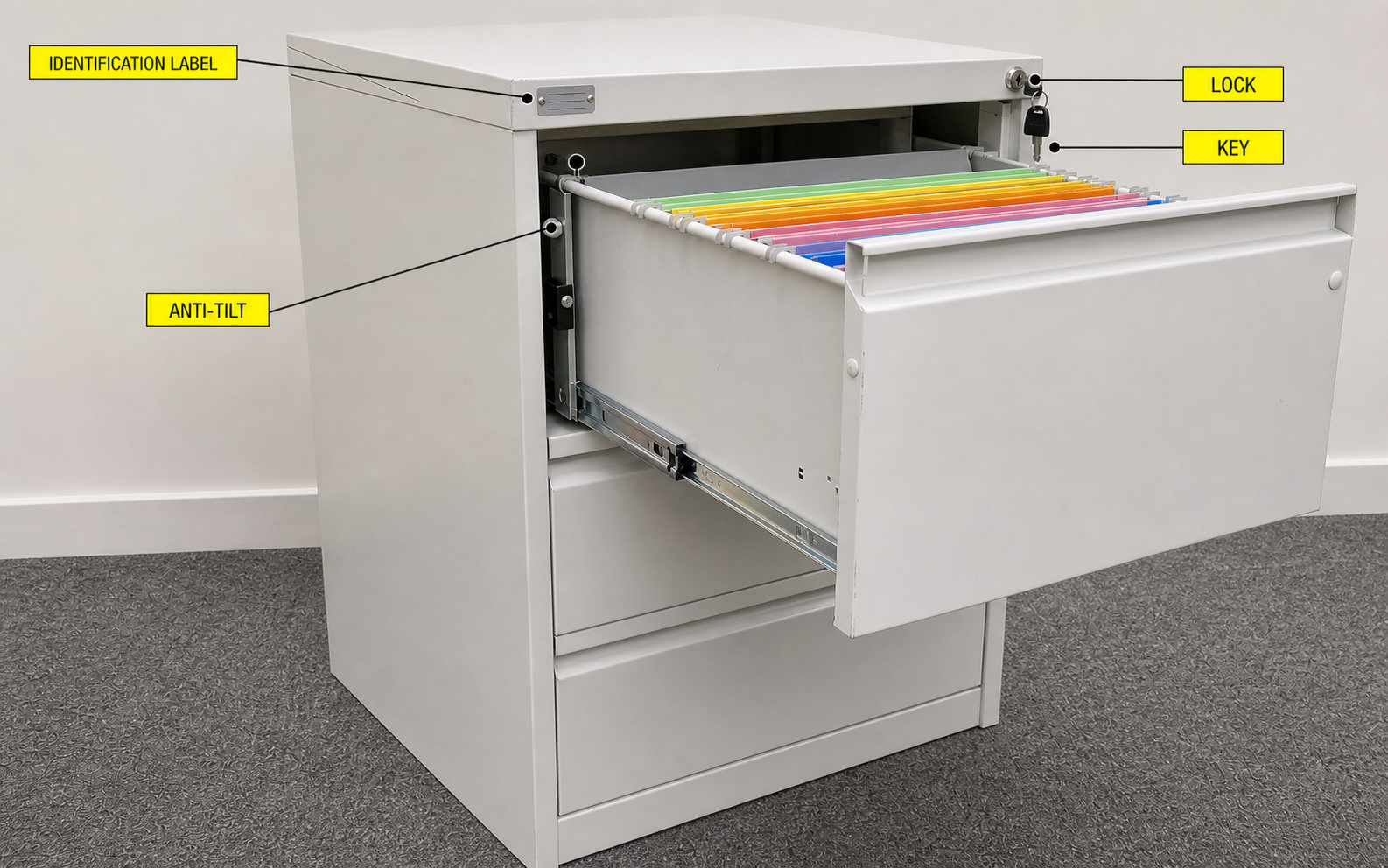
Test the anti-tilt action
With one drawer open, another may stay closed by design. Close the first drawer before testing the next.
Lock, test and unlock
Confirm which drawers are secured, how many keys are included and that normal drawer movement returns after unlocking.
One drawer opening at a time may be correct
An anti-tilt interlock helps reduce tipping risk by restricting multiple open drawers. Do not force a second drawer. If it still will not open after the first is completely closed, the alignment or mechanism may need attention.
Three claims worth checking
Locks, Stability and Fire Protection
“Lockable”, “anti-tilt” and “metal” do not mean the same thing.
These features answer different risks. Confirm what the particular cabinet actually does instead of allowing one reassuring word in the listing to stand in for all three.
| Claim | Useful check | Important limit |
|---|---|---|
| Lockable | Close all drawers, turn the key and test every drawer without force. Confirm the key quantity and any visible code. | A working lock is only one part of protecting confidential records; key and room access still matter. |
| Anti-tilt | With the cabinet level, check whether opening one drawer prevents another from extending. | Do not defeat the interlock. Follow the manufacturer's positioning or fixing instructions for that model. |
| Fire-resistant | Ask for the exact test, duration, protected contents and identification label on the cabinet. | A steel shell, heavy construction or working lock does not make an ordinary cabinet fireproof. |
For the wider process around paper records, see the Information Commissioner's Office records-management and security guidance. If tested fire protection is required, named classifications such as those explained in Phoenix Safe's fire-protection FAQ should be evidenced on the specific product.
Measure the cabinet in use
Plan the Open Drawer and the Delivery Route
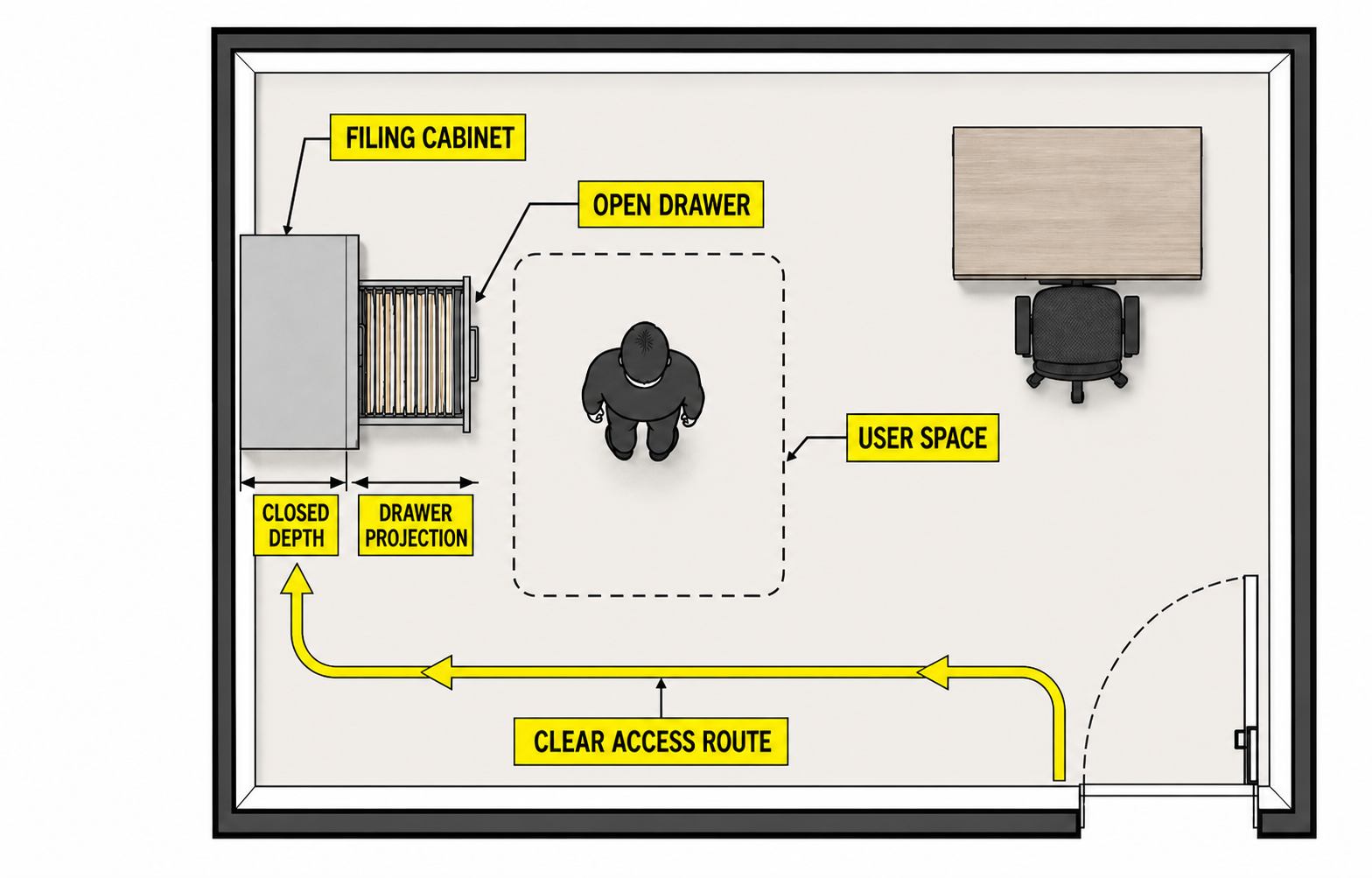
A filing cabinet does not occupy only its closed footprint.
The deepest drawer must extend into the room and a person needs space to stand, read labels and remove a folder. That complete working zone should stay clear of chairs, doors, busy walkways and escape routes.
Measure before ordering
- Record the cabinet's width, closed depth and height.
- Add the full projection of its deepest open drawer.
- Allow standing room in front of the drawer.
- Check entrances, corridors, stair turns, lifts and the final position.
Confirm whether the cabinet arrives assembled and what the delivery service includes. Cabinets should travel empty with their drawers secured, then be positioned and checked before being loaded from the lower drawers upward.
The HSE does not set one universal safe lifting weight. Its manual-handling guidance recommends avoiding hazardous handling where reasonably practicable and assessing what cannot be avoided.
Appearance still belongs in the decision
Once the cabinet fits the files, room and security requirement, choose the finish you prefer. Grey, black, white, cream and wood-effect cabinets can all work in a considered office. With used stock, matching the height and handle style can create a coherent row even when small shade differences remain.
The final check
What to Confirm Before You Buy
If a listing does not answer one of these points, ask the supplier. A short factual answer is more useful than a vague promise that the cabinet is “standard”.
Is this for suspension folders, or would a cupboard or pedestal suit the contents better?
Does it take your A4 or foolscap folders, and are the required rails or bars included?
Is there enough usable filing length for the present files plus sensible growth?
What are the width, height, closed depth and full open-drawer projection?
Have every runner, stop, handle and anti-tilt action been checked?
Which drawers lock, does the lock work and how many keys are supplied?
Which marks are cosmetic, and is there any distortion, corrosion or structural damage?
Will it fit along the complete route, and where does the delivery service end?
Quick answers
Used Filing Cabinet FAQs
The most common questions, answered without sending you around the guide again.
Are used filing cabinets worth buying?
Yes, provided the cabinet suits your folders, available space and security needs. Check that every drawer opens smoothly, the runners and stops are sound, the cabinet stands square and any advertised lock works with the supplied keys.
Should I buy a 2, 3 or 4 drawer filing cabinet?
A 2-drawer cabinet suits a smaller active file or a desk-high position. Three drawers balance capacity and reach, while four drawers provide more filing in a similar floor footprint. Measure your files and available height rather than choosing by drawer count alone.
What is the difference between an A4 and foolscap filing cabinet?
A4 describes the paper size. Filing-cabinet compatibility depends on the larger suspension folder and the spacing between its support rails. Foolscap folders are wider than A4 folders, so confirm the folder format and internal rail arrangement before ordering.
Are all filing cabinets in this category second-hand?
No. The category includes genuinely used cabinets and new boxed OHX models. The product condition should be stated on each listing, so check whether the individual cabinet is new or pre-owned before ordering.
How many files fit in a filing-cabinet drawer?
There is no reliable universal number because folder thickness varies. Measure how many centimetres your current files occupy, allow space for growth and compare that total with the usable filing length inside the drawers.
Why will only one filing-cabinet drawer open at a time?
The anti-tilt interlock may be working correctly. It restricts multiple drawers from opening together to reduce the risk of the cabinet tipping. Close the first drawer completely before trying another and never force the mechanism.
How do I inspect a used filing cabinet?
Check the folder format and dimensions first. Then make sure the cabinet stands level, open every drawer through its full travel, inspect the runners and stops, test the anti-tilt action and confirm that the lock and supplied keys work.
Is a lockable filing cabinet secure enough for confidential records?
A working lock can support physical security, but suitability also depends on the cabinet construction, sensitivity of the records, control of the keys and access to the room. Treat the lock as one part of the organisation's records-security process.
Are metal filing cabinets fireproof?
Not automatically. Metal construction is not evidence of tested fire protection. If fire resistance is required, ask for the exact rating, protected contents, test duration and identification label for the specific cabinet.
How much space does a filing cabinet need?
Allow for the closed cabinet, the full projection of its deepest open drawer and room for a person to stand and retrieve files. Keep the operating area clear of doors, chairs, walkways and escape routes.
Continue planning
Related Office Furniture Guides
Use the next guide only when it answers the next decision in your office plan.
Buying Guide
Office Storage
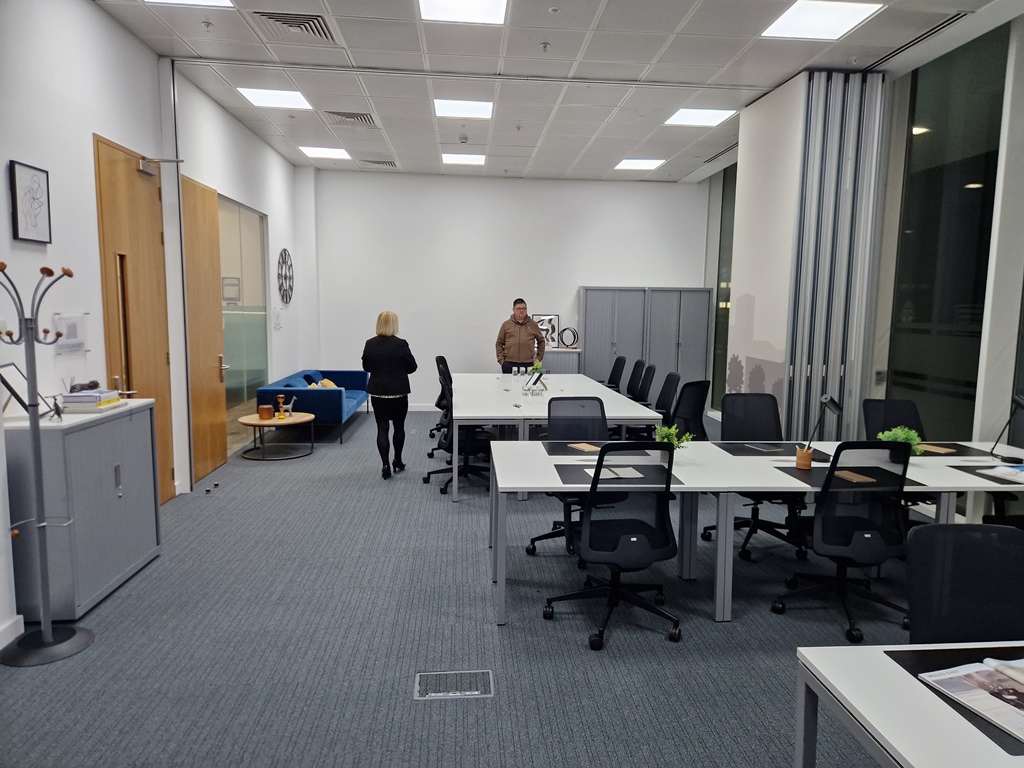
Compare cupboards, filing cabinets, pedestals, lockers and shelving.
Buying Guide
Used Office Desks
Plan desk size, storage positions and circulation together.
Buying Guide
Used Office Chairs
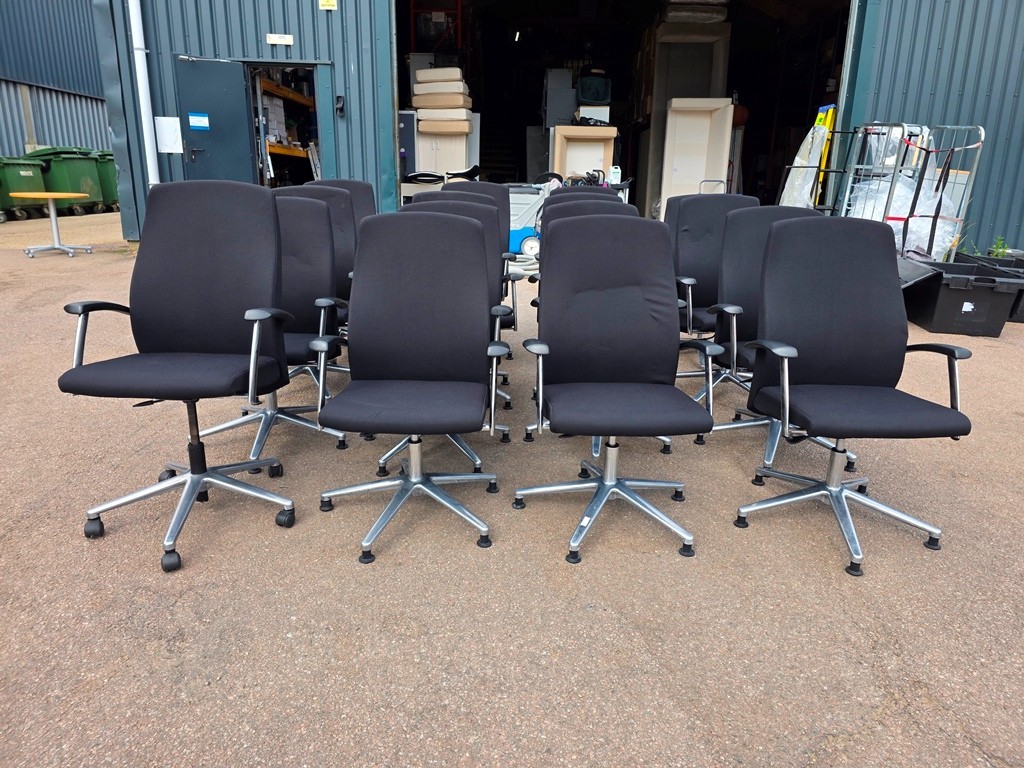
Keep chair movement and drawer clearance from competing.

Guide library
Office furniture buying guides
Coordinate condition, quantities, access and delivery across the order.
Ready to compare the live stock?
Find a Used Filing Cabinet That Fits
Choose the type and drawer count, then confirm the folder format, dimensions, condition, lock and keys on the individual listing.
Latest filing-cabinet stock
-
25% off
A4 Metal Filing Cabinet – 2 Drawer White Lockable Office Storage – 67cm
£100.00£75.00 Add to cart -
25% off
IKEA A4 Filing Cabinet | 4 Drawer Tall Grey and White Metal Lockable Storage
£190.00£142.50 Add to cart -
25% off
IKEA A4 Filing Cabinet | 4 Drawer Tall Grey and White Metal Office Storage
£180.00£135.00 Add to cart -
25% off
Silverline Office Filing Cabinet Lockable 2 Drawer Light Grey – A4 Foolscap
£120.00£90.00 Add to cart
Ready to apply it?