Comparison guide · Reception furniture · 03
Reception coffee tables vs side tables: put the surface where it is useful
The table is often the last item added to a reception. It is also the item that can turn an easy walk to a chair into an awkward sideways shuffle.
Get the short answerShort answer
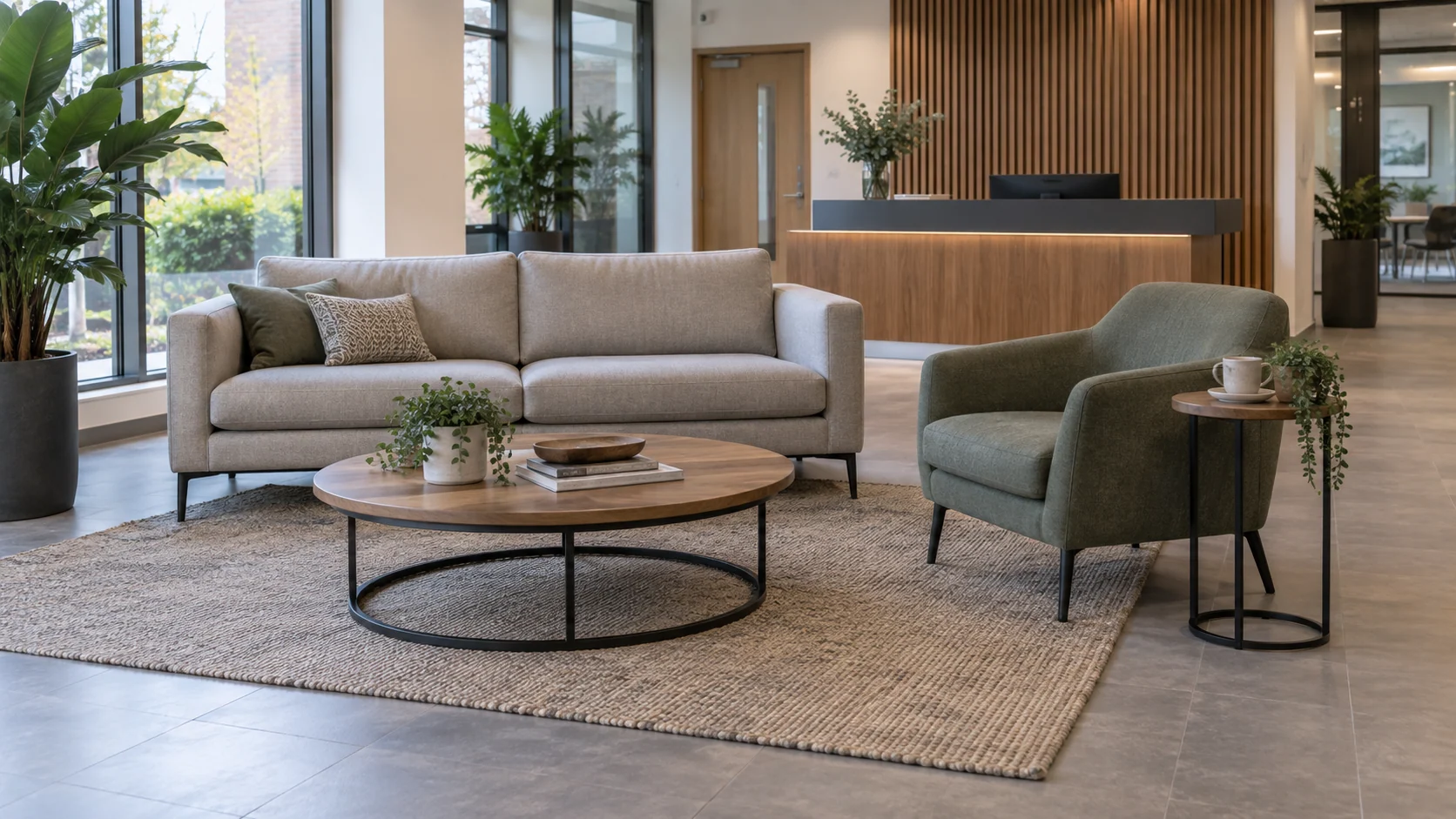
A coffee table provides a shared low surface in the centre of a seating group. Side tables place smaller surfaces beside individual seats. Choose according to reach and circulation; a central table is not required just because the seating forms a group.
Choose on purpose
Which option fits which situation?
Choose a coffee table when several seats can use the shared surface without blocking the route through the group.
Choose side tables when surfaces beside individual seats preserve a more useful open centre.
Put it in a real room
A narrow reception with a sofa along one wall
A broad coffee table may leave little room in front of the sofa. Two small side tables could provide useful surfaces while keeping the central route open. In a wider reception, the opposite may be true: one central table might serve the group more neatly than several small pieces. Measure both arrangements with people getting in and out of the seats.
Know what is being compared
Reception coffee tables
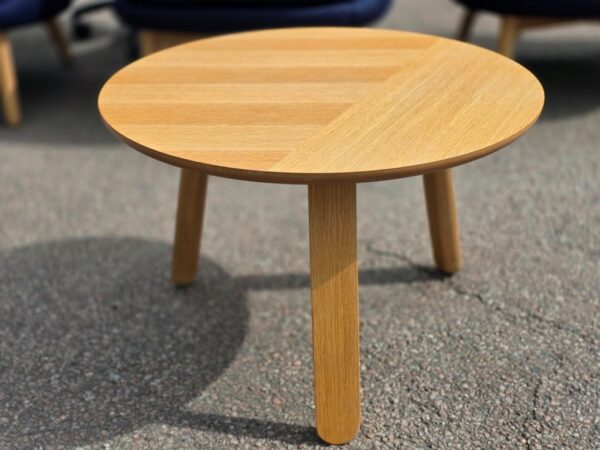
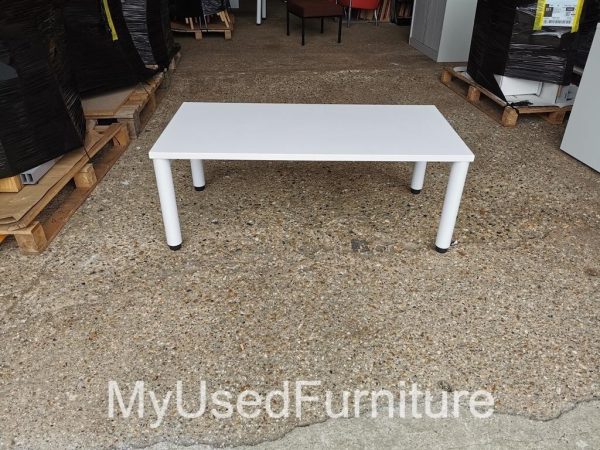
A reception coffee table is usually a relatively low, broad surface in front of seating. Its shape and base affect how people move around it.
Reception side tables
A side table is a smaller surface placed beside or between seats. It can serve one or two positions without occupying the centre of the waiting area.
The details that change the decision
A useful table does not interrupt the route to the seat
Start with the path from the entrance to the reception desk and then to the seating. A central table should not force people to step around sharp corners or squeeze between furniture. Draw the base as well as the top, because splayed legs can project further than expected.
Side tables can leave the centre more open, but they can also fill the gaps people use to enter a row of chairs. Place them deliberately rather than distributing them in every available space.
Table height should relate to the actual seating
A surface that works beside an upright visitor chair may be awkward next to a low sofa. Compare the table with the seat and arm height, and consider what will be placed on it. A magazine display, a drink and a visitor’s bag do not all create the same requirement.
Try a mock-up before ordering. A cardboard box at the proposed height can reveal whether the table feels reachable and whether its footprint interrupts movement. This is a planning aid, not a substitute for checking the product’s stability and intended use.
The smallest pieces still need condition checks
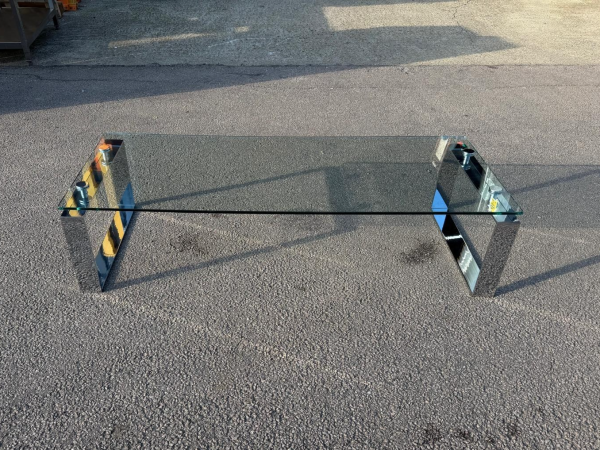
Inspect edges and corners, especially on glass, veneered or laminated tops. Check that the base is secure and the table does not rock on a suitable level surface. A decorative side table is not automatically appropriate for a busy commercial waiting area.
Think about cleaning access and the things staff may put on the table. Do not use a table as seating unless it is specifically designed for that purpose. For used items, confirm any care requirements and whether feet or protective glides are missing.
Practical example
Two small surfaces can use less tabletop area—but not always less room
Illustrative dimensions: one 1,000 × 600 mm coffee table, or two 400 × 400 mm side tables.
| Check | Option or calculation | What it tells you |
|---|---|---|
| Top area | Coffee table: 0.60 m² | Two side tables together: 0.32 m² |
| Location | Usually occupies the centre of the group | Uses space beside or between seats |
| Remaining question | Can everyone reach and pass it? | Do the side positions actually exist? |
The arithmetic compares tops, not usable circulation. Two side tables may be the better arrangement in one reception and make another feel cramped at the arms of the seats. Mark the footprints and try approaching each chair before buying.
Decide what the surface must hold. A central display of brochures needs different space from one drink beside a seat. Check stability and the product’s intended use, particularly for small tables that visitors might mistake for seating.
Side by side
Reception coffee tables vs side tables
| Decision | Reception coffee tables | Reception side tables |
|---|---|---|
| Location | Usually in front of a seating group | Beside or between seats |
| Reach | Shared access may involve leaning forward | Can place items nearer the seated user |
| Circulation | Occupies central floor space | Uses space at the edge of the arrangement |
| Capacity | Larger shared display or refreshment surface | Smaller local surface |
| Flexibility | One large item anchors the group | Several smaller items can move separately |
| Inspection | Edges, corners, top and base stability | Stability and suitability for the intended load |
Before ordering
Five checks worth doing
- 01Measure the whole top and any projecting base.
- 02Compare table height with the actual seats and arms.
- 03Check the main routes with the table in position.
- 04Inspect corners, surface damage, joints and feet.
- 05Confirm the intended load and care instructions.
Clear answers
Frequently asked questions
Does a reception sofa need a coffee table?
No. Side tables, or no table at all, may suit the space better. Start with what visitors need to place down.
Are round tables always safer for small receptions?
A rounded outline removes sharp corners, but size, stability and placement still matter. It can still obstruct a route.
Can side tables be different styles?
Yes, if the selection looks intentional and each table suits its position. Similar finishes or proportions can tie the arrangement together.
Ready to compare real options?
Take the brief to current stock.
Compare current reception furniture with the visitor and staff arrangements you need. Condition, quantity, price and delivery can change, so verify the current listing and order details.