Comparison guide · Desks & workstations · 03
Left-hand vs right-hand corner desks: check the return before you order
The wrong-handed desk is not a small cosmetic mistake. It can put the return across the entrance, against the wrong wall or exactly where your storage needs to open.
Get the short answer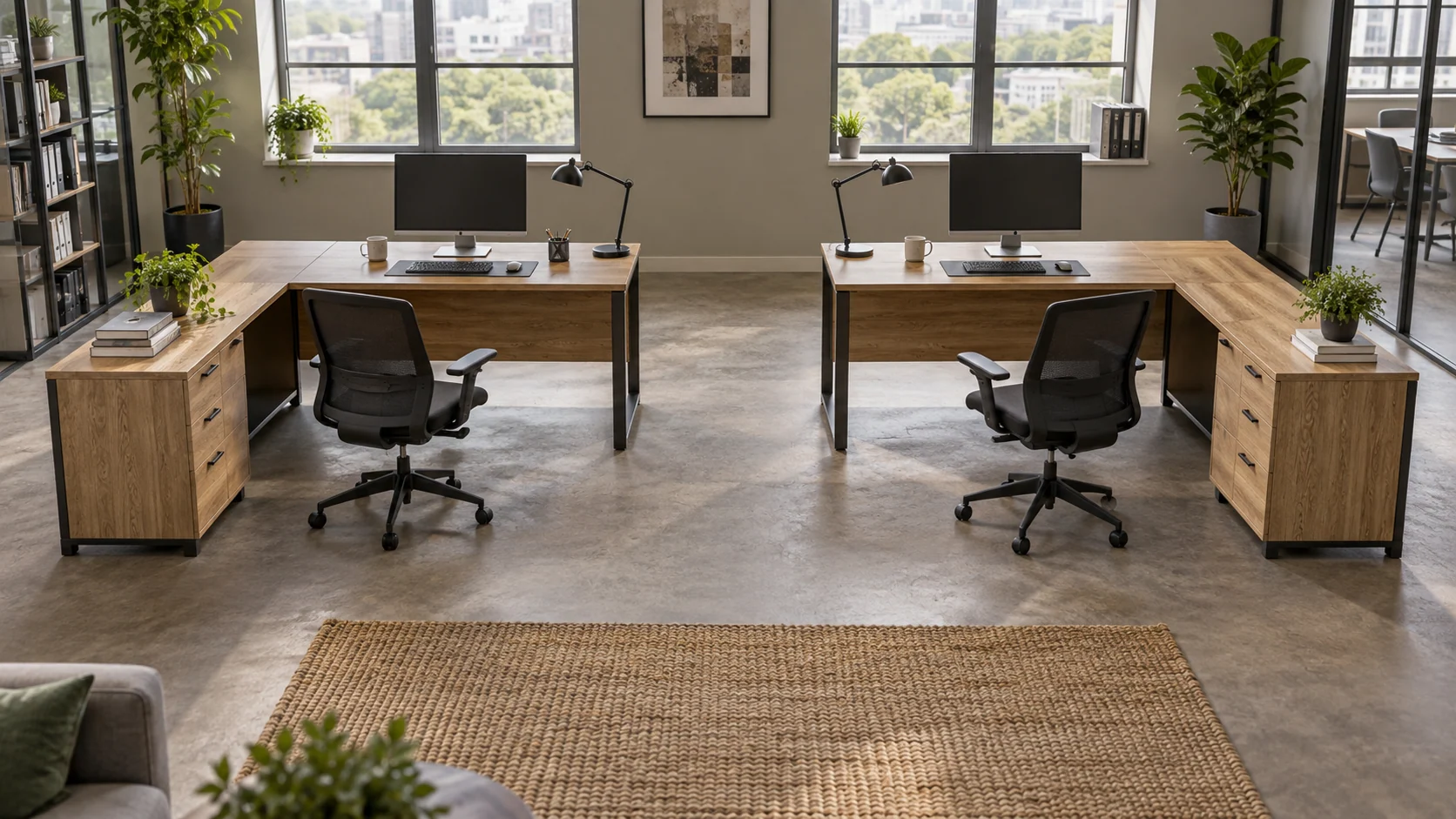
Short answer
The practical difference is which side carries the return or deeper section from the user’s working position. Sellers may describe handedness differently, so confirm the exact layout with a labelled photograph or drawing. Do not rely on the words left and right alone.
Choose on purpose
Which option fits which situation?
Choose a left return when the seated-user drawing places the extra surface where your left-side task or wall requires it.
Choose a right return for the mirrored requirement; neither choice follows automatically from the hand you write with.
Side by side
Left-hand vs right-hand corner desks
| Decision | Left-hand corner desks | Right-hand corner desks |
|---|---|---|
| Reference point | Usually the seated user’s left | Usually the seated user’s right |
| Room relationship | Return may suit a left-side wall or work zone | Return may suit a right-side wall or work zone |
| Entry to the desk | Depends on the surrounding furniture | Depends on the surrounding furniture |
| Storage | Check cupboards and drawers on the left | Check cupboards and drawers on the right |
| Equipment | Place according to task and reach | Place according to task and reach |
| Reversibility | Only when the construction allows it | Only when the construction allows it |
Practical example
A photograph that prevents a handedness mistake
Use this three-part check on the specific desk listing before agreeing the orientation.
| Check | Option or calculation | What it tells you |
|---|---|---|
| Mark the seat | Draw the intended chair position | Judge left and right from that position |
| Mark the entrance | Show how the person reaches the chair | Keep the return out of that route |
| Mark the connection | Identify the return brackets and holes | Confirm that any reversal is supported |
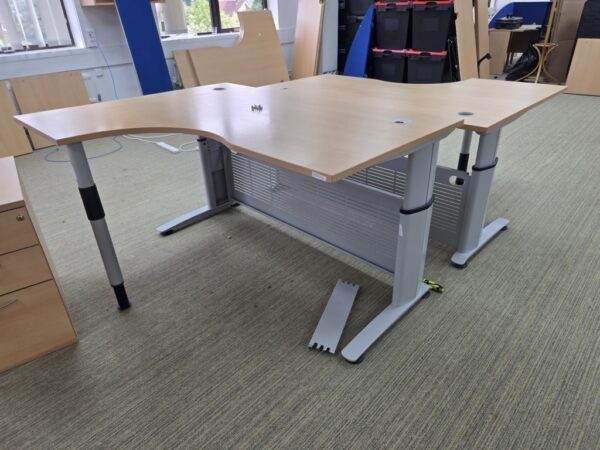
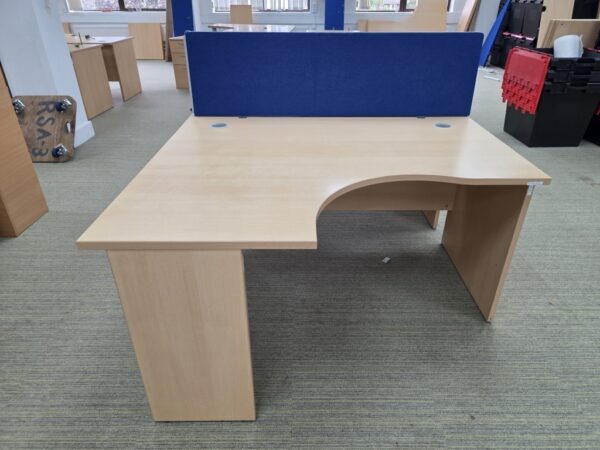
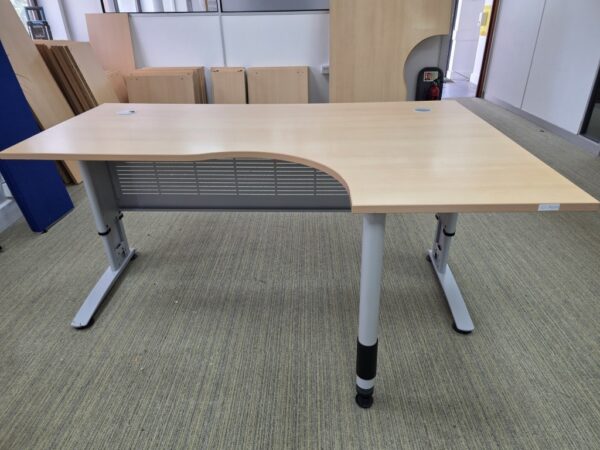
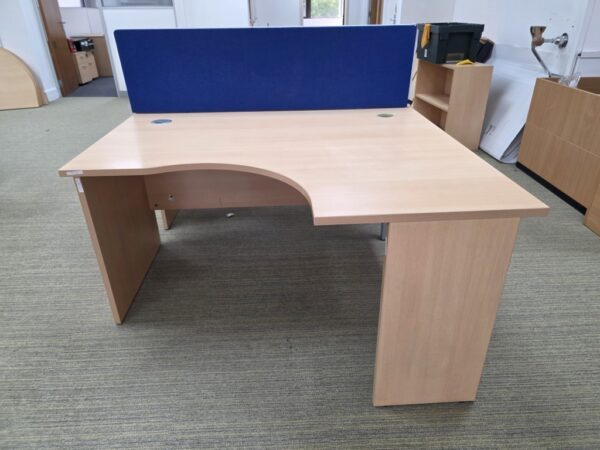
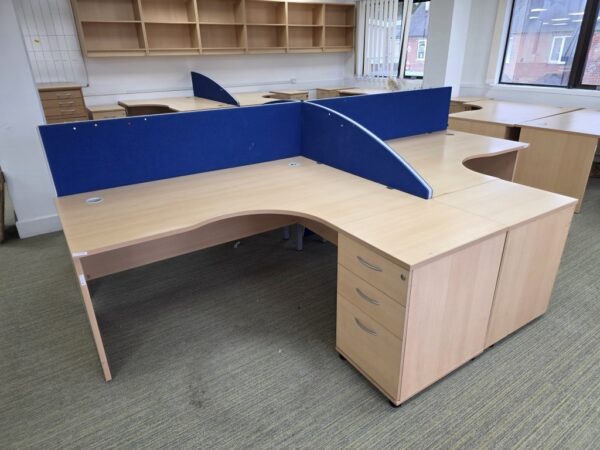
Ask the supplier to label the chair position and the return on one photograph. Keep that labelled image with the order. A front-facing photograph reverses the viewer’s left and right relative to the seated person; an agreed drawing removes that ambiguity.
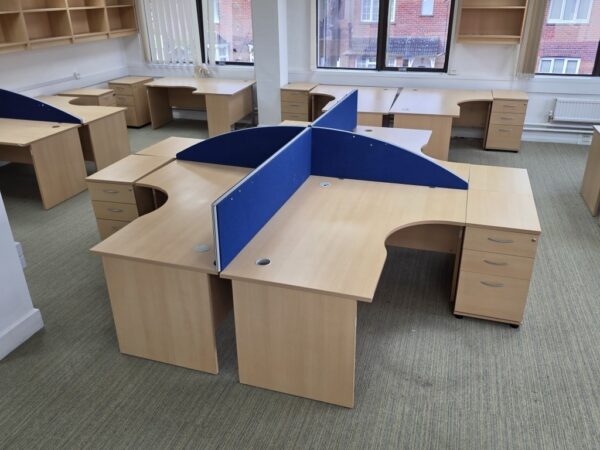
For a corner workstation with a mobile pedestal, also show where the drawers open. The correct return orientation can still be the wrong complete layout if the pedestal blocks the chair or the doorway. Confirm every component, not just the top.
A practical route to a decision
Record the room, route and working clearances.
List what the users and the task actually require.
Compare the condition and completeness of the real options.
Know what is being compared
Left-hand corner desks
A left-hand corner desk usually places its return or extended area to the left of the seated user. That convention must still be confirmed with the supplier.
Right-hand corner desks
A right-hand corner desk usually places the return to the seated user’s right. Looking at a product from the front reverses your visual left and right, which is a common source of confusion.
The details that change the decision
Start from where the chair will be
Draw the main desk surface, then place the chair on the working side. From that position, mark the return on the intended side. Send that sketch to the supplier and ask them to confirm the actual item against it. This is clearer than exchanging product names.
Photographs taken from the visitor side can be misleading. A return appearing on the left of a front-facing image may be on the seated user’s right. A top-down view with a chair position removes most of the ambiguity.
Your dominant hand does not choose the desk for you
Being left-handed does not automatically mean a left-hand desk is best. Think about the direction you enter, where cables arrive and which items you use frequently. Someone may prefer their reference material on one side and a clear entry route on the other.
Plan with actual equipment positions. A large return is not useful if it encourages important items to sit beyond comfortable reach. Keep the normal keyboard-and-screen position clear, then use the extra surface for tasks that genuinely benefit from it.
Reversible means more than moving a panel
Some modular desks can be assembled in either orientation. Others use shaped tops, pre-drilled holes, handed modesty panels or brackets that only fit one way. Ask for the manufacturer’s assembly arrangement rather than assuming the frame can be mirrored.
For used desks, confirm that all parts for the intended orientation are included. A desk may have been reversible when new but arrive with only the components from its last installation. Missing connectors can make an apparently simple conversion impractical.
Put it in a real room
The office door opens beside the workstation
Imagine the return is intended to sit against the side wall, leaving an open approach to the chair. The opposite-handed desk might instead project into that approach. Before buying, mark both outlines with removable floor tape and open the door fully. Include the chair pulled back and any pedestal drawer extended. The better orientation is the one that lets these everyday movements coexist.
Before ordering
Five checks worth doing
- 01Confirm orientation from a drawing showing the seated user.
- 02Measure both overall legs of the L, plus the depth of each surface.
- 03Check door swings, sockets, radiators and storage openings around the desk.
- 04Ask whether reversal is manufacturer-supported and which parts it requires.
- 05Confirm whether the listing shows the actual desk or a representative image.
Clear answers
Frequently asked questions
Is a left-hand desk only for left-handed people?
No. Handedness here describes furniture orientation, not who can use it. Room fit and working arrangement matter more than the label.
Can I turn the desk around to reverse it?
Turning the whole desk changes where it faces; it does not necessarily create the required mirror-image shape or usable working side.
What should I send the seller?
A simple overhead sketch with the chair, door, main top and intended return. Ask for written confirmation that the supplied desk matches it.
Ready to compare real options?
Take the brief to current stock.
Compare the dimensions and components of current office desks against your room plan. Condition, quantity, price and delivery can change, so verify the current listing and order details.